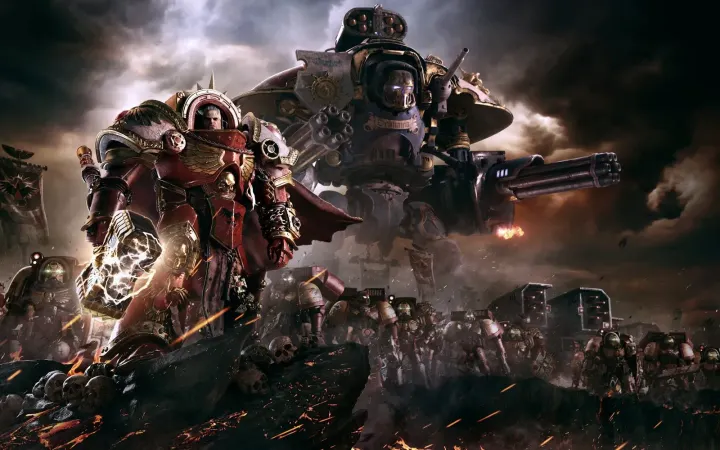
Warhammer Explained: Fantasy, 40K and Age of Sigmar
Three Warhammer settings, one confusing name. How Fantasy, 40K and Age of Sigmar connect, and where the PC games fit.

Start with Total War: WARHAMMER and you’ll meet knights, dragons and an emperor carrying a warhammer. Open Warhammer 40,000: Dawn of War and there’s another emperor, green aliens and soldiers in powered armour. The shared name makes these games sound like parts of one enormous historical sequence, which is where the confusion starts.
Quick Answer
Warhammer Fantasy and Warhammer 40,000 are separate settings, and Age of Sigmar is what comes after Fantasy's world is destroyed. The Empire in Total War: WARHAMMER doesn’t eventually become the Imperium in Dawn of War, and Sigmar isn’t the Emperor of Mankind.
Warhammer: The Old World adds another name to remember: it revisits an earlier period of the original Fantasy world. It doesn’t take place after Age of Sigmar or erase the events that led to it. Games Workshop explains that relationship here.
| Setting | Where its stories happen | Games you may recognise |
|---|---|---|
| Warhammer Fantasy | A world of rival kingdoms, ancient civilisations, magic and invading Chaos. The Old World explores its earlier history. | Total War: WARHAMMER, Total War: WARHAMMER II, Total War: WARHAMMER III; Warhammer: Vermintide 2. |
| Warhammer 40,000 | A far-future galaxy where humanity’s Imperium fights aliens, rebels and Chaos. Usually shortened to 40K. | Warhammer 40,000: Dawn of War, Warhammer 40,000: Space Marine 2, Warhammer 40,000: Rogue Trader. |
| Warhammer Age of Sigmar | Eight vast magical realms, inhabited by mortals and contested by gods and their armies. | Warhammer Age of Sigmar: Realms of Ruin; Warhammer Age of Sigmar: Storm Ground. |
Warhammer began as Games Workshop's tabletop games, and the video games borrow their settings, characters and conflicts while letting you take part in very different ways. The logo identifies the franchise; it doesn’t tell you whether you’re buying a strategy game, an RPG or a cooperative shooter.
How the Warhammer settings connect
Read the visual and view sources
Tracks are not aligned by date. Shared Chaos gods do not make 40K the future of Fantasy.
Fantasy and Age of Sigmar share a direct historical connection, including surviving characters. The Horus Heresy belongs to 40K’s own past, roughly 10,000 years before its familiar era. That’s why people sometimes call it 30K. Games Workshop’s Horus Heresy overview explains the civil war behind that distinction.
Chaos complicates the boundaries, because its gods and daemons recur across the settings. We’ll return to that connection below; it doesn’t turn these histories into a single timeline.
Gods, daemons and rulers
Warhammer mixes political authority, supernatural power and religious belief, so someone can command an empire without being a god, or be worshipped without personally directing every army that fights in their name. These distinctions make the histories much easier to follow.
| Term | What it describes | Examples and limits |
|---|---|---|
| God | A divine power with worshippers and influence over the world. Gods have different origins and spheres of influence. | Sigmar is a god in Fantasy and Age of Sigmar. Nagash is the god of death in Age of Sigmar. Neither is a Chaos god. |
| Chaos god | One of the great powers associated with Chaos and its supernatural realm. | Khorne, Tzeentch, Nurgle and Slaanesh are rivals. Age of Sigmar also includes the Great Horned Rat in its Chaos pantheon. |
| Daemon | A supernatural being whose existence belongs to the immaterial realm. | A Bloodthirster serves Khorne; it is not Khorne himself. Greater Daemons embody their patrons’ power. |
| Daemon Prince | A former mortal raised to daemonhood. | Be’lakor and a newly ascended champion have mortal origins that distinguish them from Greater Daemons. |
| Primarch | One of the Emperor’s gene-crafted sons, originally created to lead 40K’s Space Marine Legions. | A primarch is not simply an experienced Space Marine. Later Chapter Masters occupy a different military role. |
| Mortal ruler or champion | A person whose authority, skill or blessings make them influential without automatically making them divine. | Karl Franz governs the Empire; Archaon commands Chaos hosts. “Legendary Lord” is Total War’s playable-leader category, not a divine rank. |
For the distinction between created daemons and former mortals, see the official daemon introduction; Games Workshop’s primarch introduction covers the leaders behind the Space Marine lineages. These categories describe origins and roles; they don’t create a reliable ladder of who would win every fight.
What the Chaos gods want
Read the visual and view sources
Not a ranking of strength. Age of Sigmar’s Chaos pantheon also includes the Great Horned Rat. Art: Total War faction imagery.
Khorne embodies bloodshed and martial violence; Tzeentch change, ambition and sorcery; Nurgle disease, decay and the acceptance of mortality; Slaanesh excess, obsession and the pursuit of sensation. Their wars with each other help explain why a collection of Chaos armies is rarely a stable coalition. Mortals can seek strength, knowledge, relief from fear or fulfilment, and become trapped by the power they approached for help. Games Workshop’s Chaos overview
Other peoples have their own gods: Fantasy's Dwarfs revere their ancestors, Greenskins worship Gork and Mork, and Kislev honours Ursun. In Age of Sigmar, Sigmar, Alarielle and Nagash can pursue conflicting ambitions despite their shared past. The Emperor of Mankind is an immensely powerful psyker worshipped as a god by the later Imperium; his religious status isn’t a reason to identify him with Sigmar or a Chaos god. Dwarf traditions · Kislev and the Fantasy gods · The Imperium
How magic and psychic power fit
In Fantasy, magical energy flows into the world from the Realm of Chaos and is commonly understood through eight Winds of Magic. A human battle wizard, an elven mage and a Slann can use magic without worshipping Chaos. The eight winds later give their names and natures to Age of Sigmar’s Mortal Realms, where magic also shapes the geography. The eight Winds of Magic · The Mortal Realms
In 40K, psykers draw on the Warp, and their powers sit alongside spacecraft, guns and genetic engineering; a Space Marine's enhanced body isn't a psychic spell. The Necrons’ C’tan are star gods associated with the material universe, distinct from the Chaos gods of the Warp. Similar words such as “god” or “immortal” can therefore describe very different beings. The Warp · C’tan and biotransference
Warhammer Fantasy and Warhammer: The Old World
Total War’s official “Welcome to The Old World” video uses in-engine footage from Total War: WARHAMMER to introduce the setting. It predates the tabletop game called Warhammer: The Old World.
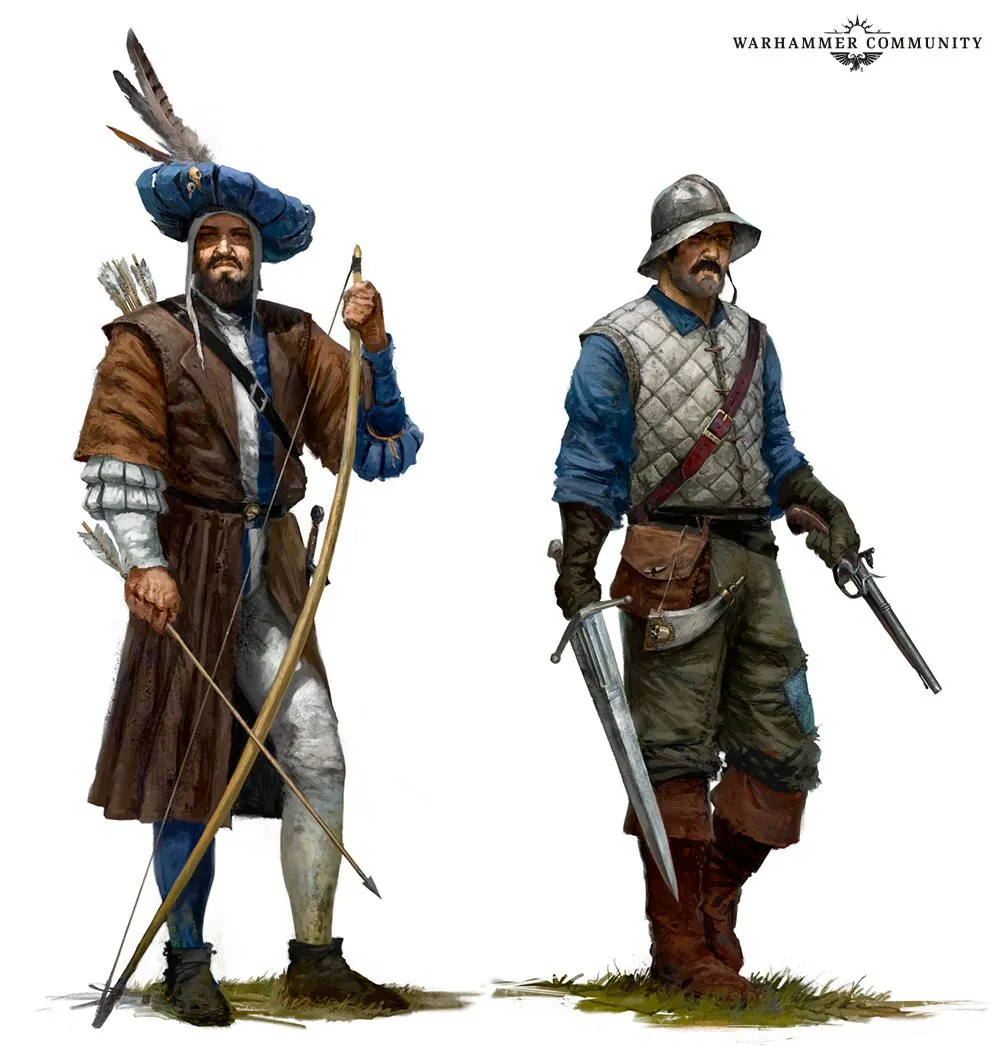
Warhammer Fantasy takes place on one world with recognisable geography: the Empire and Bretonnia occupy parts of the Old World; the High Elves inhabit Ulthuan, the Dark Elves rule from Naggaroth, the Lizardmen defend temple-cities in Lustria, and Grand Cathay lies far to the east. Travel, mountain passes, sea routes and the position of an enemy kingdom all matter.
The human nations differ more than you'd expect, with Bretonnia building its military and social order around knights and a harsh feudal hierarchy. The Empire combines swordsmen and cavalry with handguns, artillery, engineers and battle wizards. Describing the whole setting as “medieval fantasy” misses the gunpowder armies and the very different cultures beyond its European-inspired kingdoms. Bretonnia’s official introduction and the Total War: WARHAMMER overview show that contrast.
The history behind the rivalries
The Old Ones were ancient beings who reshaped the Fantasy world; the Lizardmen still follow the Great Plan left by their vanished masters. The collapse of the Old Ones’ polar gateways helps explain why that plan now has to be pursued in a world exposed to Chaos. The Old Ones and Lizardmen
Later catastrophes explain why apparently natural allies distrust each other, why ruined cities matter, and why some armies see conquest as recovering what was already theirs. These rivalries are established long before Karl Franz takes the imperial throne.
- The Great Catastrophe
The Old Ones’ polar gates collapse. Chaos invades; their Lizardmen servants inherit a damaged world.
- The Great Vortex
Elven mages drain magical energy to constrain daemons. Its continuing importance drives Total War: WARHAMMER II.
- The Sundering
Civil war separates High Elves and Dark Elves. Exile and rival claims to Ulthuan sustain their conflict.
- The War of the Beard
Dark Elf interference helps provoke Elf–Dwarf war. Elven withdrawal leaves communities that become the Wood Elves.
- Sigmar unites the tribes
A new state and an enduring alliance with Dwarfs emerge. Much later, Karl Franz inherits its divided politics.
- The Fantasy world is destroyed
Surviving powers carry their histories into Age of Sigmar. Its Mortal Realms are a new cosmic setting.
These events leave connected problems behind: the Great Catastrophe creates the enduring danger that the Vortex helps contain, while the later Sundering helps poison the alliance destroyed in the War of the Beard. Sigmar founds a human empire in a world where older civilisations have already suffered enormous losses. Those connections explain why defending the world from Chaos doesn’t automatically make its inhabitants trust one another.
Necromancy creates another set of linked conflicts, starting with Nagash, a powerful figure in ancient Nehekhara who developed the arts of necromancy and attempted to impose his will on the dead. The Tomb Kings are the rulers of that ruined civilisation, but they have their own kingdoms and ambitions. Settra’s opposition to Nagash is a useful reminder that “undead” doesn’t mean “on the same side.” The Vampire Counts belong to a different tradition of undead rulers, whose bloodlines reach back to ancient Lahmia. The histories of the Tomb Kings and Vampire Counts explain those roots.
Nor is every living faction defending civilisation against the same threat. Greenskin warlords gather Orcs and Goblins for conquest and fighting; Skaven clans scheme against the surface world and each other. Lizardmen pursue the Old Ones’ Great Plan, which can put them at odds with people who have no idea what that plan requires. Human kingdoms compete for territory while Chaos works through cults, invasions and the ambitions of individual rulers. That mix of local interests and older conflicts gives a Total War campaign its context. The official faction introductions for the first game and the second provide a useful starting point.
Karl Franz, Sigmar and the earlier Old World
Karl Franz is a mortal emperor living long after Sigmar founded the Empire. He governs a state whose powerful provinces and Elector Counts make unity difficult. Sigmar is the founder they worship, which is why his name appears on temples, war cries and weapons throughout the setting.
The tabletop game Warhammer: The Old World moves back before Karl Franz’s era, to a divided Empire and the years leading towards the Great War Against Chaos. Familiar kingdoms have different rulers and political circumstances. The later war against Archaon during the End Times is a separate conflict. The Old World development diary distinguishes these periods.
“Old World” can also mean a geographical region within the larger Fantasy world. It isn’t always the name of the tabletop game, and Ulthuan, Lustria and Cathay don’t disappear just because a story concentrates on the Empire.
What happened in the End Times
The End Times are the apocalyptic end of the Fantasy world's history: Chaos wins, the world is destroyed, and Age of Sigmar picks up afterwards in a new cosmic setting, with survivors carrying their histories into it.
This doesn’t make Total War: WARHAMMER III an Age of Sigmar game. Its armies, geography and rivalries belong to Fantasy. A sandbox campaign lets you change who conquers the map; it isn’t a compulsory reenactment of the world’s canonical ending. Our Total War: WARHAMMER guide separates its campaigns, playable armies and ownership requirements.
Warhammer 40,000
Focus Entertainment’s introduction to Warhammer 40,000, presented by Clive Standen, who plays Titus in Warhammer 40,000: Space Marine 2. This is a setting introduction rather than a gameplay walkthrough.
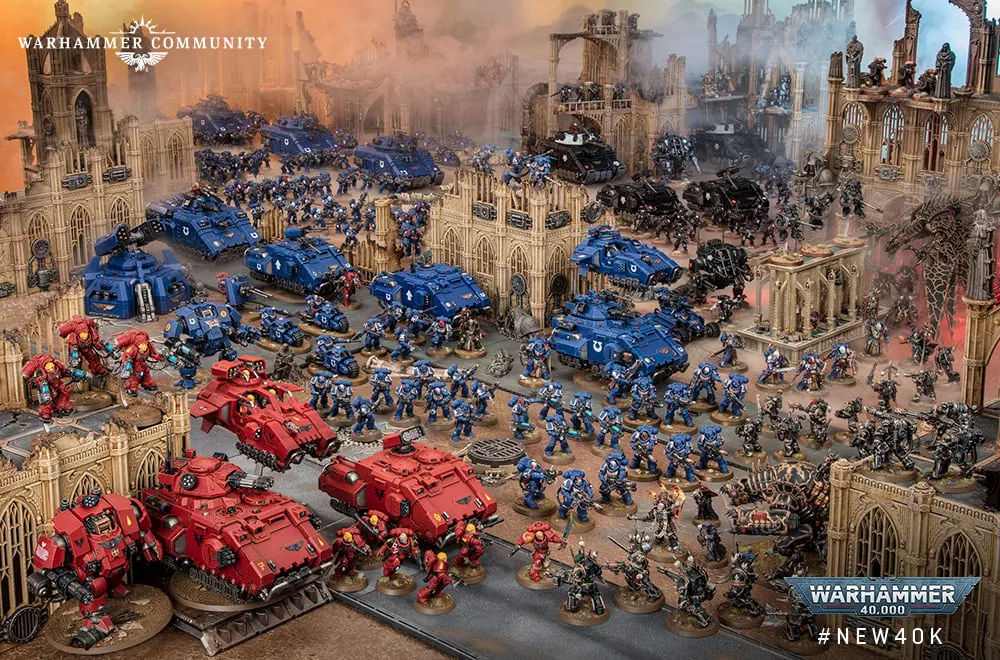
40K moves to a galaxy of inhabited planets, ancient alien empires and interstellar warfare. Humanity’s Imperium rules from Terra, the far-future Earth, under the Emperor of Mankind. Its Space Marines are genetically altered warriors organised into Chapters, but most Imperial soldiers are ordinary humans serving in the Astra Militarum, also known as the Imperial Guard. Games Workshop’s introduction and Imperial Guard guide establish those different roles.
Technology and supernatural power sit side by side in 40K: psychic abilities draw on the Warp, a dangerous immaterial dimension that is also essential to much Imperial interstellar travel. Chaos can corrupt a person, an army or a world from within. A fortress capable of resisting an alien invasion may still fall because its own defenders embraced a cult.
The Imperium often supplies a game’s protagonists, but it is a brutal, oppressive civilisation. A soldier defending civilians can act heroically while serving a state that treats other lives as expendable. That tension matters to the setting; Games Workshop describes the Imperium as a satirical warning, rather than a model society.
The events that shaped the galaxy
By the time humanity arrives in 40K’s history, the Necrons and Aeldari already carry the consequences of catastrophes that have little to do with the Imperium, even when their wars eventually collide with it.
- War in Heaven and its aftermath
Necrontyr become Necrons; ancient conflicts leave tomb worlds and rival civilisations long before humanity’s rise.
- Age of Strife and Unification
Human worlds become isolated. The Emperor conquers Terra and prepares forces for a wider empire.
- The Fall of the Aeldari
Slaanesh’s birth devastates their civilisation. Warp storms subside, opening the way for renewed human expansion.
- The Great Crusade
The Emperor’s armies reunite and conquer scattered human worlds. Primarchs lead the Space Marine Legions.
- The Horus Heresy
Horus’s rebellion divides the Legions. The Emperor is mortally wounded; the later Imperium becomes intensely religious.
- The wars of the Imperium
Chapters, human armies, Chaos warbands and alien powers contest inhabited worlds. Dawn of War belongs to this later history.
- Cadia falls; the Great Rift opens
A vast Warp rift fractures the galaxy and disrupts travel and communication. This is not the origin of the older games’ conflicts.
Read the visual and view sources
Selected military lineage, not the whole Imperial government. Photos/art show modern faction references, not the Heresy itself.
The official histories of the Necrons, Aeldari and Horus Heresy, together with the Great Crusade reference, connect those stages. The familiar 40K setting grew out of this history; the number in the title does not mean every story occurs in the same year.
Why the factions fight
The Imperium wants to preserve and extend human dominion, while Chaos warlords seek power, pursue their gods’ ambitions and wage wars against the civilisation many once served. Abaddon’s Long War connects the Heresy’s survivors to later disasters such as Cadia’s destruction. Other Chaos Space Marines are more recent renegades, so “Chaos Marine” doesn’t automatically mean a veteran who personally fought beside Horus. The official faction history makes that distinction.
The Aeldari survive differently: craftworld Aeldari use disciplined paths and spirit stones to protect themselves from Slaanesh. Their Drukhari relatives, historically called Dark Eldar, inhabit the Webway city of Commorragh and sustain themselves through the suffering of captives. They are related peoples with very different responses to the same catastrophe. Drukhari cruelty doesn’t make them ordinary worshippers of Slaanesh: their predation is tied to resisting the god’s consumption of their souls. Their official introduction explains the relationship.
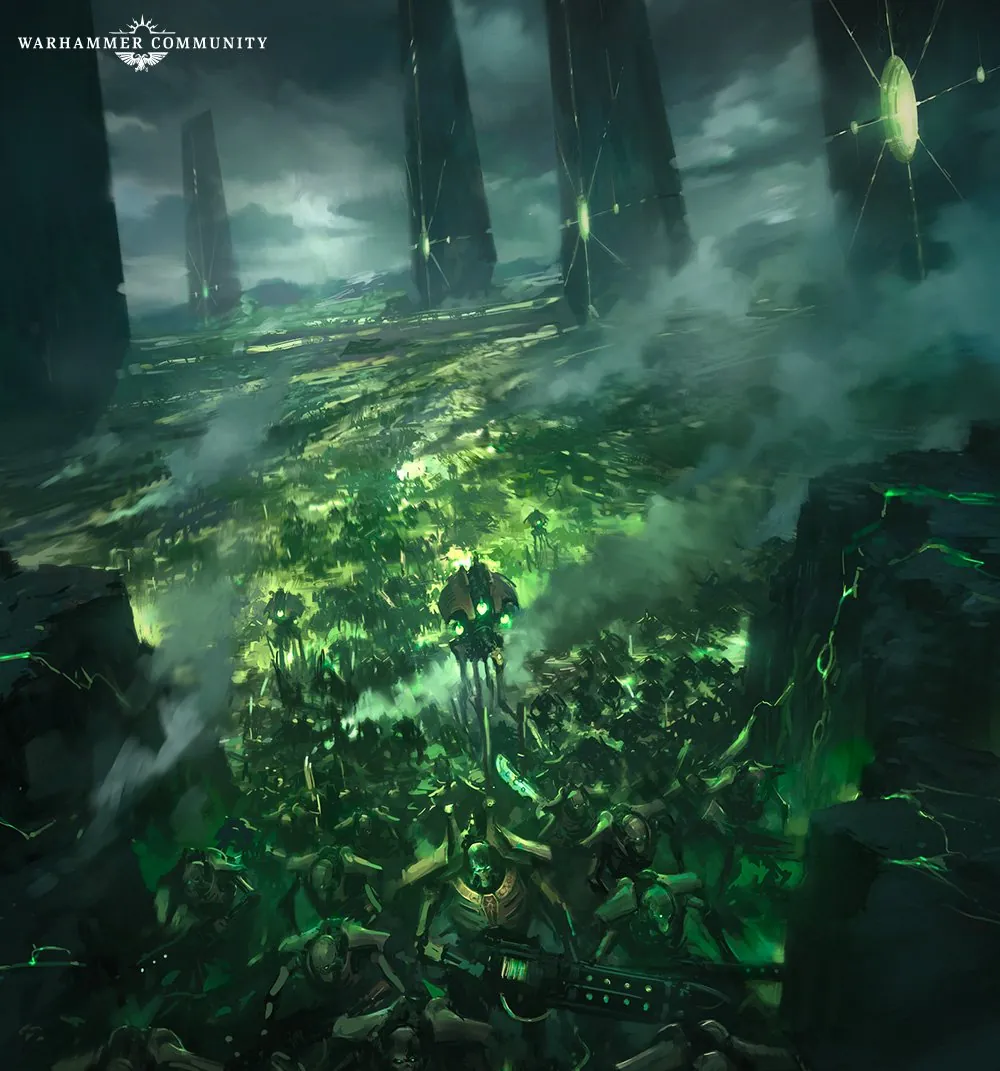
Orks gather into expanding military movements called Waaaghs because they thrive on war, while Tyranids are an extragalactic, consuming threat whose organisms act through the Hive Mind. The T’au Empire expands under the ideology of the Greater Good, using diplomacy as well as military force to draw other peoples into its order. These motivations lead to different kinds of conflict: an Ork invasion, a Tyranid hive fleet and a T’au expansion aren’t interchangeable enemy armies with different models. See the official Ork, Tyranid and T’au introductions.
In Dawn of War, these wider histories become conflicts over particular planets, artefacts and military objectives. You don’t need to read the entire Horus Heresy before meeting the Blood Ravens. Our Warhammer 40,000: Dawn of War guide follows the campaigns and recurring characters, including the change from conventional base-building towards squad tactics in the second game.
Warhammer Age of Sigmar
Games Workshop’s official introduction to Warhammer Age of Sigmar. The Mortal Realms are its setting; Warhammer Age of Sigmar: Realms of Ruin and Warhammer Age of Sigmar: Storm Ground adapt different parts of it.
Age of Sigmar continues after the destruction of the Fantasy world, now remembered as the World-that-Was. Its scale is different: the Mortal Realms are vast magical domains, each shaped by one of the eight fundamental forms of magic. They contain cities, wildernesses, kingdoms and ordinary lives, alongside places where the nature of reality becomes much stranger.
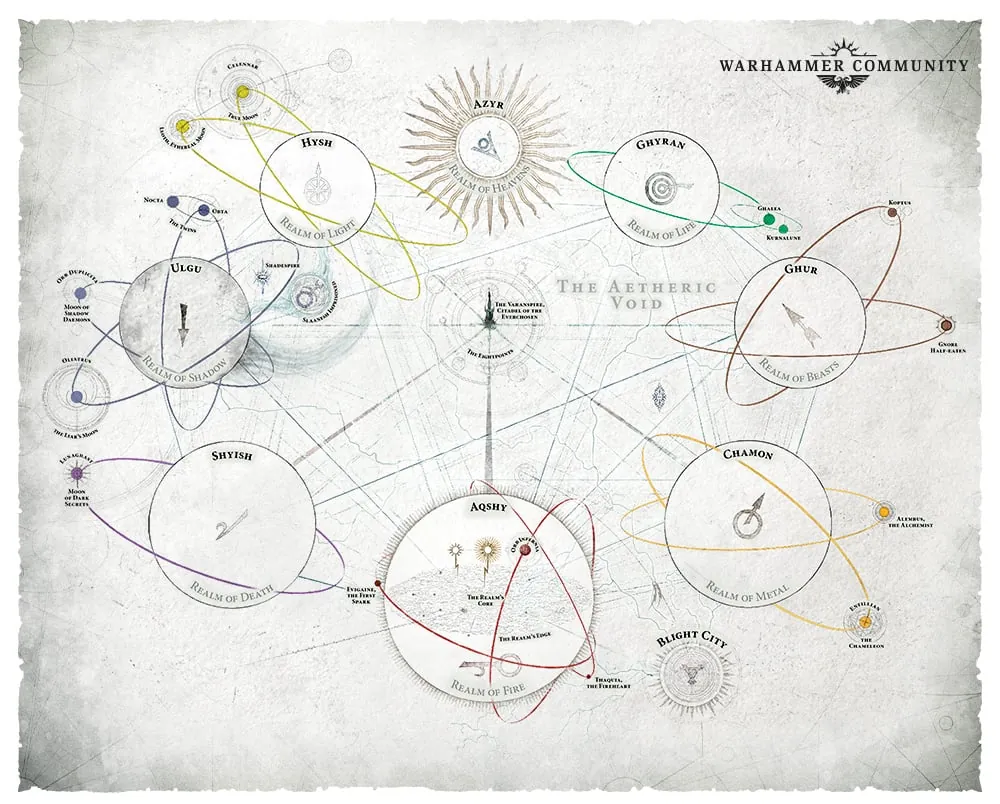
| Realm | Associated magic | Realm | Associated magic |
|---|---|---|---|
| Azyr | Heavens | Aqshy | Fire |
| Ghyran | Life | Ghur | Beasts |
| Chamon | Metal | Shyish | Death |
| Hysh | Light | Ulgu | Shadow |
Realmgates make travel, trade and conquest between these domains possible, so holding one can mean controlling access to another realm, with entire cities growing around these connections. The Realm of Chaos is separate from these eight Mortal Realms. Games Workshop’s guide to the realms explains their geography and connections.
The three ages
| Age | What happens | What carries into the next period |
|---|---|---|
| Age of Myth | Sigmar explores the realms and brings gods and peoples into a great alliance. Civilisations grow. | These kingdoms and alliances establish what later wars will destroy or attempt to recover. |
| Age of Chaos | Chaos overwhelms much of the realms as the alliance breaks down. Sigmar eventually seals himself and his followers within Azyr. | Survivors outside Azyr endure occupation, resist or turn to Chaos. Sigmar prepares a counterattack. |
| Age of Sigmar | The Stormcast Eternals strike from Azyr, beginning the Realmgate Wars and the recovery of territory. | Cities are founded and expanded, but competing gods and fresh invasions make every gain vulnerable. |
The official history of the Realmgate Wars follows that return and the reconquest after catastrophe that opens Age of Sigmar, where protecting a city, recovering a sacred site or reopening a route can carry generations of significance.
Later events shift the balance again, starting with Nagash's great ritual, which unleashes the Necroquake, spreading death magic across the realms and helping ignite the Soul Wars. The Vermindoom later forces the Skaven’s Blight City into the Mortal Realms, devastating territory and opening a new phase of invasion. These are developments within Age of Sigmar’s history, rather than replacements for the whole setting. The Soul Wars retrospective and the studio’s explanation of the Vermindoom connect those events.
The factions and their competing aims
Age of Sigmar groups its armies into four Grand Alliances, but these are broad alignments that don't guarantee every faction in a group will cooperate.
| Grand Alliance | The central aim | Examples |
|---|---|---|
| Order | Resist Chaos and sustain or rebuild civilisations, while pursuing very different interests. | Cities of Sigmar, Stormcast Eternals, Seraphon, Lumineth Realm-lords, Kharadron Overlords. |
| Chaos | Conquer, corrupt or consume the realms in the service of competing dark powers. | Slaves to Darkness, Skaven, Blades of Khorne, Maggotkin of Nurgle. |
| Death | Extend the power of undeath, with Nagash asserting dominion over the dead. | Soulblight Gravelords, Nighthaunt, Ossiarch Bonereapers, Flesh-eater Courts. |
| Destruction | Fight, hunt, consume and overthrow the structures others build, in cultures associated with Gorkamorka. | Orruk Warclans, Gloomspite Gitz, Ogor Mawtribes, Sons of Behemat. |
The official faction directory places those armies within their wider alignments, including the Idoneth Deepkin under Order, whose soul-raids keep their people alive at their victims’ expense. Allegiance to Order is no guarantee of kindness. The Idoneth’s origins make them a particularly useful example of the setting’s moral complications.
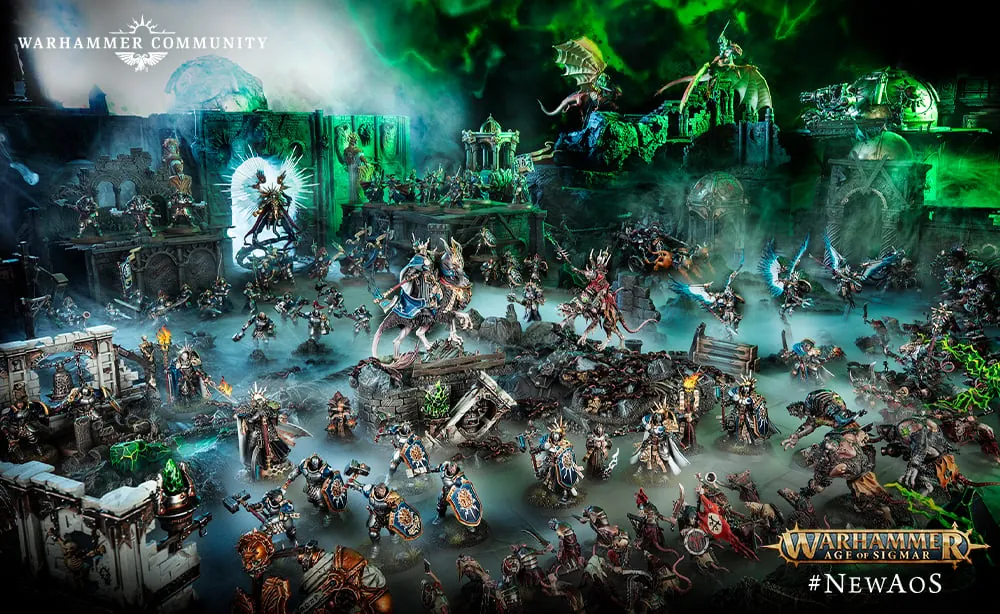
Stormcast Eternals can look like fantasy Space Marines, but their origins and tragedies are different. Sigmar takes mortal heroes and has them Reforged into his champions. When they fall, their souls can return to Azyr to be Reforged again, gradually losing memories and aspects of their humanity. This gives their apparent immortality a personal cost. Games Workshop’s Stormcast introduction explains that process.
Nagash also sees Sigmar’s recovery of souls as an intrusion into his own dominion, a grievance that feeds the Soul Wars. The same act that gives one army its heroes supplies another god with a reason to attack them.
Who survived from Warhammer Fantasy
Sigmar, Nagash and Alarielle connect the two settings directly, although their circumstances and power have changed. Sigmar was already worshipped as a god in Fantasy; Age of Sigmar doesn’t begin with Karl Franz being renamed and promoted into the role. Archaon also continues as a central champion of Chaos, now campaigning across the Mortal Realms.
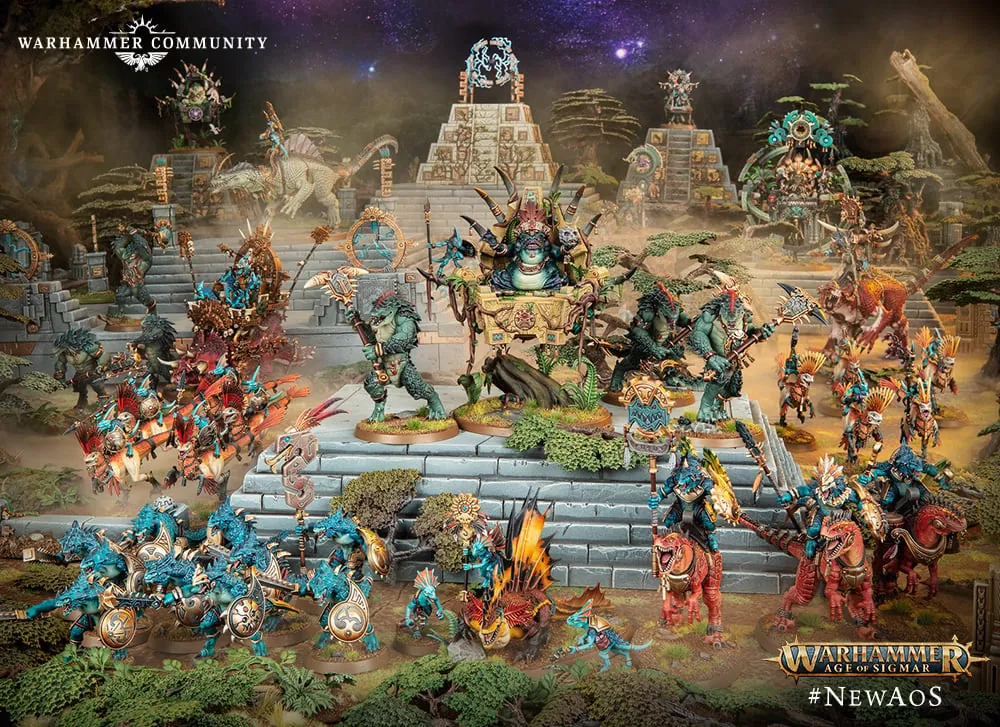
The Lizardmen are the clearest connection: their Slann escaped the dying world in temple-ships, and the Seraphon continue the Old Ones’ Great Plan in the new realms. Lord Kroak links the histories of both settings. They aren’t an unrelated replacement species, and they have no equivalent historical connection to 40K’s Tyranids. The official Seraphon history follows that continuity.
Two different elven histories
Read the visual and view sources
Solid lines: family or historical development, labelled in context. Dashed rust: continuing conflict.
Read the visual and view sources
Selected cultures only. Craftworld populations escaped before the Fall; the paths show survival strategies, not a simultaneous migration.
In Fantasy, civil war divides a kingdom, and a later withdrawal from overseas colonies helps create another culture. In 40K, survivors of a civilisation-wide psychic catastrophe develop different ways to protect their souls. That is why Dark Elves and Drukhari can share raiding imagery without sharing the same origin story. The Sundering · Wood Elf origins · Aeldari history
Similar factions don’t always share a history
Some similarities reflect direct continuity; others reflect ideas that Games Workshop developed differently across its settings. The distinction becomes clearer when you compare origins rather than appearances.
| Familiar comparison | What the relationship means |
|---|---|
| The Empire and the Imperium of Man | Different human civilisations in different histories. Sigmar founded the Empire; the Emperor of Mankind founded the Imperium. |
| Fantasy Elves and 40K Aeldari | Related design ideas, but separate histories. Malekith’s struggle over Ulthuan is not the origin of the Drukhari. |
| Fantasy Dwarfs and Age of Sigmar duardin | A connection within the Fantasy-to-Age-of-Sigmar history. Duardin societies include very different cultures, such as the airborne Kharadron Overlords and the Fyreslayers. |
| Fantasy Greenskins, Age of Sigmar orruks and 40K Orks | Shared themes and recognisable designs. Orruks belong to the Mortal Realms; 40K Orks have their own galactic history. “Orc” and “Ork” usually signal which setting you’re reading about. |
| Tomb Kings and Necrons | Similar imagery of ancient dynasties, tombs and deathless rulers. Tomb Kings are undead; Necrons descend from an alien civilisation transformed into living metal. |
| Lizardmen and Seraphon | Direct continuity, including the Slann and the Great Plan. The change is more than a spelling variation, because their world and circumstances have changed. |
Why the same Chaos gods appear
Khorne, Tzeentch, Nurgle and Slaanesh recur across these settings, associated with slaughter, change, decay and excess. Chaos also has its own internal rivalries; its followers don’t behave as one disciplined coalition. In Age of Sigmar, the Great Horned Rat also holds a place in the Chaos pantheon, so describing its pantheon as consisting only of the familiar four is incomplete. The official Chaos introduction states this explicitly.
Games Workshop’s Ask Grombrindal column describes a connection beyond reused names: the Realm of Chaos extends across realities, with Slaanesh able to affect both 40K and the Fantasy settings. That explanation is reproduced and discussed in this source-referenced examination of the Warp. It supports a supernatural connection between settings, not the claim that the Empire grows into the Imperium or that the Fantasy world is simply ancient Earth.
For the video games, follow each setting’s own history, since a familiar daemon can cross the conceptual boundary without turning the Total War: WARHAMMER trilogy into a prequel to Dawn of War.
Which Warhammer games fit each setting
If the political struggles and rival civilisations interest you, Total War: WARHAMMER turns Fantasy into territorial campaigns. If you want to follow a Space Marine Chapter through connected wars, Warhammer 40,000: Dawn of War provides that route. Warhammer Age of Sigmar: Realms of Ruin introduces the Mortal Realms through a conflict in Ghur. None requires completing the other settings first.
| Game | Setting | What you do |
|---|---|---|
| Total War: WARHAMMER, Total War: WARHAMMER II and Total War: WARHAMMER III | Fantasy | Manage territory, diplomacy and armies in turn-based campaigns, then command large battles in real time. |
| Warhammer: Vermintide 2 | Fantasy | Fight through cooperative missions, with a strong emphasis on first-person melee combat. |
| Warhammer 40,000: Dawn of War | 40K | Build bases, capture strategic territory and command armies in real-time battles. |
| Warhammer 40,000: Dawn of War II | 40K | Its main campaign centres on selected squads, equipment and tactical engagements, without conventional base-building. |
| Warhammer 40,000: Dawn of War III | 40K | Command larger forces with bases, elite units and a campaign alternating between three factions. |
| Warhammer 40,000: Space Marine 2 | 40K | Fight as a Space Marine in third-person action combining shooting and melee. |
| Warhammer 40,000: Rogue Trader | 40K | Lead a party through a narrative RPG with turn-based combat and consequential decisions. |
| Warhammer 40,000: Darktide | 40K | Complete cooperative first-person missions as Imperial rejects fighting through Tertium. |
| Warhammer Age of Sigmar: Realms of Ruin | Age of Sigmar | Command armies in a real-time strategy game set in Ghur, the Realm of Beasts. |
| Warhammer Age of Sigmar: Storm Ground | Age of Sigmar | Develop a warband through turn-based battles and roguelike campaigns. |
For a campaign route through the strategy series, continue with Total War: WARHAMMER: Games, Races and Campaigns or Warhammer 40,000: Dawn of War: Campaigns and Playing Order. They answer different questions: which army and campaign to choose in Total War, and how to follow the stories and gameplay changes across Dawn of War.
When the settings were created
Publication order explains why older discussions sometimes use “Warhammer” to mean Fantasy alone. The first Warhammer game appeared in 1983, followed by Warhammer 40,000: Rogue Trader in 1987. That second title was 40K’s original tabletop rulebook, distinct from Owlcat’s much later Warhammer 40,000: Rogue Trader video game.
Age of Sigmar launched in 2015 after the End Times concluded Fantasy’s original tabletop run. Warhammer: The Old World then launched in January 2024, returning to an earlier part of Fantasy history. A newer tabletop release can therefore depict a much earlier fictional period.
Sources
All linked references checked on 5 November 2026.
TGK companion guides
- Total War: WARHAMMER: Games, Races and Campaigns
- Warhammer 40,000: Dawn of War: Campaigns and Playing Order
Games Workshop histories and faction references
- The Old World and the World-that-Was (11 January 2023)
- The Horus Heresy explained (10 June 2025)
- Bretonnia (27 December 2023)
- The history of the Tomb Kings (29 December 2023)
- Seraphon survivors and temple-ships (21 April 2023)
- What is Warhammer 40,000? (30 September 2022)
- Astra Militarum
- Games Workshop on the Imperium (19 November 2021)
- Necrons (8 December 2023)
- Aeldari origins and the Fall
- Chaos Space Marines
- Drukhari (2 October 2025)
- Orks
- Tyranids
- T’au Empire
- The Mortal Realms explained (26 March 2024)
- The Realmgate Wars (6 August 2025)
- The Soul Wars and Broken Realms
- Studio interview on the Vermindoom (26 June 2024)
- Age of Sigmar official faction directory
- Idoneth Deepkin (4 June 2024)
- Stormcast Eternals (21 May 2024)
- Seraphon (17 June 2024)
- Chaos and the Great Horned Rat (10 July 2024)
- Games Workshop publication timeline
- The Old World launch announcement (6 January 2024)
Official video-game descriptions
- Total War: WARHAMMER
- Feral Interactive: Total War: WARHAMMER races
- Feral Interactive: Total War: WARHAMMER II races
- Total War: WARHAMMER II
- Total War: WARHAMMER III
- Warhammer: Vermintide 2
- Warhammer 40,000: Dawn of War
- Warhammer 40,000: Dawn of War II
- Warhammer 40,000: Dawn of War III
- Warhammer 40,000: Space Marine 2
- Warhammer 40,000: Rogue Trader
- Warhammer 40,000: Darktide
- Warhammer Age of Sigmar: Realms of Ruin
- Warhammer Age of Sigmar: Storm Ground
Specialist lore references and cross-setting discussion
- Lexicanum: Great Cataclysm
- Lexicanum: The Sundering
- Lexicanum: War of the Beard
- Lexicanum: Sigmar
- Lexicanum: Vampire Counts
- Lexicanum: Warp
- Madministratum: the multiversal Warp, with reproduced White Dwarf passages (November 2025)
Official videos and visual references
- Total War: WARHAMMER | Welcome to The Old World (Total War)
- Warhammer 40,000: Space Marine 2 - Titus Talks Episode 1 (Focus Entertainment)
- What is Warhammer Age of Sigmar? (Warhammer)
- Focus Entertainment: Titus Talks introduction
- Warhammer Community: What is Warhammer Age of Sigmar? (16 July 2024)
- Space Marines
Further references: official daemon introduction; Games Workshop’s primarch introduction; Dwarf traditions; Kislev and the Fantasy gods; The Imperium; The eight Winds of Magic; C’tan and biotransference; The Old Ones and Lizardmen; Great Crusade reference; Wood Elf origins.