Total War: WARHAMMER Guide to the Games, Races and Campaigns
Choose your first campaign, get to know the armies, and see what you need to own to play them.

Start with the army you want to command, not the game that came out first. The Total War: WARHAMMER trilogy shares one world and a growing roster of playable factions, but its three original campaigns tell different stories, and you don't need to finish the first game to enjoy the third.
The harder choice is between defending a kingdom, rebuilding an ancient empire, hunting rival warlords and destroying everything your neighbours have built. Understanding who these armies are makes that choice much more interesting.
Quick Answer
For most new players, our recommendation is The Lost God tutorial followed by an Immortal Empires campaign as Tyrion or Zhao Ming, depending on which content you own. Tyrion offers a clear introduction to infantry, archers and cavalry; Zhao Ming adds gunpowder, artillery and a lord who can transform into a dragon.
| Game | Its original campaign | Why play it today? |
|---|---|---|
| Total War: WARHAMMER (2016) | The Old World: regional conquest, faction objectives and the threat of Chaos in the north. | Experience the original campaign and its optional Beastmen and Wood Elf mini-campaigns. Its included armies also carry into Immortal Empires. |
| Total War: WARHAMMER II (2017) | Eye of the Vortex: four races compete over a magical vortex; several DLC factions pursue their own stories on this map. | Play the Vortex storyline, Tomb Kings’ search for forbidden books or Vampire Coast’s supernatural pirate adventure. |
| Total War: WARHAMMER III (2022) | The Realm of Chaos: rival powers pursue the dying bear god Ursun, introduced by The Lost God prologue. | Learn through the prologue, play the Ursun campaign and use the application that hosts Immortal Empires. |
You no longer need all three games, or even the third, to enter Immortal Empires. Since December 2025, owning any game in the trilogy gets you in through the WARHAMMER III application, and since September 2026 any single Lords of the End Times pack works as an entry purchase too. What you own still decides which factions you can pick, because access to the map doesn't give you every army. Rules checked 4 November 2026. SEGA’s access FAQ and Creative Assembly’s new-player guide explain the current arrangements.
Which campaign should you play first?
These picks are about what each campaign teaches you, not a ranking of the strongest lords on the current patch.
| If you want… | Start with… | Why, and what to watch |
|---|---|---|
| A broad introduction to conventional armies | Tyrion (High Elves) | Spearmen, archers and cavalry make battlefield roles easy to distinguish. You still need to secure Ulthuan and watch its approaches. |
| Gunpowder, artillery and dragons | Zhao Ming (Grand Cathay) | A varied army and a powerful transforming lord. Protect your shooting units and choose caravan routes carefully. |
| Sturdy infantry and impressive firepower | Thorgrim Grudgebearer: Dwarfs | A clear defensive battle plan. Slow movement and hostile neighbouring powers make campaign judgement important. |
| A human campaign with a specific local story | Boris Todbringer (the Empire) | Ulric’s temple and the feud with Khazrak give the campaign a clear identity. The new pack is also a standalone route into Immortal Empires. |
For your second campaign, pick something that plays differently: go from Tyrion's territorial empire to the Sisters of Twilight's forest objectives, or follow a defensive Dwarf campaign with Taurox's rampage. Try Ikit Claw when you want to build an army around dangerous weapons and expendable troops, or Golgfag when you want your wars to follow paid contracts.
For a more focused narrative, return to Eye of the Vortex and its faction stories. For an ongoing campaign in which unfamiliar neighbours keep giving you new ideas, stay in Immortal Empires and choose the army whose motives you now understand.
Your first campaign turns
These opening priorities suit conventional settlement-based campaigns such as Tyrion’s or Zhao Ming’s. They are a learning routine, not a fixed turn-by-turn build order; unusual economies and horde campaigns need their own approach.
| Decision | A useful first-campaign habit | Why it helps |
|---|---|---|
| Before moving | Read the lord’s faction effects, short victory conditions, starting enemies and recruitment options. | You learn what this particular campaign rewards before committing to a distant war. |
| First army | Keep the valuable starting units. Add affordable front-line infantry and missile support, then cover specific gaps such as anti-large defence. | A coherent army is easier to use and sustain than an early collection of expensive units with overlapping jobs. |
| First targets | Defeat the nearby enemy and secure a manageable area. Finish one local war before opening another where possible. | Occupied settlements cost attention and may expose additional borders. Expansion is useful when you can hold it. |
| Buildings | Balance income, growth, public order and the recruitment you need. Read settlement building limits before spending. | A military building that cannot reach its useful tier there is a poor early investment. |
| Diplomacy | Check attitudes and existing wars. Seek non-aggression or trade where useful; inspect an ally’s enemies before accepting a military alliance. | A friendly border can free your only army. An alliance can also pull you into an unwanted war. |
| Army upkeep | Leave enough recurring income for recruitment, replenishment and emergencies. | Filling a second army immediately can make a seemingly rich treasury disappear in a few turns. |
For Tyrion, practice keeping spearmen between the enemy and your archers, with mobile units protecting flanks or reaching exposed shooters. For Zhao Ming, combine infantry protection with missile units and artillery, checking line of sight rather than assuming every gun can fire through friendly troops. Preserve your starting specialists while adding reliable, affordable support.
While you're learning, pause or slow down single-player battles so you can spot the enemy's dangerous units, anchor your line where possible and give cavalry somewhere to withdraw after a charge. Protect artillery, avoid chasing one fleeing unit with your whole army, and concentrate fire on a threat you can remove. Leadership matters: flanking, casualties and a lost lord can make troops rout before every soldier dies. Undead and daemonic units use different failure rules, so read their traits rather than expecting ordinary flight.
Fight some early battles manually to learn those relationships, then compare the result with the predicted autoresolve losses. After each fight, check replenishment, movement remaining and whether another enemy army can reach you. Winning one battle should leave you able to hold the ground it gained. Feral’s manual and Total War Academy explain the underlying systems; the priorities here are our suggested learning routine.
Which Warhammer setting is this?
All three games use Warhammer Fantasy, the setting of the Empire, Ulthuan, the Dwarf mountain holds and the Chaos Wastes. Warhammer 40,000, home to Dawn of War’s Space Marines and alien civilisations, is a separate setting. Its Imperium isn’t this Empire thousands of years later.
Age of Sigmar follows the destruction of the Fantasy world in the tabletop narrative. Warhammer: The Old World, the newer tabletop game, returns to an earlier period of Fantasy history. Neither name means that Total War’s campaigns have moved into a different universe. Games Workshop’s setting overview explains that historical distinction.
One more useful distinction: the game uses race for a broad playable army category, faction for a particular political or military group, and Legendary Lord for its named leader. Tyrion leads Eataine, a High Elf faction. Malekith leads Naggarond, a Dark Elf faction. Two lords from the same race can have different starting locations, enemies and campaign systems.
For what happened after Fantasy, our Warhammer settings explainer follows the history into Age of Sigmar, and our Dawn of War guide covers the separate 40K series and its very different kind of strategy.
Where the armies live
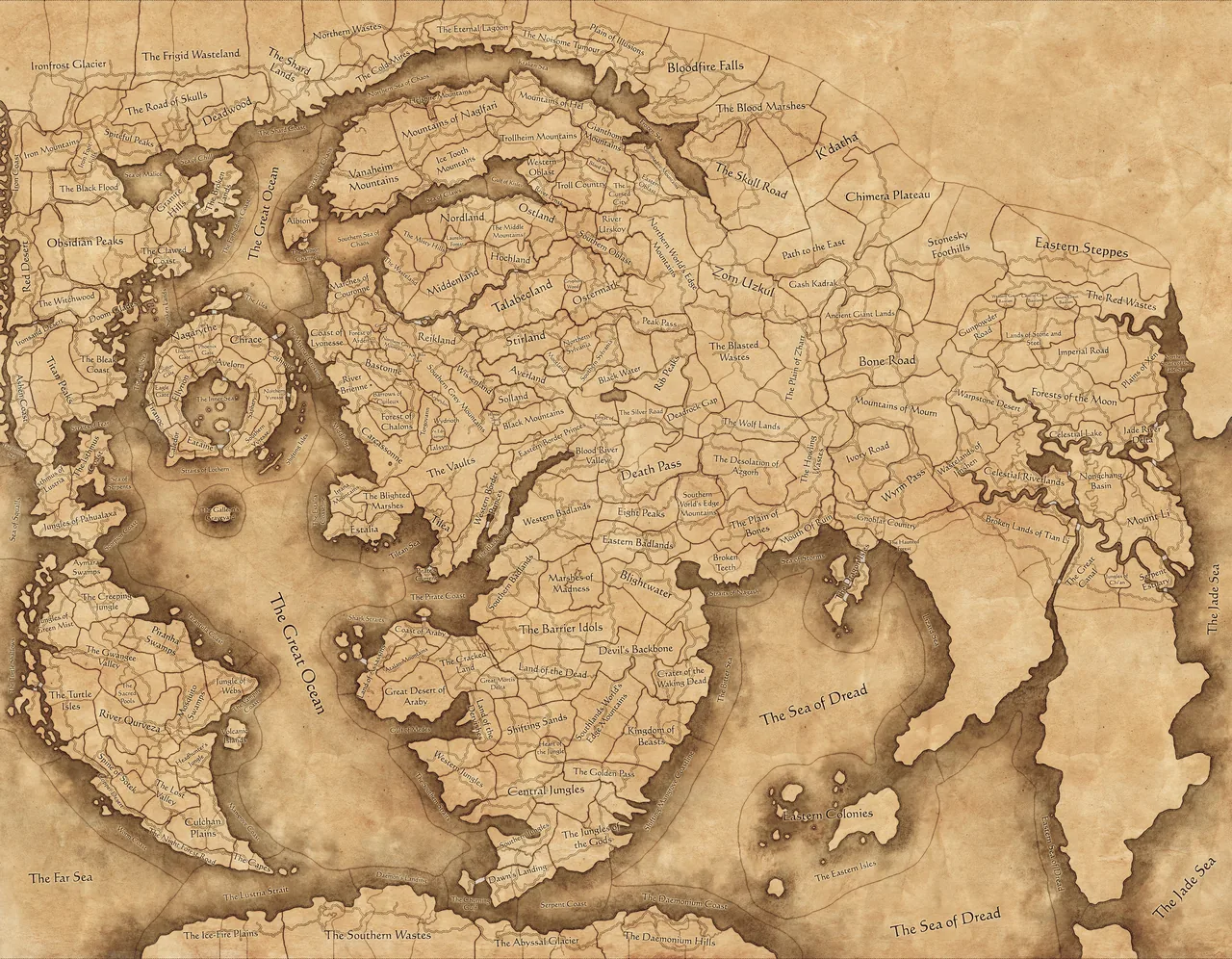
01 · Naggaroth
Dark Elves; overseas raids and the war for Ulthuan. Find the army
02 · Ulthuan
High Elves; the island and Great Vortex they defend. Find the army
03 · Lustria
Lizardmen temple-cities; Skaven and coastal rivals. Find the army
04 · Old World
Empire, Bretonnia and nearby Athel Loren. Find the army
05 · Kislev & the north
Kislev faces northern threats; Norsca lies to its west. Find the army
06 · Mountain holds
Dwarfs, Greenskins and Skaven contest holds and tunnels. Find the army
07 · Nehekhara
Tomb Kings rule the Land of the Dead. Find the army
08 · Dark Lands & Mourn
Chaos Dwarfs to the west; Ogre routes farther east. Find the army
09 · Grand Cathay
Dragon-ruled provinces beyond the eastern mountains. Find the army
| Look here | Civilisations and conflicts to recognise |
|---|---|
| West: Naggaroth, Ulthuan and Lustria | Dark Elves rule from the north-west; High Elves defend the ring-shaped island of Ulthuan; Lizardmen hold temple-cities in the southern jungles. Dark Elf raiding and the war for Ulthuan cross the ocean. |
| Centre: the Old World | The Empire’s provinces sit east of Bretonnia, with Athel Loren near their southern approaches. Kislev lies to the north-east; Norsca and the Chaos Wastes lie farther north. Sylvania is a vampire stronghold within the wider imperial region. |
| The mountain belt and Badlands | Dwarf holds, Greenskin warlords and Skaven tunnels compete around the World’s Edge Mountains. Eight Peaks lies towards their southern reaches. Underground territories overlap the surface map. |
| South: Nehekhara and the coasts | The Land of the Dead holds the Tomb Kings’ ancient kingdoms. Undead pirates operate from widely separated coastal bases, rather than forming one neat country beside them. |
| East: Dark Lands, Mountains of Mourn and Cathay | Chaos Dwarf industry, Ogre territories and the dragon-ruled human empire occupy different stages of the overland route. Cathay’s Great Bastion faces threats from the north. |
These are homelands and recurring centres of power, not start positions: Legendary Lords can begin far from them, and Beastmen, Skaven, Chaos cults and raiding fleets don't fit inside surface borders at all.
Find an army that interests you
Open an army to see its leaders, home, relationships and strengths. Allies describe common ties, not guaranteed campaign diplomacy; homelands are not a list of current starting positions.
25 armies. Open a panel for details.
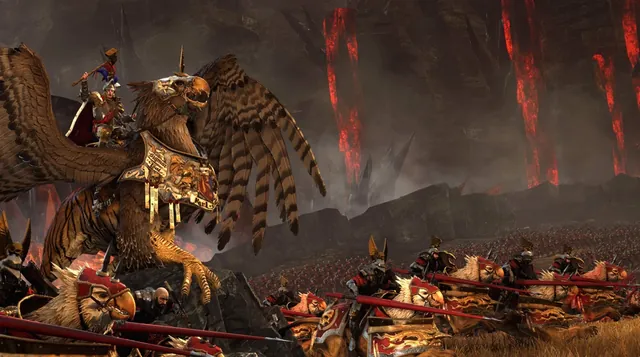
- Homeland / theatre
- Old World: imperial provinces
- Major leaders
- Karl Franz; Boris Todbringer
- Allies & relationships
- Dwarfs and neighbouring human powers, with competing interests
- Enemies & rivalries
- Sylvania’s vampires; Beastmen; Chaos
- Gameplay strengths
- Combined arms, artillery and battle magic
Empire: official faction artwork. Credit: © Games Workshop; game imagery Creative Assembly / SEGA. Hosted by Feral Interactive. Official image source.
Read the full Empire profile →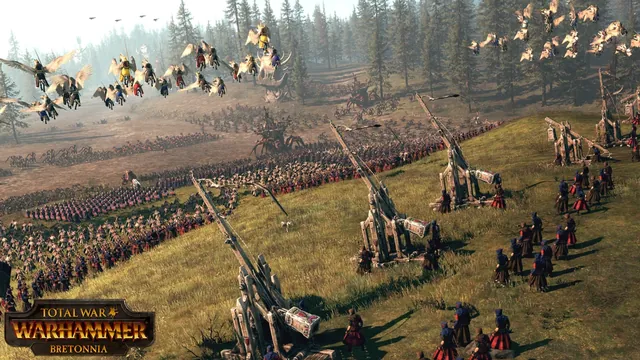
- Homeland / theatre
- Bretonnia, west of the Empire
- Major leaders
- Louen Leoncoeur; Repanse de Lyonesse
- Allies & relationships
- Other human realms; uneasy relations with nearby Wood Elves
- Enemies & rivalries
- Undead; Chaos; raiders
- Gameplay strengths
- Cavalry charges and mobile striking power
Bretonnia: official promotional screenshot. Credit: © Games Workshop; game imagery Creative Assembly / SEGA. Hosted by Steam / SEGA. Official image source.
Read the full Bretonnia profile →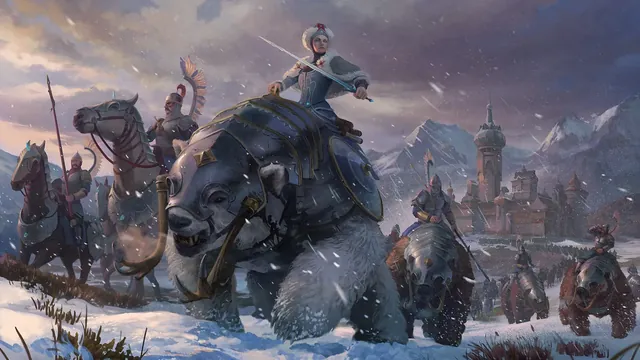
- Homeland / theatre
- Kislev, north-east of the Empire
- Major leaders
- Katarin; Kostaltyn; Boris Ursus
- Allies & relationships
- The Empire against northern threats; internal rival authorities
- Enemies & rivalries
- Chaos armies from the north
- Gameplay strengths
- Hybrid infantry, ice magic and bear cavalry
Kislev: official faction artwork. Credit: © Games Workshop; game imagery Creative Assembly / SEGA. Hosted by Feral Interactive. Official image source.
Read the full Kislev profile →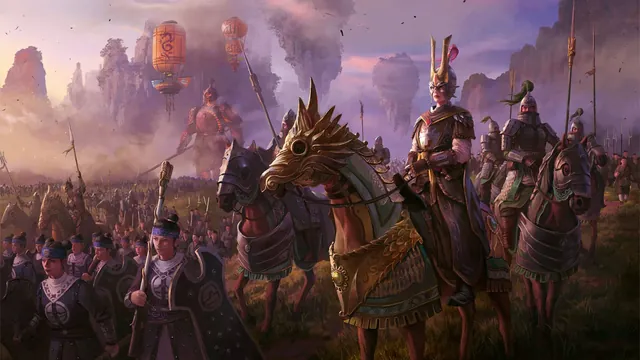
- Homeland / theatre
- Far east: Cathay
- Major leaders
- Miao Ying; Zhao Ming
- Allies & relationships
- Trade partners along western caravan routes
- Enemies & rivalries
- Northern Chaos invaders; threats to trade routes
- Gameplay strengths
- Infantry support, missiles, artillery and dragon lords
Grand Cathay: official faction artwork. Credit: © Games Workshop; game imagery Creative Assembly / SEGA. Hosted by Feral Interactive. Official image source.
Read the full Grand Cathay profile →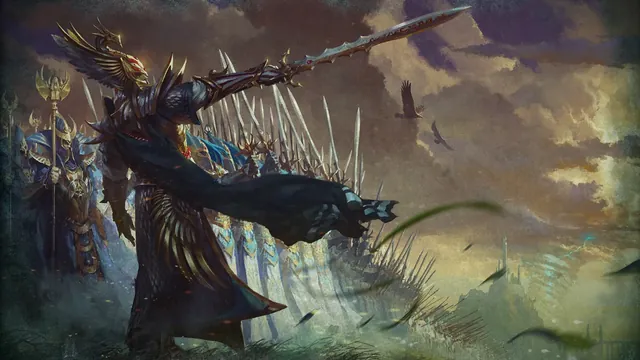
- Homeland / theatre
- Ulthuan and overseas enclaves
- Major leaders
- Tyrion; Teclis; Alarielle
- Allies & relationships
- Other defenders against Chaos; shared ancestry with rival elves
- Enemies & rivalries
- Dark Elves; daemons; invaders of Ulthuan
- Gameplay strengths
- Spears, archers, elite troops and dragons
High Elves: official faction artwork. Credit: © Games Workshop; game imagery Creative Assembly / SEGA. Hosted by Feral Interactive. Official image source.
Read the full High Elves profile →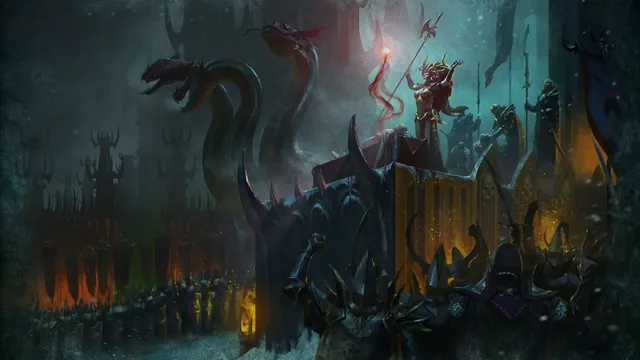
- Homeland / theatre
- Naggaroth in the north-west
- Major leaders
- Malekith; Morathi
- Allies & relationships
- Competing Dark Elf rulers; shared ancestry with High Elves
- Enemies & rivalries
- High Elves; rival raiders and warlords
- Gameplay strengths
- Armour-piercing missiles, assault troops and monsters
Dark Elves: official faction artwork. Credit: © Games Workshop; game imagery Creative Assembly / SEGA. Hosted by Feral Interactive. Official image source.
Read the full Dark Elves profile →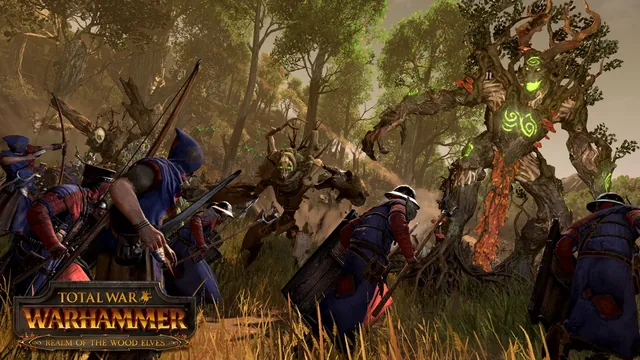
- Homeland / theatre
- Athel Loren and other magical forests
- Major leaders
- Orion; Durthu; Sisters of Twilight
- Allies & relationships
- Forest spirits; conditional help for human neighbours
- Enemies & rivalries
- Beastmen; forest destroyers and intruders
- Gameplay strengths
- Mobile archery, forest spirits and Worldroots travel
Wood Elves: official promotional screenshot. Credit: © Games Workshop; game imagery Creative Assembly / SEGA. Hosted by Steam / SEGA. Official image source.
Read the full Wood Elves profile →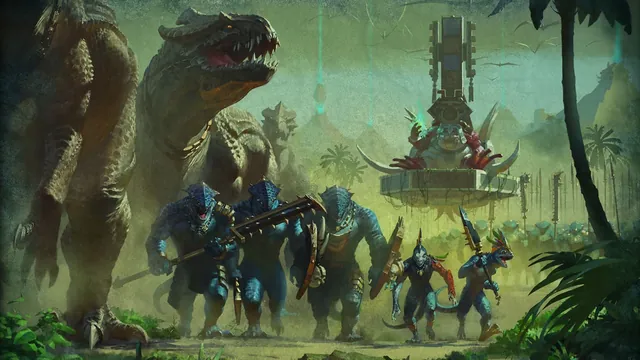
- Homeland / theatre
- Lustria and other temple-city regions
- Major leaders
- Mazdamundi; Kroq-Gar; Tehenhauin
- Allies & relationships
- Slann, Saurus, Skinks and Kroxigor within one civilisation
- Enemies & rivalries
- Chaos; Skaven, especially Clan Pestilens
- Gameplay strengths
- Saurus infantry, skirmishers and great beasts
Lizardmen: official faction artwork. Credit: © Games Workshop; game imagery Creative Assembly / SEGA. Hosted by Feral Interactive. Official image source.
Read the full Lizardmen profile →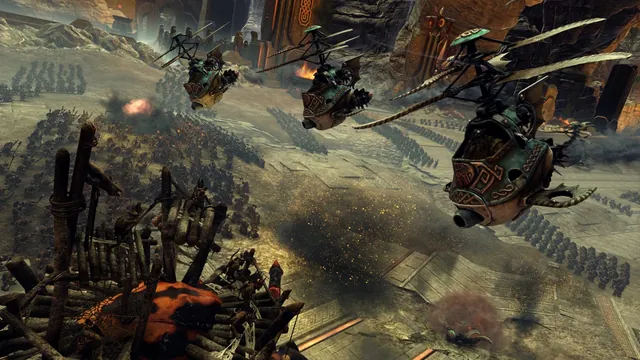
- Homeland / theatre
- Karaz Ankor: the mountain holds
- Major leaders
- Thorgrim; Belegar; Ungrim
- Allies & relationships
- The Empire; kinship between surviving holds
- Enemies & rivalries
- Greenskins; Skaven; Chaos
- Gameplay strengths
- Durable infantry, artillery and engineering
Dwarfs: official faction artwork. Credit: © Games Workshop; game imagery Creative Assembly / SEGA. Hosted by Feral Interactive. Official image source.
Read the full Dwarfs profile →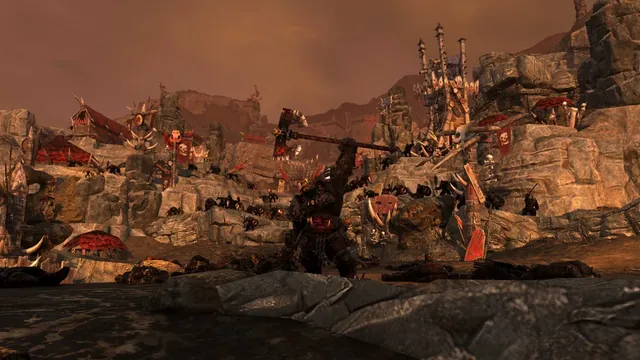
- Homeland / theatre
- Badlands, mountains and scattered tribal lands
- Major leaders
- Grimgor; Skarsnik; Grom
- Allies & relationships
- Tribes gather behind successful Waaagh! leaders
- Enemies & rivalries
- Dwarfs; Skaven; other tribes and neighbouring kingdoms
- Gameplay strengths
- Aggression, numbers, monsters and varied infantry
Greenskins: official faction artwork. Credit: © Games Workshop; game imagery Creative Assembly / SEGA. Hosted by Feral Interactive. Official image source.
Read the full Greenskins profile →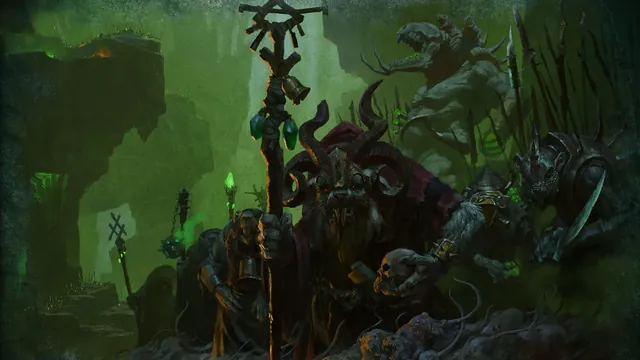
- Homeland / theatre
- The under-empire, beneath many surface realms
- Major leaders
- Queek; Ikit Claw; Skrolk; Thanquol
- Allies & relationships
- Temporary clan bargains; treachery is routine
- Enemies & rivalries
- Dwarfs; Lizardmen; rival clans and surface peoples
- Gameplay strengths
- Expendable troops with weapons, monsters or magic
Skaven: official faction artwork. Credit: © Games Workshop; game imagery Creative Assembly / SEGA. Hosted by Feral Interactive. Official image source.
Read the full Skaven profile →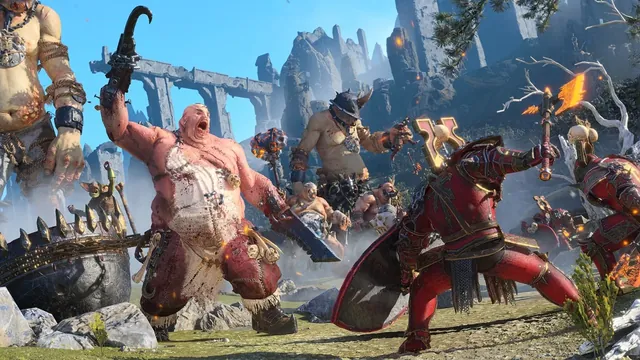
- Homeland / theatre
- Mountains of Mourn and mercenary routes
- Major leaders
- Greasus; Skrag; Golgfag
- Allies & relationships
- Paying employers and trading partners; loyalties vary
- Enemies & rivalries
- Whoever blocks a tribe’s hunger, territory or contracts
- Gameplay strengths
- Large shock troops, monsters and mobile hitting power
Ogre Kingdoms: official promotional screenshot. Credit: © Games Workshop; game imagery Creative Assembly / SEGA. Hosted by Steam / SEGA. Official image source.
Read the full Ogre Kingdoms profile →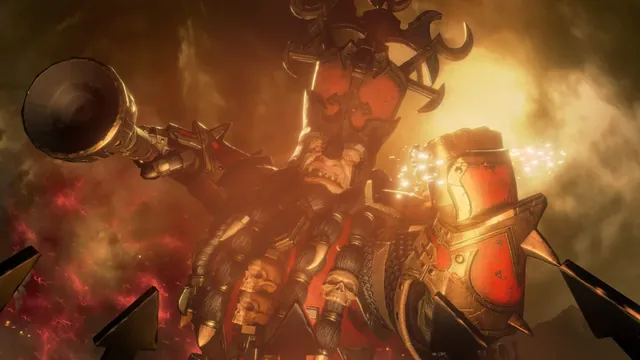
- Homeland / theatre
- Dark Lands
- Major leaders
- Astragoth; Drazhoath
- Allies & relationships
- Their own rival industrial powers; shared worship of Hashut
- Enemies & rivalries
- Independent neighbours and western Dwarf kin
- Gameplay strengths
- Artillery, armour and an interconnected industrial economy
Chaos Dwarfs: official promotional screenshot. Credit: © Games Workshop; game imagery Creative Assembly / SEGA. Hosted by Steam / SEGA. Official image source.
Read the full Chaos Dwarfs profile →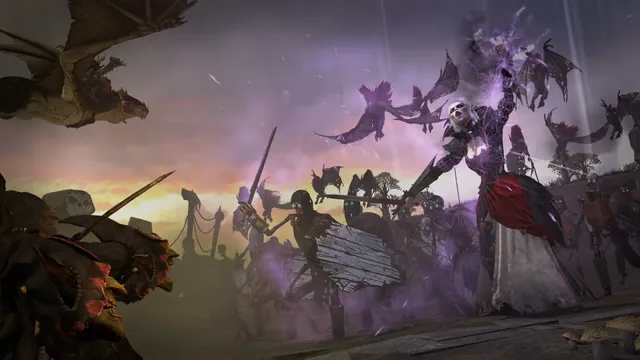
- Homeland / theatre
- Sylvania and other vampire domains
- Major leaders
- Vlad; Isabella; Mannfred; Neferata
- Allies & relationships
- Shared bloodlines; cooperation depends on the ruler
- Enemies & rivalries
- The Empire; rival undead, including hostile Tomb Kings
- Gameplay strengths
- Magic, renewable dead, cavalry and monsters
Vampire Counts: official faction artwork. Credit: © Games Workshop; game imagery Creative Assembly / SEGA. Hosted by Feral Interactive. Official image source.
Read the full Vampire Counts profile →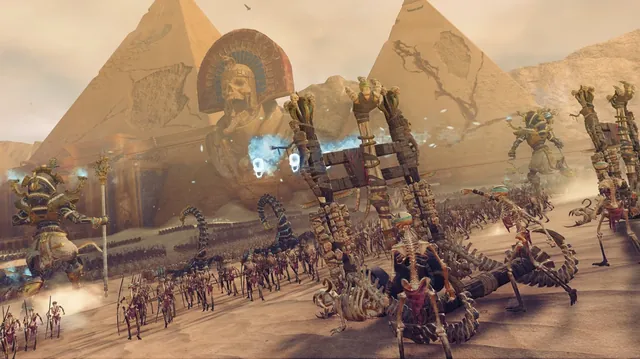
- Homeland / theatre
- Nehekhara: the Land of the Dead
- Major leaders
- Settra; Arkhan; Khalida
- Allies & relationships
- Separate dynasties; Arkhan serves Nagash, Settra opposes him
- Enemies & rivalries
- Tomb robbers; rival kings; vampires for Khalida
- Gameplay strengths
- Chariots and constructs; army and unit caps shape recruitment
Tomb Kings: official promotional screenshot. Credit: © Games Workshop; game imagery Creative Assembly / SEGA. Hosted by Steam / SEGA. Official image source.
Read the full Tomb Kings profile →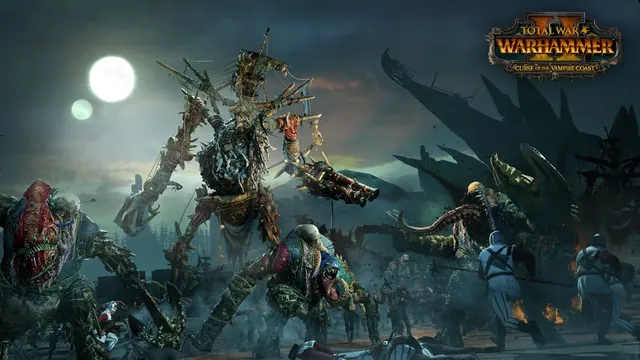
- Homeland / theatre
- Lustria’s coast and scattered pirate bases
- Major leaders
- Luthor Harkon; Noctilus; Cylostra; Aranessa
- Allies & relationships
- Crews and opportunistic pirate interests
- Enemies & rivalries
- Coastal rivals; Lizardmen in Harkon’s domain
- Gameplay strengths
- Gun lines, artillery, monsters and ship development
Vampire Coast: official promotional screenshot. Credit: © Games Workshop; game imagery Creative Assembly / SEGA. Hosted by Steam / SEGA. Official image source.
Read the full Vampire Coast profile →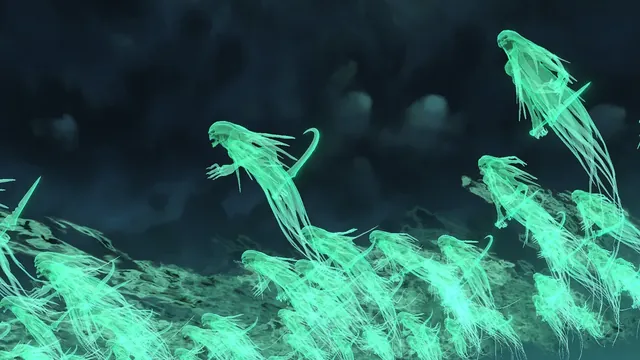
- Homeland / theatre
- Nehekhara and the Black Pyramid campaign
- Major leaders
- Nagash; sought-after Mortarch lieutenants
- Allies & relationships
- Arkhan and servants gathered to Nagash’s cause
- Enemies & rivalries
- Independent undead rulers and the living
- Gameplay strengths
- Combines troops from three undead rosters
Spectral undead units from the Nagash pack. Credit: © Games Workshop; game imagery Creative Assembly / SEGA. Hosted by Steam / SEGA. Official image source.
Read the full Host of Nagash profile →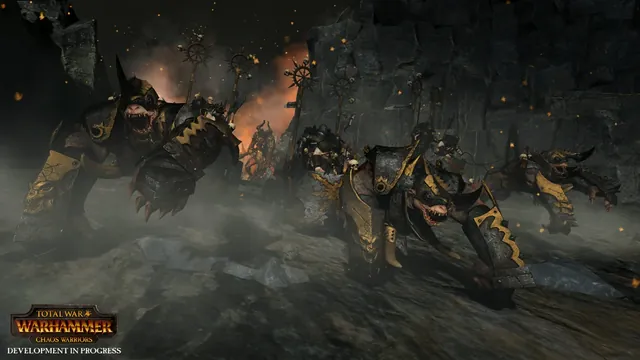
- Homeland / theatre
- Northern wastes, Dark Fortresses and invasion routes
- Major leaders
- Archaon; Be’lakor; the Glottkin
- Allies & relationships
- Subordinate factions and rival Chaos powers
- Enemies & rivalries
- Mortal kingdoms; competing Chaos champions
- Gameplay strengths
- Armoured troops, Warband progression and vassals
Warriors of Chaos: official promotional screenshot. Credit: © Games Workshop; game imagery Creative Assembly / SEGA. Hosted by Steam / SEGA. Official image source.
Read the full Warriors of Chaos profile →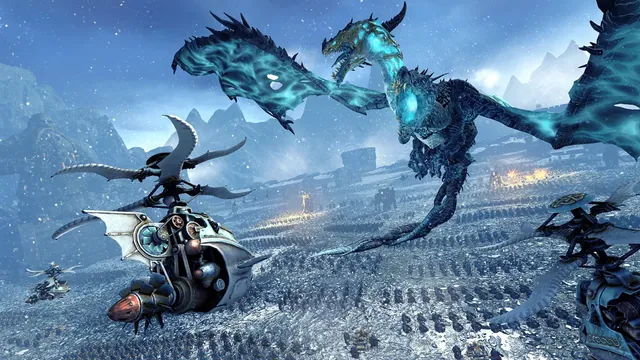
- Homeland / theatre
- Norsca and wider northern tribal lands
- Major leaders
- Wulfrik; Throgg; Sayl
- Allies & relationships
- Tribal hosts and Chaos patrons; loyalties vary
- Enemies & rivalries
- Southern kingdoms; rival northern powers
- Gameplay strengths
- Aggressive infantry, trolls and mammoths
Norsca: official promotional screenshot. Credit: © Games Workshop; game imagery Creative Assembly / SEGA. Hosted by Steam / SEGA. Official image source.
Read the full Norsca profile →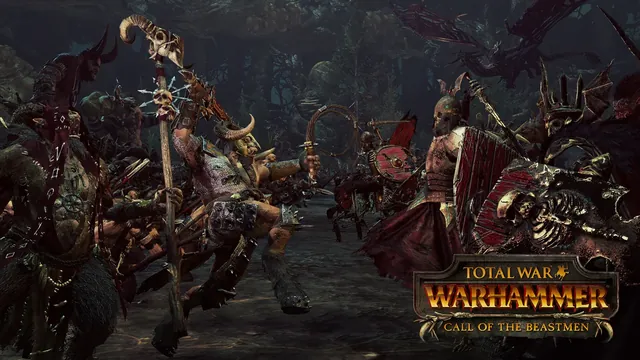
- Homeland / theatre
- Forests and wilderness; mobile herds
- Major leaders
- Khazrak; Morghur; Taurox
- Allies & relationships
- Other herds and forces of Chaos, when interests align
- Enemies & rivalries
- The Empire; Bretonnia; Wood Elves
- Gameplay strengths
- Ambushes, speed, monsters and destructive Bloodgrounds
Beastmen: official promotional screenshot. Credit: © Games Workshop; game imagery Creative Assembly / SEGA. Hosted by Steam / SEGA. Official image source.
Read the full Beastmen profile →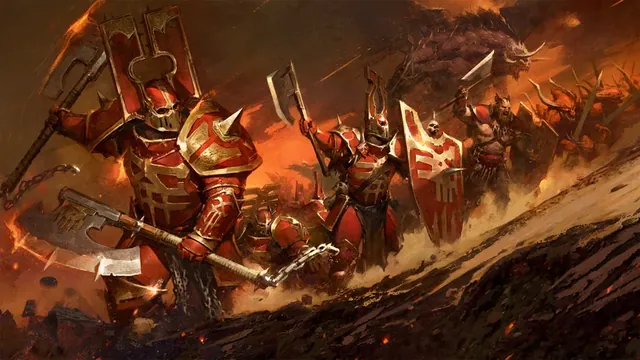
- Homeland / theatre
- Chaos realms and invading hosts
- Major leaders
- Skarbrand; Skulltaker
- Allies & relationships
- Khorne’s mortal and daemonic servants
- Enemies & rivalries
- Living enemies and rival Chaos powers
- Gameplay strengths
- Powerful melee and offensive momentum
Khorne: official faction artwork. Credit: © Games Workshop; game imagery Creative Assembly / SEGA. Hosted by Feral Interactive. Official image source.
Read the full Khorne profile →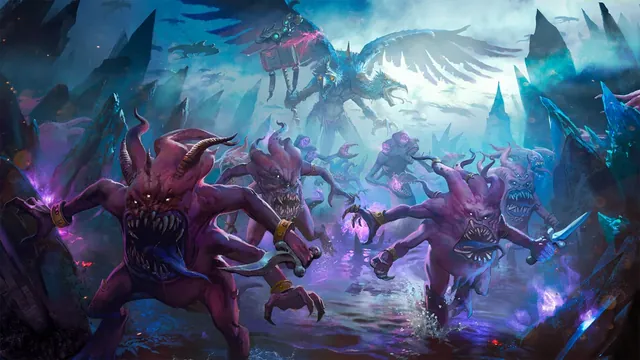
- Homeland / theatre
- Chaos realms; cults and enclaves
- Major leaders
- Kairos Fateweaver; the Changeling
- Allies & relationships
- Scheming cults and servants of Tzeentch
- Enemies & rivalries
- Opponents of their plans; rival Chaos powers
- Gameplay strengths
- Spells, ranged damage and regenerating barriers
Tzeentch: official faction artwork. Credit: © Games Workshop; game imagery Creative Assembly / SEGA. Hosted by Feral Interactive. Official image source.
Read the full Tzeentch profile →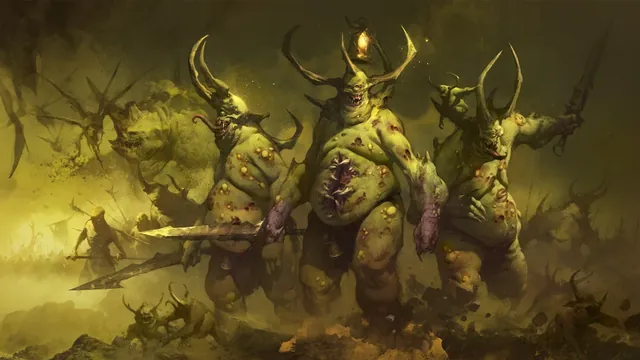
- Homeland / theatre
- Chaos realms and plague-ridden domains
- Major leaders
- Ku’gath; Tamurkhan
- Allies & relationships
- Nurgle’s daemons and mortal devotees
- Enemies & rivalries
- Healthy civilisations and rival Chaos powers
- Gameplay strengths
- Resilience, plagues and sustained close combat
Nurgle: official faction artwork. Credit: © Games Workshop; game imagery Creative Assembly / SEGA. Hosted by Feral Interactive. Official image source.
Read the full Nurgle profile →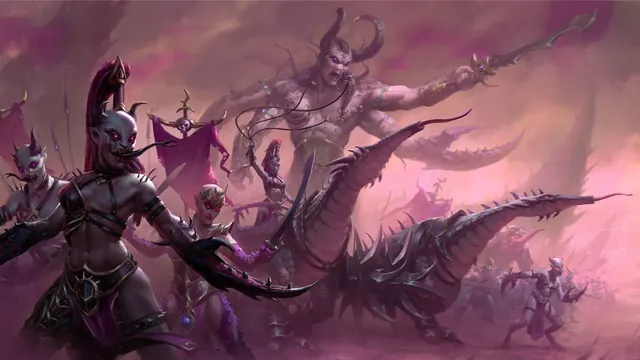
- Homeland / theatre
- Chaos realms; cults and conquered lands
- Major leaders
- N’Kari; Dechala
- Allies & relationships
- Devotees and subverted followers
- Enemies & rivalries
- Elven rivals; other Chaos powers and resisting realms
- Gameplay strengths
- Speed, flanking and punishing exposed enemies
Slaanesh: official faction artwork. Credit: © Games Workshop; game imagery Creative Assembly / SEGA. Hosted by Feral Interactive. Official image source.
Read the full Slaanesh profile →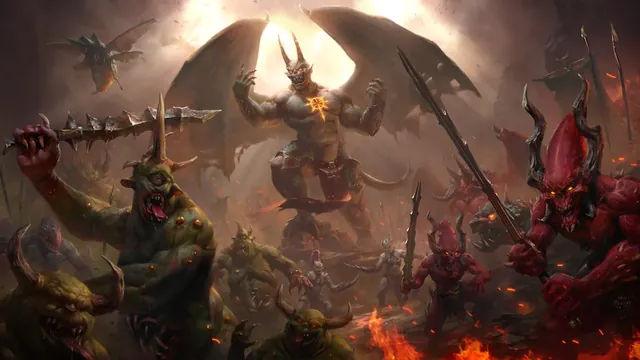
- Homeland / theatre
- A mobile daemonic campaign, rather than one homeland
- Major leaders
- The customisable Daemon Prince
- Allies & relationships
- Patron gods and their hosts; devotion shapes the army
- Enemies & rivalries
- Mortal realms and competing powers
- Gameplay strengths
- Mixed daemonic forces and body customisation
Daemons of Chaos: official faction artwork. Credit: © Games Workshop; game imagery Creative Assembly / SEGA. Hosted by Feral Interactive. Official image source.
Read the full Daemons of Chaos profile →How these groups connect
The human states are neighbours and trading partners with different religions and governments. The elves share a deeper ancestry, divided by civil war and later migration. The Lizardmen pursue their creators’ Great Plan, so opposition to Chaos does not make them automatic allies of everyone else in this group.
Dwarfs, Greenskins and Skaven fight over mountains and tunnels, while Ogres and Chaos Dwarfs dominate different eastern routes. Among the undead, common origins do not mean common loyalties: Settra seeks restored sovereignty, vampires pursue their own rule, and Nagash wants the dead under his command.
These are game roster categories, not eight gods or eight branches under one commander. A mortal champion, a northern tribe and a daemonic army can serve the same god while belonging to different categories. Archaon’s attempt to unite them is an achievement precisely because their rivalries run so deep.
How the games play
On the campaign map, you take turns moving armies, building settlements, recruiting troops and negotiating with other factions. A province that looks profitable may be expensive to defend; a neighbour who dislikes your enemies may be more useful as an ally than as your next conquest.
When armies meet, you can resolve the result automatically or command the battle in real time. Infantry holds ground, cavalry attacks exposed flanks, artillery breaks formations and flying monsters threaten units that would otherwise be safe behind the front line. Magic can change a battle, but it does not remove the need to protect a vulnerable spellcaster or keep your missile troops firing.
The two layers feed each other: an army built entirely around expensive monsters may win its battles and still leave you unable to afford a second force. Losing a recruitment province can hurt more than losing an unimportant border town. A successful battle is useful because of what it lets you do next on the map. Feral’s game manual covers the basic structure.
Civilization is a useful comparison for the turn-based decisions, but Total War gives you direct control of large battles. Dawn of War is a different kind of strategy game: its real-time missions do not use this same empire-management structure.
Total War: WARHAMMER
Official Empire campaign walkthrough from the first game’s prerelease build. It introduces the campaign map; its interface and faction systems differ from their current Immortal Empires versions.
The Old World campaign
The first game concentrates on the Empire and the neighbouring lands where many of Fantasy’s best-known rivalries meet. Human provinces struggle with internal divisions, the Vampire Counts expand from Sylvania, and Dwarfs fight to recover mountain holds occupied by Greenskins. The threat gathering in the north eventually makes those regional wars part of a larger crisis.
Its four launch races were the Empire, Dwarfs, Greenskins and Vampire Counts. Bretonnia arrived as a free addition. Warriors of Chaos, Beastmen, Wood Elves and Norsca were separate paid additions, so the original game alone does not unlock that entire list. The official game page separates its included content from the DLC.
Two expansions preserve smaller campaigns that are easy to overlook, starting with Call of the Beastmen and its An Eye for an Eye campaign about Khazrak’s war against Boris Todbringer. Realm of the Wood Elves includes Season of Revelation, focused on Athel Loren. You need the first game and the relevant expansion to play those original mini-campaigns; selecting their races in Immortal Empires doesn’t reproduce them. Beastmen campaign · Wood Elf campaign
The first game is worth visiting for that original campaign structure, but if you mainly want to command Karl Franz or Thorgrim, play their modern Immortal Empires versions instead, because the older game doesn't get the later faction redesigns.
Total War: WARHAMMER II
Creative Assembly’s High Elf campaign demonstration. This shows the second game’s campaign systems, rather than the later Immortal Empires implementation.
Eye of the Vortex and the New World
The second game moves the focus across the ocean to Ulthuan, Naggaroth, Lustria and the Southlands. Its included races are High Elves, Dark Elves, Lizardmen and Skaven, with Tomb Kings and Vampire Coast sold as separate race packs.
The Great Vortex is a magical defence that High Elf mages created during an ancient Chaos invasion, and it works by draining magic out of the world so daemonic invaders have less power to draw on. When it becomes unstable, Tyrion and Mazdamundi want to preserve it, while Malekith and the Skaven see opportunities to pursue their own ambitions. That gives the campaign a shared crisis without making the four sides allies. Official campaign description
As the original Vortex factions gather resources and perform rituals, rival interference puts pressure on you to defend important settlements and prepare for interruptions instead of simply expanding until the map is yours. If you prefer unrestricted conquest, those ritual demands can become the part you would rather skip.
Several DLC campaigns offer something different: the Tomb Kings hunt the Books of Nagash and the Black Pyramid, while the Vampire Coast chases a weapon and ritual tied to the great sea creature Amanar. They use the Vortex map without joining the four original races’ ritual contest. That distinction makes the second game a much better collection of story campaigns than “the one with the Vortex race” suggests. Rise of the Tomb Kings · Curse of the Vampire Coast
Mortal Empires
Mortal Empires joins the first two games’ regions into one sandbox campaign inside the second game, and requires you to own both games on the same storefront. It remains a separate mode from Immortal Empires: it doesn’t include the third game’s full world, races or later updates. Official Mortal Empires page
Total War: WARHAMMER III
Official Miao Ying campaign demonstration from the third game’s launch period. It shows Grand Cathay’s map and battles; some mechanics have since been revised.
The Lost God and The Realm of Chaos
The Lost God follows a Kislevite expedition searching for Ursun, teaching movement, recruitment and battles while it sets up the crisis behind The Realm of Chaos. Play it before reading a detailed account of the Daemon Prince’s origins: his connection to this story is one of its main discoveries.
The main campaign centres on the captive bear god and Be’lakor, a Daemon Prince with ambitions of his own. The competing factions want different things from Ursun: rescue, answers, revenge or a god’s power. Their routes converge on expeditions into the Chaos realms and battles for the daemon souls needed to reach him. SEGA’s launch FAQ and Feral’s story introduction establish the premise.
The base game introduced Kislev, Grand Cathay, Khorne, Tzeentch, Nurgle, Slaanesh and Daemons of Chaos. Ogre Kingdoms were a separate pack, including when offered as an early-purchase bonus. Chaos Dwarfs arrived later through Forge of the Chaos Dwarfs.
The Ursun campaign suits players who want a central objective and visits to places beyond the ordinary world map. Its recurring supernatural crises also demand attention while you are trying to manage an empire. For a first long campaign, Immortal Empires gives you more freedom to concentrate on your chosen lord’s neighbours and objectives.
Later DLC doesn't always follow Ursun's story: the Chaos Dwarfs pursue the Great Drill of Hashut on the Realm of Chaos map; the Champions of Chaos have their own struggle centred on Zanbaijin. More recent packs, including Tides of Torment, focus on Immortal Empires. Check the campaign supported by a pack, not just the game named on its store page. Forge of the Chaos Dwarfs · Champions of Chaos · Feral’s DLC guide
Immortal Empires
Immortal Empires combines the trilogy’s lands and armies into the largest shared campaign. Choosing a lord gives you a starting position, local enemies and objectives, but you decide how far the war spreads. You might defend the Empire, establish a coastal raiding network or cross the world to settle a particular grudge.
Creative Assembly’s 2022 Immortal Empires map flyover. This is an introduction to the world’s geography; the roster and map have expanded since this footage was released.
On the combined map, an isolated regional rivalry can draw in distant empires, while a lord’s new neighbours may make a familiar army feel very different. A guide to a WARHAMMER II starting position should therefore not be treated as a route map for that lord in WARHAMMER III.
You'll still fight factions you don't own; buying their content makes their lords and units playable, but it doesn't add opponents who weren't there before. Creative Assembly’s current FAQ
Campaign order and chronology
The games came out as I, II, then III, but their campaigns aren't three chapters you have to finish in sequence. They use the same setting, and the recurring Advisor provides connections, but a victory in one game doesn’t carry your empire into the next.
| What you want to follow | Recommended route | How the stories connect |
|---|---|---|
| Learn the game and choose your own wars | The Lost God → Immortal Empires | The tutorial teaches the systems; the sandbox then lets you choose an army and direction. |
| Follow the third game’s central story | The Lost God → The Realm of Chaos | This is the clearest direct narrative sequence. The prologue establishes the main campaign’s crisis. |
| Experience the trilogy’s original releases | The Old World → Eye of the Vortex → The Realm of Chaos | This follows the games’ development, map expansion and changing campaign designs, rather than a strict fictional calendar. |
| Play distinct faction stories | Pick an original campaign and its relevant DLC | The Beastmen, Wood Elf, Tomb King and Vampire Coast campaigns have their own premises and objectives. |
The safest way to understand Immortal Empires is as a playable arrangement of Warhammer’s characters and conflicts. It brings together figures from different parts of the setting’s history and lets you change their outcomes. A campaign start is not a claim that every featured character was alive, in that location, in one precisely dated year.
That remains true after Lords of the End Times, released on 24 September 2026. Nagash, Thanquol, Boris Todbringer and the Glottkin are now playable through its four packs. Their arrival draws further on the End Times material, but the title does not turn every Immortal Empires campaign into a mandatory reenactment of the tabletop ending. SEGA’s release announcement
The history behind the wars
- Polar gates collapse
Chaos floods the world; Lizardmen lose their creators. Great Vortex established: Elven magic limits daemonic power; its disruption drives WARHAMMER II.
- The Sundering
High Elves remain on Ulthuan; Dark Elves build power in Naggaroth. War of the Beard: Dark Elf interference helps wreck the Elf–Dwarf alliance; later elven withdrawal leaves the roots of Wood Elf society.
- Nagash develops necromancy
Lahmia’s rulers pursue immortality; vampirism spreads. Nehekhara is destroyed: Tomb Kings awaken with their own sovereignty; vampires spread beyond the ruined kingdom.
Most campaigns make more sense once you understand a few old disasters. These are background events, not missions you must play through first.
The Great Catastrophe leaves the Lizardmen trying to preserve the Old Ones’ damaged world. The Sundering and War of the Beard explain why the High Elves, Dark Elves, Wood Elves and Dwarfs cannot be treated as four unrelated starting armies. Nehekhara’s history explains the equally divided undead.
When Sigmar’s Empire emerges amid these older civilisations and their losses, his alliance with the Dwarfs helps establish a lasting human–Dwarf connection, while the imperial state creates another power that vampires, Greenskins and Chaos can threaten. Sigmar’s history
Gods, lords and magic
Legendary Lord is a game category that covers mortal rulers such as Karl Franz, powerful spellcasters such as Teclis, dragons such as Miao Ying and daemons such as Skarbrand. It tells you that a named character leads a playable campaign; it doesn’t tell you that all those characters are equally powerful in the lore.
| Name or category | What it means | What that changes in the game |
|---|---|---|
| Sigmar, Ulric and Ursun | Different gods worshipped by human peoples. Sigmar founded the Empire; Ulric has an older martial cult; Ursun is central to Kislev. | Their worship shapes political factions and campaign objectives. Karl Franz is not Sigmar, and Katarin is not Ursun. |
| Khorne, Tzeentch, Nurgle and Slaanesh | Rival Chaos gods associated with bloodshed, change, decay and excess. | Their armies favour different methods: melee momentum, sorcery, attrition and speed or subversion. |
| A Greater Daemon and a Daemon Prince | A Greater Daemon embodies its god’s power; a Daemon Prince began as a mortal before receiving daemonhood. | Skarbrand and Be’lakor have different origins. Neither is the god whose power they wield. |
| Mortal champions and rulers | Leaders can gain blessings, magical equipment or extraordinary abilities without becoming gods. | Archaon unites competing Chaos forces; Karl Franz governs provincial interests. Their campaign authority has a history. |
| Other divine patrons | Gork and Mork, the Horned Rat, the Great Maw, Hashut and Sotek belong to different peoples’ religious worlds. | Greenskins, Skaven, Ogres, Chaos Dwarfs and Sotek’s Lizardmen followers have distinct beliefs. None is merely a renamed version of the four main Chaos-god rosters. |
Fantasy magic flows into the world from the Realm of Chaos and is understood through the eight Winds of Magic. That origin doesn’t make every wizard a Chaos worshipper. The Empire’s Colleges teach different disciplines; elves and Slann have their own traditions. Runes, divine powers and specialised lores also prevent every supernatural ability from fitting into one identical spell list. The eight Winds of Magic · Official race descriptions
In a battle, the useful questions are practical: which spells does this caster know, how much Winds of Magic power is available, and what can the spell target? A healing spell, a moving vortex and a direct damage spell need different opportunities. Keep the caster protected and read targeting indicators before releasing an area attack near friendly troops. Ordinary Dwarf armies use runes and engineering instead of conventional wizards; Chaos Dwarfs have a separate sorcerous tradition. Game manual · Chaos Dwarfs
The human kingdoms
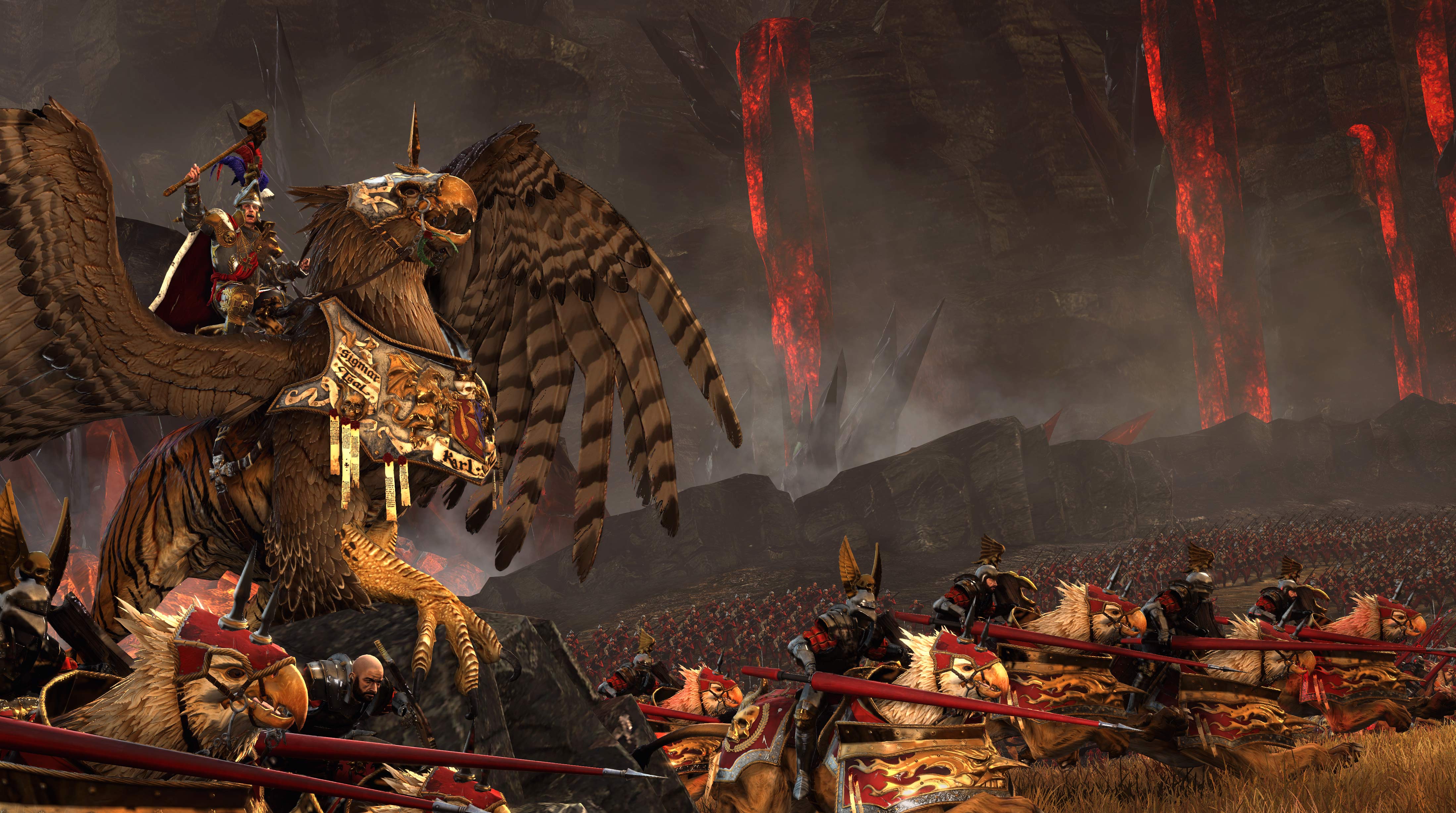
The Empire, Bretonnia, Kislev and Grand Cathay all oppose Chaos, but they are separate states with different traditions. Their shared enemy does not erase disputes over borders, religion or political authority.
The Empire
Karl Franz rules the Empire that Sigmar founded, but as its elected ruler in Total War’s familiar setting, he governs a collection of provinces and powerful interests. Defending it involves more than moving one national army towards the nearest enemy.
Its forces combine comparatively ordinary soldiers with handguns, artillery, cavalry and battle wizards. This makes it a good army for learning how different units support one another, although Karl Franz’s exposed borders can make the campaign less forgiving than the roster suggests. Sylvania’s vampires threaten from within the wider imperial region, while Beastmen turn its forests into another front.
Boris Todbringer, the Count of Middenland, provides a particularly clear connection between character and campaign. His rivalry with Khazrak is personal, while his devotion to Ulric shows that imperial religion is broader than the cult of Sigmar. His 2026 pack builds a campaign around restoring the Great Temple of Ulric and strengthening its sanctuaries. Empire background · Boris Todbringer
Bretonnia
Bretonnia’s royal tradition begins with Gilles le Breton, the Lady of the Lake and the quest for the Grail. Its noble cavalry embodies that ideal, while peasants provide much of the labour and less prestigious military service that keep the kingdom functioning.
Through Louen Leoncoeur you see the kingdom’s chivalric leadership, while Repanse de Lyonesse takes its crusading tradition into the deserts. Closer to home, the Wood Elves complicate its borders: Athel Loren lies beside Bretonnian lands, but its inhabitants answer to their own powers.
On the battlefield, Bretonnia rewards well-timed cavalry charges and attention to where each unit can escape after impact. Its peasant infantry is not a substitute for heavily armoured elite troops. The race is free, but its reliance on managing cavalry means that “free” and “easiest to learn” are different recommendations. Bretonnian history · Official race description
Kislev
Kislev stands between the northern Chaos threat and much of the Old World. Its frontier position helps explain both its military culture and the importance of Ursun, the bear god whose disappearance drives the third game’s story.
Tzarina Katarin and Kostaltyn represent competing centres of authority: the Ice Court and the Great Orthodoxy. They can oppose the same invaders while competing over who should guide Kislev. Boris Ursus, Katarin’s father, is a different character from the Empire’s Boris Todbringer.
Kislev’s hybrid soldiers can shoot and then fight in melee, giving you room to recover when an enemy reaches the line. Ice magic, war sleds and bear cavalry add more specialised tools. That battlefield resilience does not remove the pressure of a frontier campaign with dangerous neighbours. Kislev and the third game’s races
Grand Cathay
Cathay is a human empire ruled by dragons who can assume human form. The Celestial Dragon Emperor and Moon Empress belong to a history older than the Empire; their children administer different regions. Miao Ying guards the north and its Great Bastion, while Zhao Ming rules in the west.
Its identity depends on cooperation between parts of an army: disciplined infantry, missile troops, artillery, flying support and powerful lords. The caravan system also gives its geography practical meaning. Trade crosses the dangerous western routes towards other civilisations, passing through lands where Ogres and Chaos Dwarfs have their own interests.
Zhao Ming is our first-campaign recommendation for players drawn to gunpowder and dragons. Miao Ying puts the northern defensive role more directly in the foreground. Neither requires you to study Cathay’s entire imperial family before starting. Games Workshop’s Cathay history
Why the three elven races are different
Read the visual and view sources
Solid lines: family or historical development, labelled in context. Dashed rust: continuing conflict.
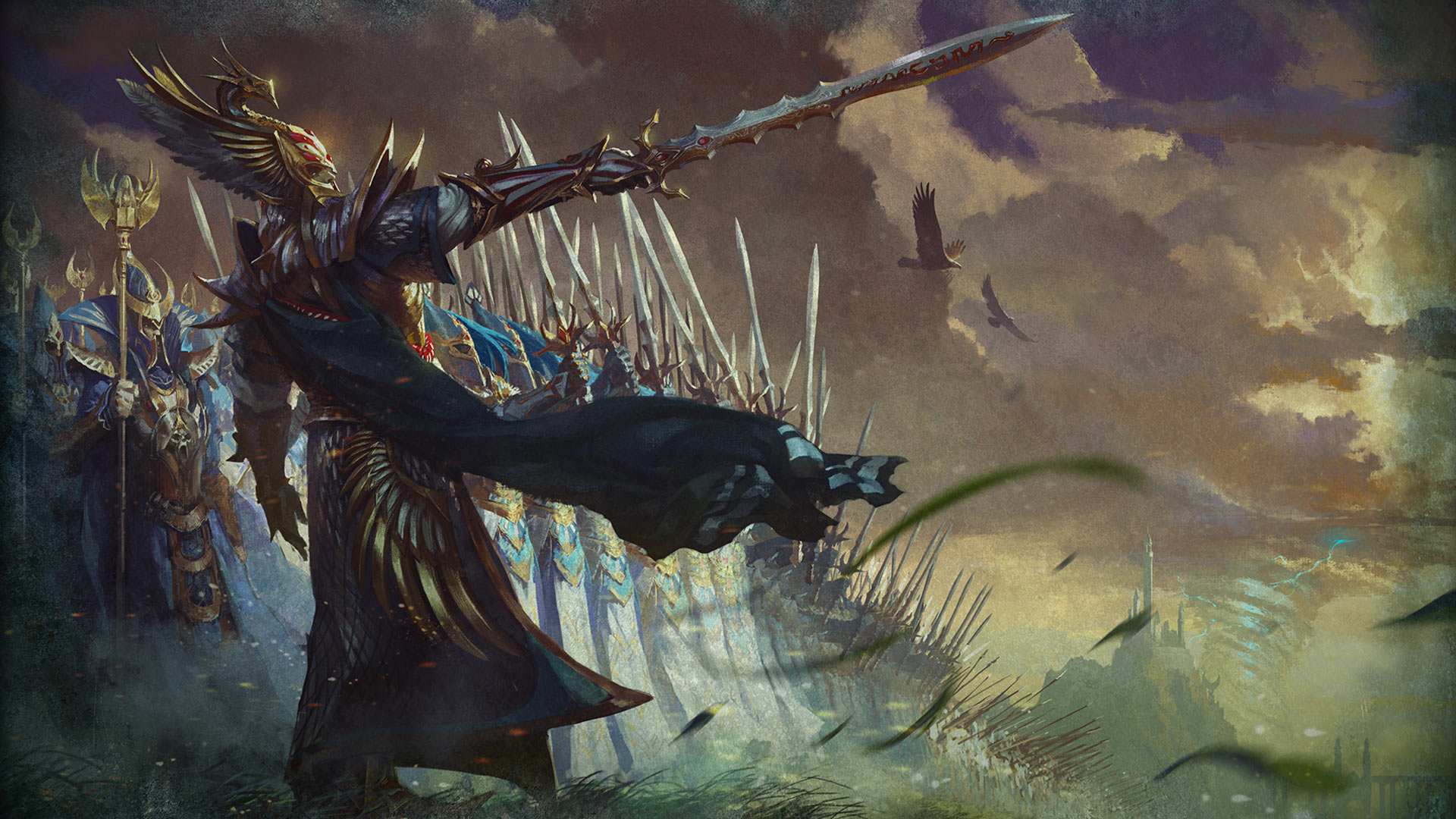
The High Elves, or Asur, remain centred on Ulthuan, while the Dark Elves, or Druchii, descend from the losing side of its great civil war. The Wood Elves, or Asrai, developed from elven communities that remained in the Old World and made their lives with its forest spirits. The Wood Elves were not simply a third army created during the same moment of the Sundering.
High Elves
Ulthuan contains the Great Vortex, which gives its defence consequences far beyond the island itself. Tyrion is its great warrior-defender; his brother Teclis is a leading mage whose concerns extend beyond elven borders. Alarielle, the Everqueen, has a different sacred role from the Phoenix King.
High Elves offer a readable progression from spearmen and archers towards elite infantry, cavalry, phoenixes and dragons. Tyrion is a useful starting point because that army teaches a broad range of battlefield roles without requiring an unusual campaign economy from the outset.
Aislinn, added in Tides of Torment, changes that experience substantially by building his campaign around Dragonships, outposts and supporting other High Elf factions. His maritime structure isn’t Tyrion’s territorial campaign with a different portrait. High Elf roster · Alarielle · Aislinn
Dark Elves
Malekith is the son of Aenarion, an earlier Phoenix King, and believes that Ulthuan’s throne belongs to him. His mother, Morathi, is a powerful participant in that long struggle. Their wars against the High Elves are shaped by the destruction and exile of the Sundering, rather than a simple disagreement between two unrelated kingdoms.
From Naggaroth, the Dark Elves raid overseas, take captives and sustain a ruthless aristocratic society. Black Arks are floating strongholds that support those expeditions. On land, crossbow fire, aggressive infantry and monsters such as hydras make them dangerous at several ranges.
Their offensive tools are appealing, but maintaining an expanding empire and supporting exposed armies still matters. Nor does every Dark Elf share Morathi’s relationship with Chaos; worship of Khaine, the elven god of murder, has its own central place in their society. The Sundering · Dark Elf military identity
Wood Elves
Athel Loren is a living, dangerous realm whose spirits have their own wishes. The Wood Elves share it with beings such as Durthu, an ancient Treeman. Orion embodies the violence of the Wild Hunt, while the Sisters of Twilight serve Queen Ariel. They belong to the same wider alliance without representing interchangeable leaders.
Beastmen are among their most consistent enemies because their corruption threatens the forests themselves, while human neighbours can be allies or intruders depending on what they’re doing at the forest’s edge.
Their modern campaigns concentrate on magical forests and the lands around them, with Worldroots travel connecting distant theatres. In battle, excellent archers and mobile units reward positioning, while forest spirits provide tougher bodies. This is a strong choice when you want to protect and restore particular places rather than occupy every province. Wood Elf background · Ariel and the Sisters
Dwarfs, Greenskins and Skaven
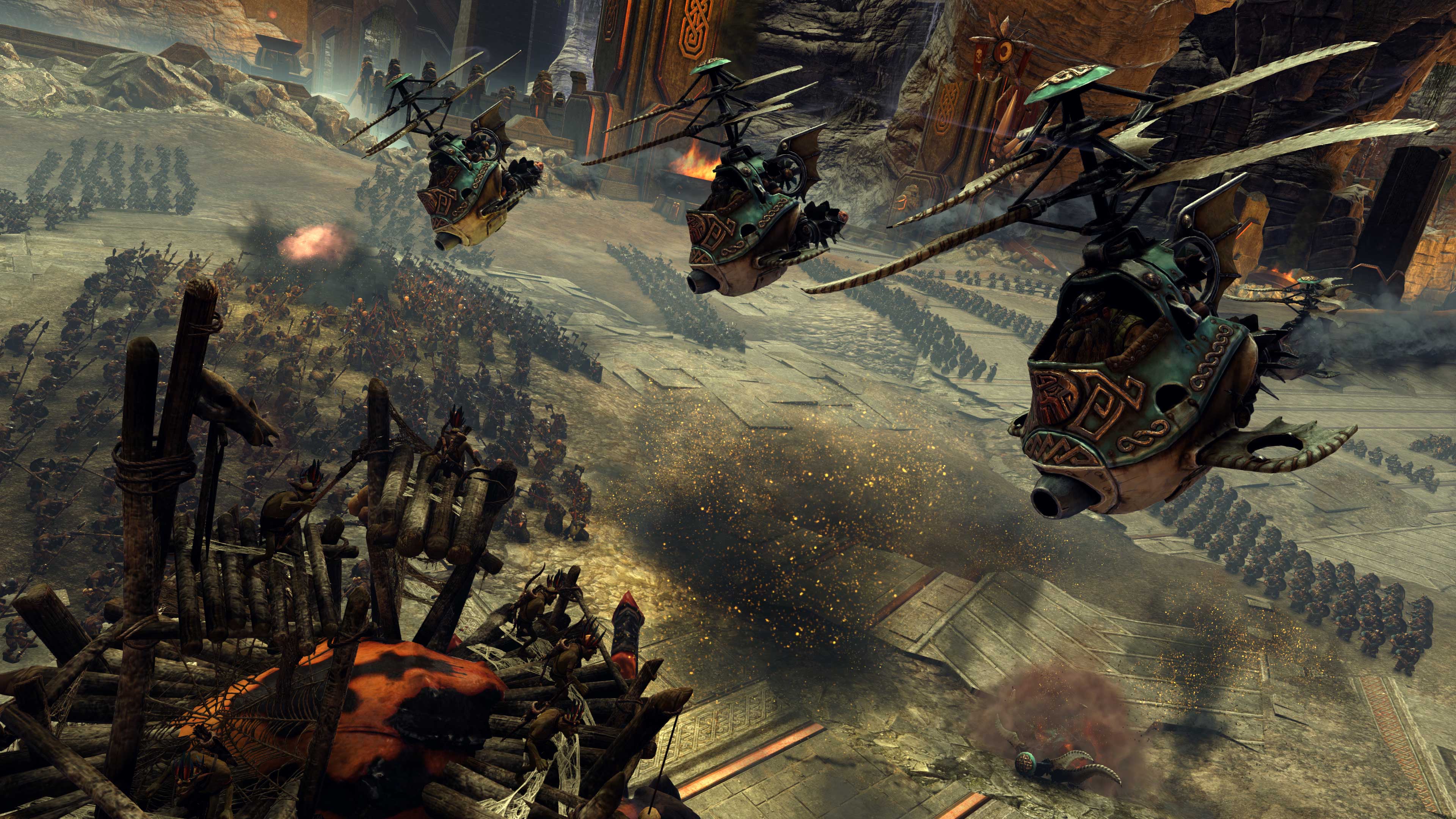
These three races repeatedly fight over the same mountains, tunnels and ruined settlements. What a Dwarf calls a stolen ancestral hold may be a Goblin warlord’s proudest possession and the roof above a Skaven colony.
Dwarfs
The Karaz Ankor, the Dwarfs’ great mountain realm, survives through holds linked by history, kinship and the old underground routes. Disasters and invasions have cost it much of its former territory. Recovering those losses is a cultural obligation, recorded alongside other wrongs in books of grudges.
Thorgrim Grudgebearer carries that responsibility as High King, while Belegar Ironhammer makes it more personal through his struggle to reclaim his ancestral inheritance at Karak Eight Peaks. Ungrim Ironfist, the Slayer King, carries the conflicting duties of a ruler who must protect his people and a Slayer sworn to seek an honourable death.
Sturdy infantry, powerful artillery and engineering give Dwarf armies a reliable defensive foundation. Their lack of conventional cavalry changes how you pursue enemies and protect flanks; runes provide a different kind of support from a human wizard’s spellcasting. Dwarf history · Belegar’s campaign
Greenskins
Orcs and Goblins belong to the game’s Greenskins category, but they are not one disciplined nation. Successful leaders gather followers, and a growing war can become a Waaagh!, drawing more tribes into a common wave of violence.
Where Grimgor Ironhide represents overwhelming martial strength, the Night Goblin Skarsnik shows how much cunning and ambush matter in a society outsiders dismiss as mindless. Grom the Paunch carries a particularly famous rivalry with the High Elf Eltharion, connecting Greenskin expansion to the defence of Ulthuan.
The roster ranges from cheap Goblins to Black Orcs, squigs, trolls and enormous spiders. A Goblin-heavy army can therefore demand a different approach from a heavily armoured Orc force. Aggression is the shared theme; which troops do the fighting depends on the lord and the content you own. Greenskin background · Grom and Eltharion
Skaven
Skaven civilisation exists beneath other peoples’ feet, divided into competing clans and devoted to the Horned Rat. Its leaders want the surface world, but they also want to survive one another. Treachery is part of the political system, rather than an occasional betrayal.
The clans explain the variety within the race. Queek Headtaker belongs to the militaristic Clan Mors; Lord Skrolk to plague-spreading Clan Pestilens; Ikit Claw to the weapons engineers of Clan Skryre; and Throt to Clan Moulder’s flesh-shaping laboratories. Thanquol is a Grey Seer whose new campaign revolves around ambitious Masterplans and the complications that threaten them.
On the battlefield, expendable troops can occupy an enemy while weapons teams, artillery, monsters or magic do the damage. Under-cities extend your influence beneath foreign settlements. Ikit’s weapons are attractive, but managing firing lines, food and vulnerable infantry makes him a less straightforward first lesson than his spectacular arsenal suggests. Skaven overview · Ikit Claw · Throt · Thanquol
Why Karak Eight Peaks matters
Read the visual and view sources
Schematic, not a campaign map or starting-position guide. Images identify the armies, not individual claimants.
| Character | Their claim | What the rivalry gives your campaign |
|---|---|---|
| Belegar Ironhammer: Dwarfs | Recover the ancestral hold of Clan Angrund. | A destination with a clear personal and political purpose. |
| Skarsnik (Greenskins) | Reassert his position as the Night Goblin warlord associated with Eight Peaks. | A fight for prestige and control against rivals who also regard it as theirs. |
| Queek Headtaker: Skaven | Secure the hold for Clan Mors and advance its power. | An underground war that intersects directly with the other two campaigns. |
This is one of the best places to begin if you want lore to explain your next strategic decision. The same settlement means three different things to its claimants, and each army approaches the struggle differently. The precise starting positions and campaign effects vary by game, but the shared dispute remains recognisable. Karak Eight Peaks history
The Lizardmen and the Old Ones
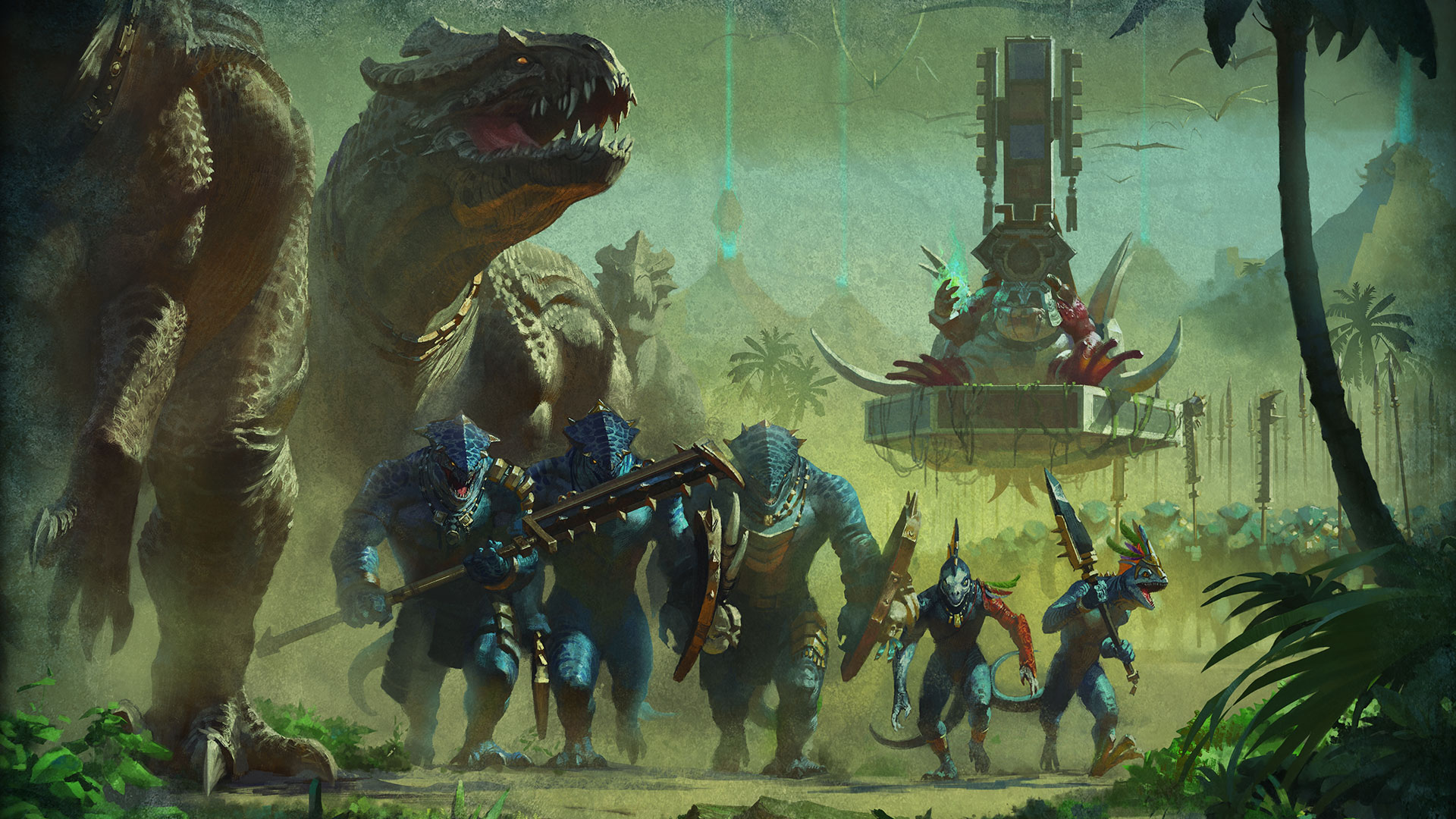
The Lizardmen are the surviving servants of the Old Ones, beings who reshaped the world and left behind the Great Plan. After the Great Catastrophe, the Slann continued trying to interpret that plan from their temple-cities. Their view of other civilisations can be severe: a people’s right to exist in a particular place may depend on whether it fits their understanding of their creators’ intentions.
Several species make up the Lizardmen, each with a different role: Slann provide spiritual and magical leadership, Saurus are bred for war, Skinks keep society functioning as well as serving in battle, and Kroxigor supply immense physical strength. Mazdamundi is a powerful Slann; Kroq-Gar is a veteran Saurus commander. They are different kinds of leader, not two versions of the same creature.
Their long war with Clan Pestilens gives the conflict with the Skaven particular importance. Tehenhauin, prophet of the serpent god Sotek, embodies that hostility. The struggle is about desecrated temple-cities and devastating plagues as much as territory.
Saurus infantry and large monsters give the army a solid centre, while Skinks provide mobility and ranged support. The Geomantic Web, connecting temple settlements, links their campaign development to their ancient role as caretakers of the world. Lizardmen history · Campaign systems · Tehenhauin and the Skaven
The undead and Nagash’s legacy
Read the visual and view sources
Blue: historical influence and development. Green / rust: allegiance and opposition. Not a complete vampire family tree.

Undead armies share necromantic foundations, but they do not all want the same world. A vampire ruling human subjects, a Tomb King recovering his ancient realm and a pirate seeking plunder have reasons to fight one another.
Vampire Counts
Vampirism began in Lahmia, in ancient Nehekhara, with Neferata and the first vampires. Its later spread produced different bloodlines and societies. The von Carsteins are especially associated with Sylvania and wars for power in the Empire; they are not the whole history of vampirism.
Vlad and Isabella represent the von Carstein dynasty’s most famous partnership, while Mannfred pursues his own ambitions. Their armies rely on the dead as renewable manpower, supported by dangerous characters, cavalry and monsters. They generally approach ranged-heavy opponents by surviving the approach, disrupting shooters and bringing their strongest threats into close combat.
The race received a substantial update alongside Lords of the End Times, including Neferata as a free Legendary Lord for eligible owners. Advice built around the old recruitment and bloodline systems needs checking against that update. Vampire history · Update 9.0
Tomb Kings
Nehekhara was a major human civilisation before it became the Land of the Dead. Its rulers sought immortality, but the catastrophe brought about by Nagash left them governing kingdoms of skeletons and awakened monuments.
Settra the Imperishable wants his sovereignty and former greatness restored. He is not Nagash’s obedient servant. Arkhan the Black, by contrast, is a devoted follower of Nagash; that distinction makes him a very different choice within the same broad army category. Khalida’s hostility towards vampires adds another conflict inside the undead’s shared history.
You field skeletal troops, chariots and towering animated constructs without paying ordinary upkeep for native armies, although army limits and caps on stronger units prevent unlimited recruitment. Building the infrastructure for your desired army is part of the campaign’s appeal. Nehekhara’s history · Tomb King lords and systems
Vampire Coast
Luthor Harkon established his undead domain on Lustria’s coast, bringing him into conflict with the Lizardmen. Other playable pirate leaders have their own identities: Count Noctilus commands a dreadfleet, Cylostra Direfin is a vengeful spirit, and Aranessa Saltspite is not herself a vampire. The category name describes a game roster, not the species of every leader in it.
These armies turn dead crews into musket lines and artillery teams, with sea monsters and other horrors filling the gaps. Their campaigns can use pirate coves and ship development to support activity far from a conventional inland empire.
Choose them if you like the idea of undead armies but would rather build around gunpowder and coastal expeditions than the Vampire Counts’ usual approach. Their original WARHAMMER II story also gives piracy a specific supernatural objective beyond accumulating territory. Official Vampire Coast campaign and characters
Nagash and the Host of Nagash
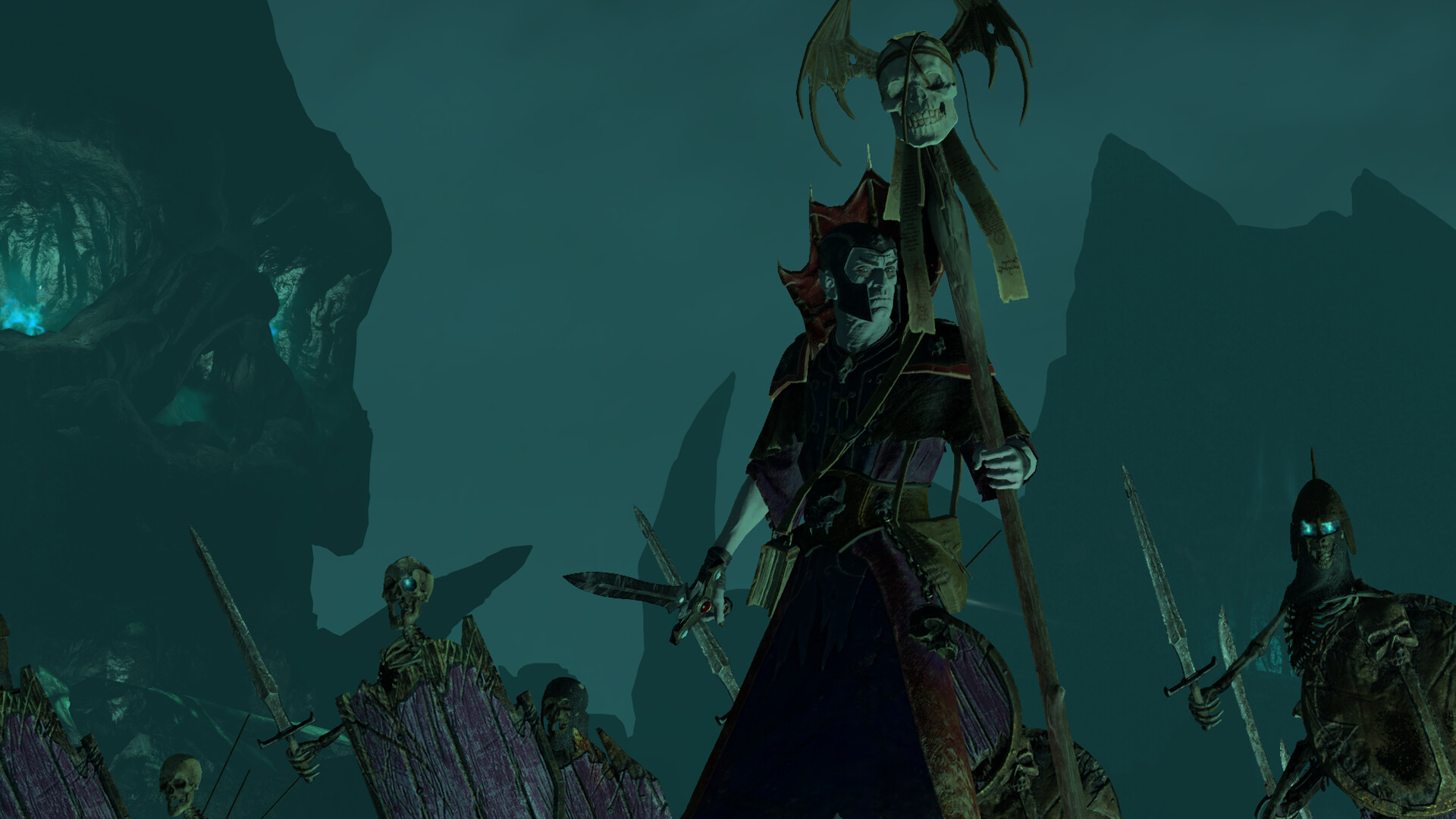
Nagash is the central figure connecting these histories: the great necromancer whose ambitions devastated Nehekhara and whose legacy shaped the undead beyond it. That influence does not mean that Settra, every vampire and every pirate willingly serve him.
In his 2026 campaign, he pursues that ambition by gathering the Books of Nagash, strengthening the Black Pyramid and seeking his Mortarch lieutenants while transforming the world into a realm of the dead. His armies can draw from Tomb Kings, Vampire Counts and Vampire Coast units.
Treat the Host of Nagash as its own campaign choice when comparing the undead. Its combined forces and progression are not accurately described by recommending an older Vampire Counts guide. Nor does buying Nagash automatically give you every other undead Legendary Lord as a selectable campaign. Nagash’s official pack description
The different armies of Chaos
Read the visual and view sources
Not a ranking of strength. Age of Sigmar’s Chaos pantheon also includes the Great Horned Rat. Art: Total War faction imagery.
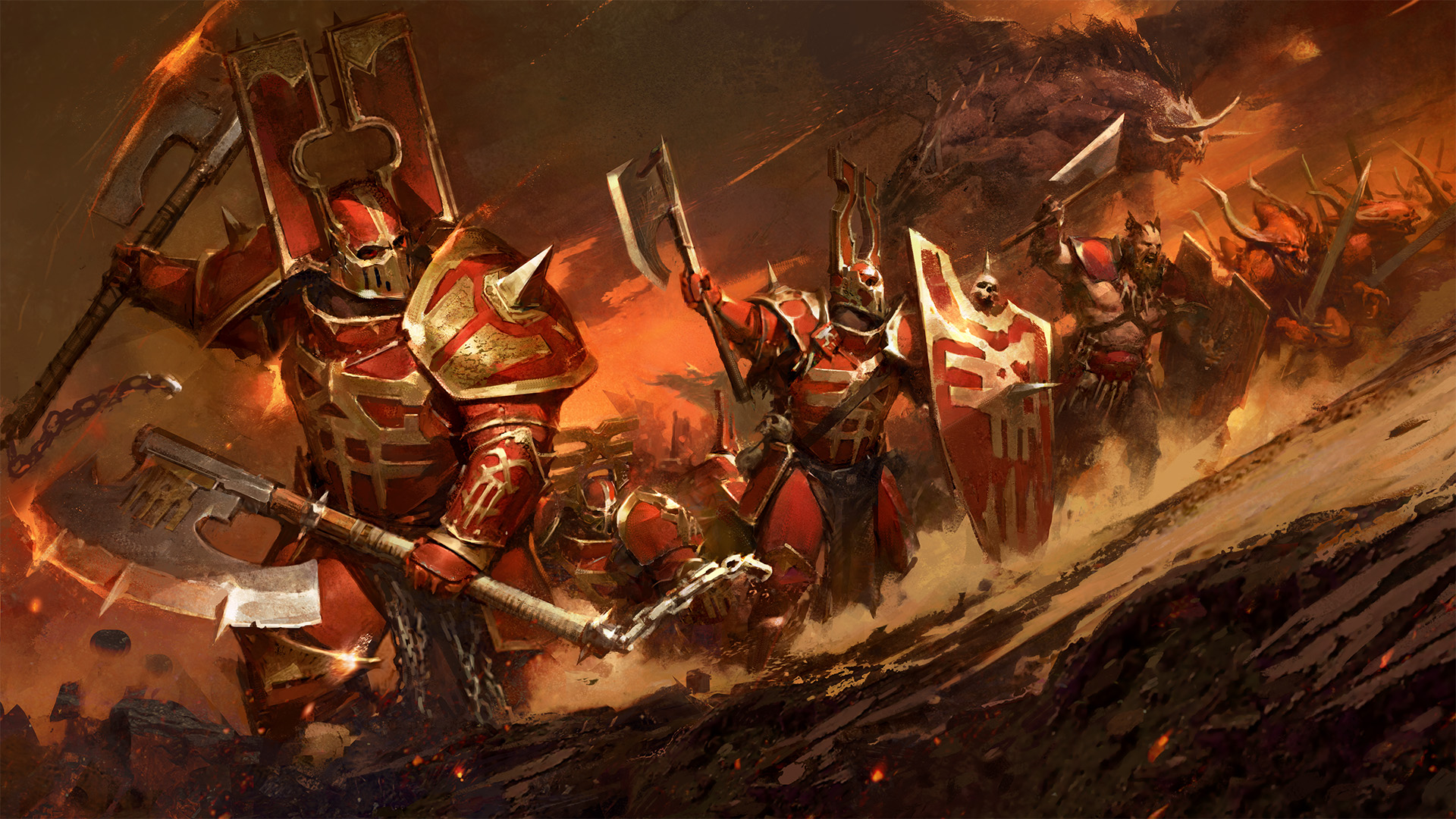
Chaos is a collection of rival powers whose four great gods struggle with one another as well as attacking the mortal world. Their mortal servants, daemonic hosts and allied peoples are represented by several separate playable categories.
Warriors of Chaos
These are the armoured warlords, champions and followers who seek power through the Chaos gods. Archaon, the Everchosen, attempts to bring those competing forces behind a world-ending invasion. Be’lakor pursues his own ambitions and is selectable within the Warriors of Chaos category in Immortal Empires, despite being a Daemon Prince.
Their modern design emphasises Dark Fortresses, subordinate factions and the Warband system, through which experienced troops can progress into more powerful forms. Raising a battered group of Marauders into elite warriors gives an army a sense of development beyond replacing its early units.
Valkia, Festus, Azazel and Vilitch serve individual gods but belong to the Warriors of Chaos roster, which is why god allegiance and menu category need to be considered separately. The Glottkin likewise belong to Warriors of Chaos, although their campaign revolves around Nurgle’s corruption and daemons. They shouldn’t be listed as another ordinary Nurgle faction. Champions of Chaos · The Glottkin
Norsca
The northern tribes live close to the influence of Chaos, raiding and fighting in harsh lands where dangerous creatures are part of daily life. Wulfrik the Wanderer is a champion driven towards worthy opponents; Throgg leads monstrous followers as the Troll King. They give the same race markedly different identities.
Marauders, trolls, Skin Wolves and mammoths make Norsca a physically aggressive army with considerable monstrous strength. Its relationship with Chaos does not make it interchangeable with Archaon’s heavily armoured hosts.
Sayl the Faithless, introduced in Tides of Torment, brings the Dolgans and a campaign of manipulation and ritual. His inclusion also shows why the game’s Norsca category has become broader than a literal list of people from the Norscan peninsula. Original Norsca pack · Sayl
Beastmen
Beastmen are Chaos-tainted peoples who gather in the wilderness and attack the settlements around them. Their hatred of the ordered world puts them in direct conflict with the Empire, Bretonnia and the Wood Elves. They threaten the spaces between the roads and cities as well as the frontier.
Beastmen campaigns range from Khazrak’s longstanding feud with Boris Todbringer to the threat of Morghur’s corrupting presence in the forests and Taurox’s sustained rampage.
Modern Beastmen campaigns establish Herdstones and devastate the surrounding Bloodgrounds, converting destruction into progress. Ambushes, fast troops and monsters support that purpose. This gives you a very different relationship with the map: the ruined province can be the achievement, rather than an interruption on the way to constructing your own settlement. Beastmen background · Taurox · Herdstone system
Khorne
Khorne is the god of bloodshed and battle, and Skarbrand, his exiled Bloodthirster, expresses that through enormous destructive force; Skulltaker makes hunting powerful enemy characters a campaign objective.
With strong melee units but limited conventional ranged options, these armies depend on closing the distance, finding a workable approach and maintaining offensive momentum. Skarbrand’s capacity to smash an enemy line doesn’t by itself teach you how to defend scattered settlements. Khorne’s identity · Skulltaker’s campaign
Tzeentch
Tzeentch is associated with magic, change and manipulation, and Kairos Fateweaver leads a force whose spells and ranged attacks can do devastating work while magical barriers absorb damage. Repositioning matters because those barriers can recover when units stop taking hits.
The Changeling takes the same god’s themes in a different direction, spreading cults and completing schemes across different theatres. A recommendation for his unusual campaign should not be read as a description of how Kairos manages territory. Tzeentch’s identity · Barrier mechanics · The Changeling
Nurgle
Nurgle offers acceptance of decay, disease and mortality, expressed by followers who regard infection as a gift. Their apparent cheerfulness makes more sense once you understand that grotesque belief, rather than treating them as monsters with no culture.
Ku’gath Plaguefather represents the daemonic side of the roster; Tamurkhan builds a campaign around gathering powerful chieftains. Plagues, resilient bodies and sustained close fighting are central attractions. An opponent who can keep its distance or concentrate missiles on large targets can force you to solve a different problem from simply surviving melee. Nurgle’s identity · Tamurkhan
Slaanesh
Slaanesh embodies excess, obsession and the pursuit of sensation. N’Kari’s hostility towards the elves ties that divine theme to the struggles around Ulthuan; seduction and subversion can work alongside open war.
Manoeuvre your fast units to punish exposed enemies, because leaving fragile troops trapped in a prolonged, unfavourable fight wastes much of their advantage. Dechala’s later campaign adds its own structure of captured settlements, thralls and Decadence, so older descriptions of N’Kari’s systems shouldn’t be applied to her wholesale. Slaanesh’s identity · Dechala
Daemons of Chaos
Leading the separately named Daemons of Chaos faction, the Daemon Prince can draw on the four gods’ forces and customise his body with rewards gained through devotion, letting you build around particular strengths or a broader mixture.
That flexibility is the reason to choose him, but it introduces more decisions than a conventional starting army. His background is directly connected to The Lost God, so the prologue is the right place to meet him. The community nickname “Daniel” refers to this customizable prince; it is not another Chaos god or an additional race. Official Daemon Prince explanation
Ogres and Chaos Dwarfs on the eastern routes
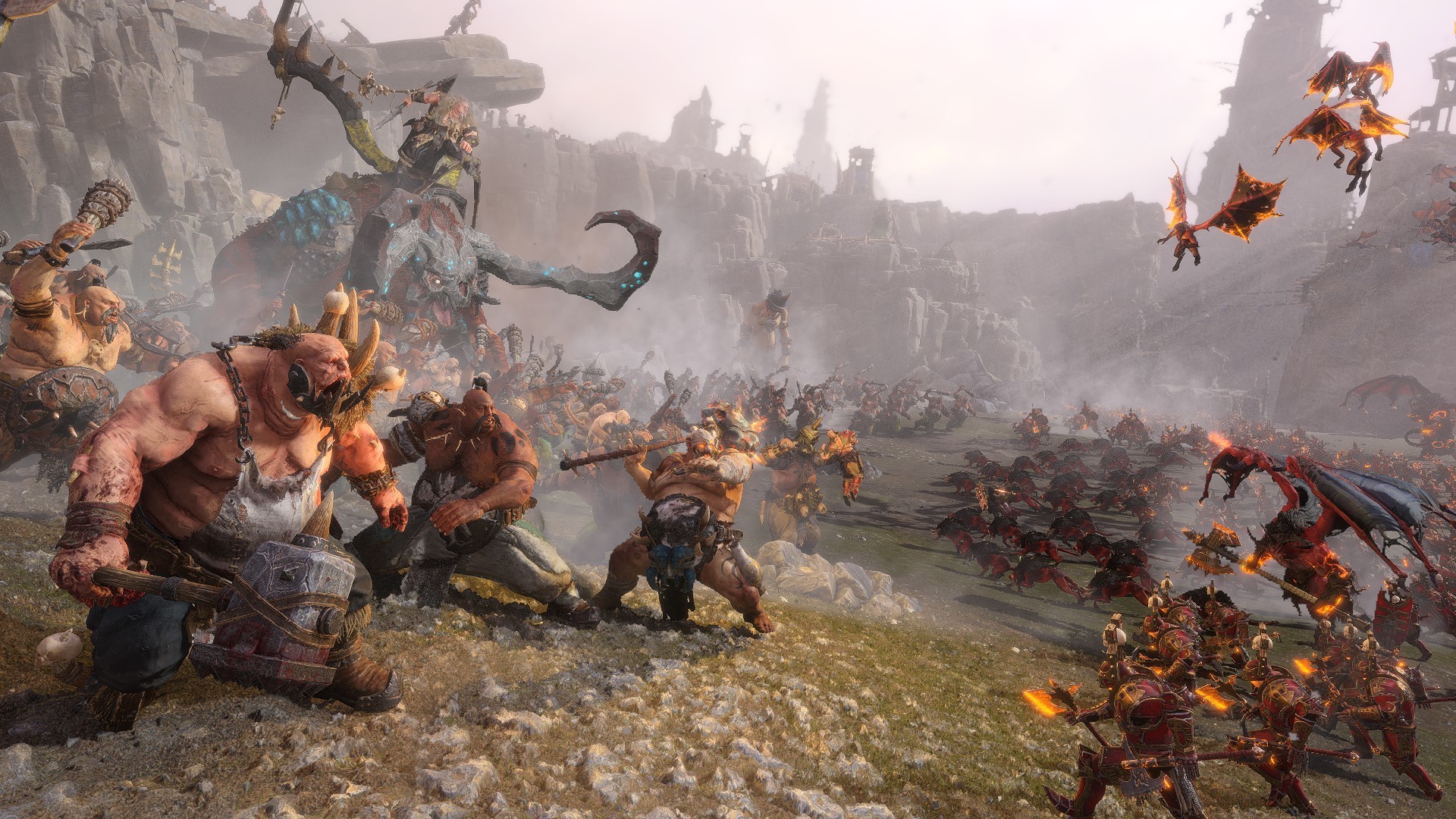
Between Cathay and the wars farther west, armies and caravans must cross the Mountains of Mourn and the Dark Lands, inhabited territories whose rulers have reasons to trade, demand payment or attack.
Ogre Kingdoms
Ogre society is shaped by appetite, strength and worship of the Great Maw. The devastation of their ancient homeland drove migration towards the Mountains of Mourn, leaving a culture in which hunger has religious as well as practical importance.
Greasus Goldtooth turns wealth and power into leadership, while Skrag the Slaughterer embodies the Maw’s more disturbing religious side. Golgfag Maneater offers a mercenary alternative: his campaign accepts contracts to join clients’ wars, then earns rewards through fighting their enemies.
Large, hard-hitting troops give Ogre armies weight and mobility, supported by Gnoblars, monsters and heavy weapons. Their size also makes them vulnerable to anti-large attacks and concentrated shooting. Camps, meat and the need to keep moving towards profitable fights connect the campaign to the army’s identity. The Great Maw · Ogre Kingdoms · Golgfag
Chaos Dwarfs
The Dawi Zharr are estranged kin of the western Dwarfs who worship Hashut, and their civilisation in the Dark Lands runs on sorcery, industry and slavery. Calling them Dwarfs who happen to use Chaos weapons misses how deeply their religion and society have diverged.
Their wars feed an economy of labour, raw materials and armaments, while rival leaders compete within the Tower of Zharr. Astragoth Ironhand is a powerful Sorcerer-Prophet whose body is turning to stone; Drazhoath the Ashen rules the Black Fortress. Their magic carries costs that ordinary Dwarf runecraft does not.
Artillery, heavily armoured troops, monsters and expendable labourer units provide several ways to construct an army. The more demanding part is supporting that army through a connected industrial economy. They are a rewarding later campaign for players who enjoy planning production as much as planning battles. Chaos Dwarf history · Official campaign systems
What each purchase includes
Get access to Immortal Empires first, then buy the lord or race you want to play; you don't need every expansion before your first campaign.
| Base game you own | Main included race access in Immortal Empires |
|---|---|
| Total War: WARHAMMER | Empire, Dwarfs, Greenskins and Vampire Counts, with their included lords and eligible free additions. |
| Total War: WARHAMMER II | High Elves, Dark Elves, Lizardmen and Skaven, with their included lords and eligible free additions. |
| Total War: WARHAMMER III | Kislev, Grand Cathay, the four individual Chaos-god races and Daemons of Chaos; Be’lakor also provides a Warriors of Chaos option in Immortal Empires. |
Bretonnia is a free addition available with Immortal Empires access. A base game supplies a race’s core content, not every later paid lord and unit associated with that race. See SEGA’s ownership table for individual unlocks.
The original race packs remain useful when you want their particular starting lords:
| Race | Original paid pack | Its principal lords |
|---|---|---|
| Warriors of Chaos | Chaos Warriors | Archaon, Kholek Suneater, Sigvald |
| Beastmen | Call of the Beastmen | Khazrak, Malagor, Morghur |
| Wood Elves | Realm of the Wood Elves | Orion and Durthu; Drycha is an associated later free addition in the combined campaigns. |
| Norsca | Norsca | Wulfrik and Throgg |
| Tomb Kings | Rise of the Tomb Kings | Settra, Khalida, Khatep and Arkhan |
| Vampire Coast | Curse of the Vampire Coast | Luthor Harkon, Noctilus, Aranessa and Cylostra |
| Ogre Kingdoms | Ogre Kingdoms | Greasus and Skrag |
| Chaos Dwarfs | Forge of the Chaos Dwarfs | Astragoth, Drazhoath and Zhatan |
You can also enter some races through later lord packs. The Silence & the Fury gives you Taurox’s Beastmen campaign; The Twisted & the Twilight gives you the Sisters’ Wood Elf campaign. Those purchases do not give you every lord from the older race packs. This is why “I own Wood Elves” is an incomplete answer to whether a particular campaign is available.
Lords of the End Times is a specific exception to the usual entry requirement: its Nagash, Thanquol, Boris Todbringer and Glottkin packs can each grant Immortal Empires access on their own. Do not assume every older DLC pack does the same. Also, receiving the WARHAMMER III application through an older purchase does not grant all of III’s base races or The Realm of Chaos; those remain tied to the appropriate ownership or upgrade. Current access rules
Keep the games and DLC on the same storefront if you want their ownership to combine. You do not need to keep the older games installed merely to use their unlocked content in Immortal Empires. SEGA’s installation and ownership FAQ
Sources and further reading
Campaigns and ownership: Total War: WARHAMMER, Total War: WARHAMMER II, Total War: WARHAMMER III, Feral’s manual, Mortal Empires, the I/II Immortal Empires access FAQ, the DLC ownership guide and Creative Assembly’s current new-player FAQ.
Official lore and army introductions: Games Workshop on the Fantasy setting’s timeline, Bretonnia, Grand Cathay, Dwarfs and Tomb Kings; Feral’s race introductions for game I, game II and game III. The Old World articles describe an earlier tabletop period; their contemporary political situations are not interchangeable with Total War’s campaign starts.
Specialist cross-checks: Lexicanum on the Great Catastrophe, the Sundering, the War of the Beard, Karak Eight Peaks, Lizardmen, vampires, the Great Maw and Chaos Dwarfs. These are community reference works with citations to published lore, not replacements for the original books. The Total War wiki was used to cross-check forest health, Herdstones, Kislev’s political systems and Tzeentch’s barriers.
Current additions: Lords of the End Times release announcement, Update 9.0, and the official individual DLC descriptions linked alongside each relevant faction. The discussion beneath Creative Assembly’s FAQ was consulted for player questions and disagreements about beginner recommendations.
Further references: Creative Assembly’s original map announcement; Total War: WARHAMMER - Empire Campaign Walkthrough: official video; Beastmen campaign; Wood Elf campaign; Total War: WARHAMMER 2 - High Elves Campaign Let's Play: official video; Rise of the Tomb Kings; Curse of the Vampire Coast; Let's play with Miao Ying of Grand Cathay I Total War: WARHAMMER III: official video; SEGA’s launch FAQ; Feral’s story introduction; Forge of the Chaos Dwarfs; Champions of Chaos; Feral’s DLC guide; Total War: WARHAMMER III - Immortal Empires Map First Look: official video; Great Catastrophe; Sigmar’s history; The eight Winds of Magic; Boris Todbringer; Official race description; Alarielle; Aislinn; Ariel and the Sisters; Belegar’s campaign; Grom and Eltharion; Ikit Claw; Thanquol; Campaign systems; Nagash’s official pack description; The Glottkin; Original Norsca pack; Sayl; Taurox; Skulltaker’s campaign; The Changeling; Tamurkhan; Dechala; Ogre Kingdoms; Golgfag; Total War Academy.