How to Choose a Padel Racket Without Wasting €300
Round, teardrop, diamond, soft EVA and a hundred ways to spend €300. Here is what changes the way a padel racket plays and what mostly changes the paint.

Padel has become the chosen sport of finance bros and Dubai escorts. Maybe the finance bros are there for ego and the escorts for the aesthetic, but sport has always contained plenty of both, so who cares? The courts are full and suddenly everyone has an opinion on 12K carbon.
When I started playing, I used the cheap generic rackets behind the club desk. I was not spending $300 on equipment for a sport I might play three times and forget. Years of tennis meant I could already move and hit the ball properly. My partner and I even beat some of the finance-bro crowd with those rentals, which was satisfying for obvious reasons.
Padel still has its own timing, walls, positioning and overheads. Tennis experience does not make somebody a proper padel player, but it supported my usual argument that the player plays, not the racket.
Then I tried a friend’s better racket. The contact felt cleaner, the ball left with more authority and power came more easily. A padel racket is like finding a better blade in an RPG: it will not teach you how to fight, but the extra five points of attack damage are there. You do not need to spend $300 to get them, only some idea of which stats you are paying for.
Quick Answer
Most beginners should choose a round or forgiving teardrop padel racket weighing roughly 340 to 360 grams, with low or medium balance and a soft-to-medium core. Round gives you the largest central sweet spot and the easiest control. Teardrop adds some power without becoming as demanding as a head-heavy diamond racket.
If padel is your first racket sport, look for a round, soft fiberglass model around $60 to $140, or the equivalent where you live. If you already play tennis, squash or badminton and can strike cleanly, a teardrop racket around 350 to 365 grams can make more sense from the start. A good used racket is worth considering too: I would rather buy a well-kept previous-generation Bullpadel, NOX, HEAD or Babolat than a flimsy new racket simply because the plastic wrap is still on it. Spend serious money only after you know whether you prefer a softer or firmer face, more weight in the head, and control or power.
What a Better Padel Racket Changes
Bad positioning stays bad, and no racket will stop you from trying to murder every easy ball into the back wall. Equipment earns its money through the useful hitting area, manoeuvrability, stability at impact, rebound at slower speeds and the power it gives back when you swing properly.
That difference is why a decent mid-range racket can feel much nicer than a battered generic club model. The frame may be more stable, the foam may respond more consistently and the balance may suit your swing instead of feeling like a frying pan with holes in it.
The annoying part is that padel brands bury these useful differences under a mountain of names: Carbonflex, Multieva, Auxetic, Dual Spin, Power Foam, 3K, 12K, 18K and whatever gets added next year. Some of that engineering is real, but the front of the racket still tells you far less than four basic things: shape, balance, weight and hardness.
The Three Padel Racket Shapes
The three main shapes are round, teardrop and diamond. Shape influences where the sweet spot sits and usually gives you a clue about balance, although brands now make enough hybrids that the specification still needs checking. HEAD’s current selection guide describes the same broad split: round for control and forgiveness, teardrop for a mixture of control and power, and diamond for advanced attacking play.
| Shape | What it gives you | Best suited to | Main drawback |
|---|---|---|---|
| Round | Large central sweet spot, control, easy handling | Beginners, defensive players, anyone who values consistency | Less free help on big overheads |
| Teardrop or hybrid | A useful mix of power, control and reach | Improving players and people arriving from tennis | Less forgiving than a true round racket |
| Diamond | High sweet spot and more weight through attacking shots | Advanced players with clean overhead technique | Smaller margin for error and more demanding handling |
Round: the sensible first choice
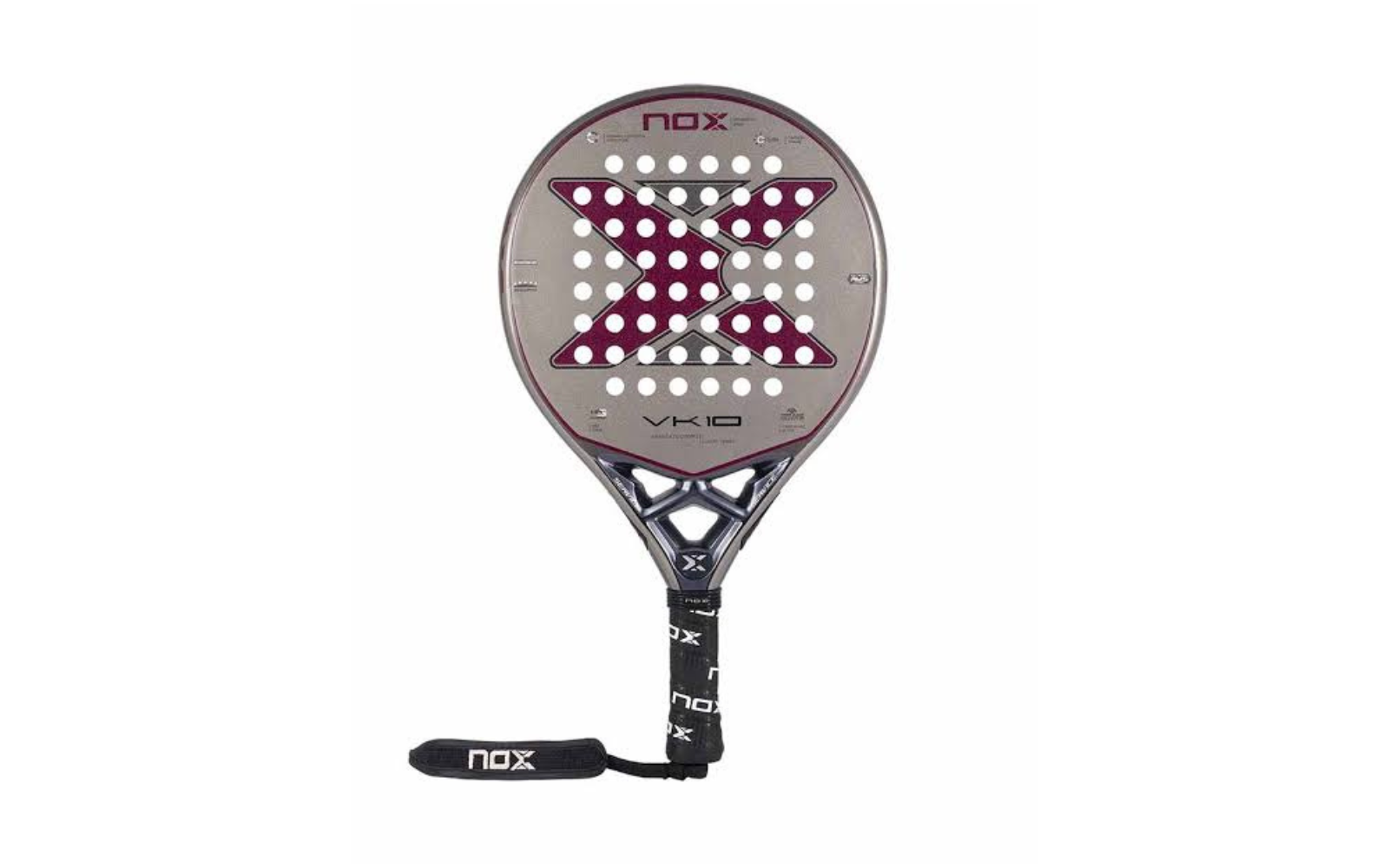
A round racket gives you the biggest target in the middle of the face. When contact is slightly late, low or away from the centre, you lose less. That matters far more to a beginner than squeezing another five kilometres per hour out of a smash that was going into the glass anyway.
Calling round rackets weak or boring misses how padel works. Plenty of experienced right-side and control players use them because placement, defence and quick reactions win a ridiculous number of points. A good player can create power with technique; a beginner cannot create a larger sweet spot through optimism.
Teardrop: the useful middle for most people
Teardrop sits between round and diamond. The sweet spot usually moves slightly higher, the balance is often around the middle and the racket gives you more assistance when attacking without becoming a complete bastard to move at the net.
This is where I would look if I already had tennis technique or had played enough padel to know that the generic club racket was holding back the feeling of the shot. A 350 to 365 gram teardrop with even balance and a soft or medium core gives a very usable mix of clean contact, stability and power. You still have to play padel rather than treating the court like small tennis, but the transition feels natural.
Diamond: power that makes you earn it
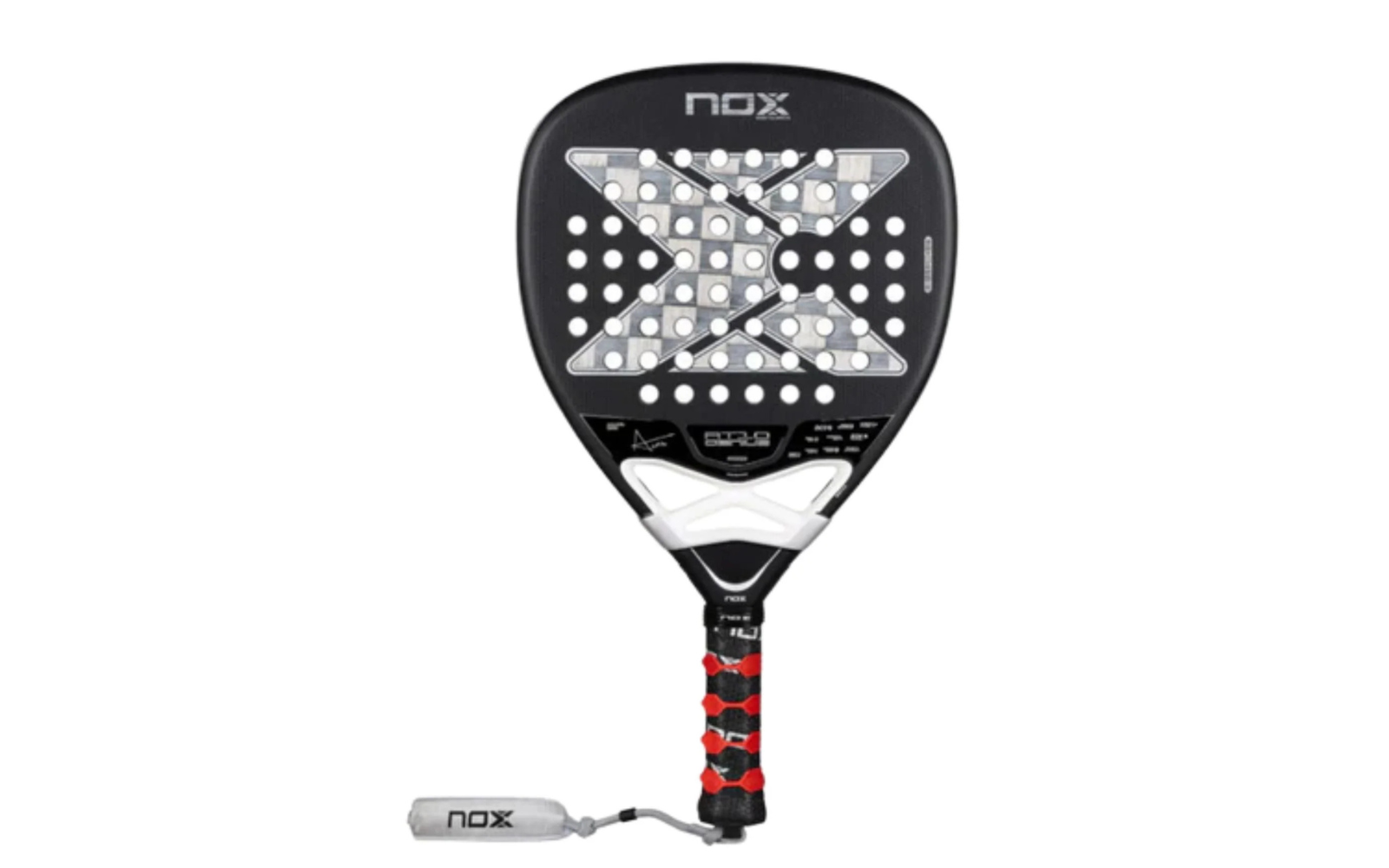
Diamond rackets carry their useful hitting area higher in the face and are commonly head-heavy. When you prepare early and catch an overhead properly, that mass helps the racket go through the ball. When you are late, cramped or defending near the glass, the same setup can feel like you borrowed Thor’s hammer for a sport that mostly rewards patience.
Buy one because your attacking game is developed and you genuinely prefer high balance. Do not buy one because the sponsored player on the product page hits X3 smashes for a living.
Balance Can Matter More Than the Number on the Scale
People talk about racket weight because grams are easy to print. Balance is where the same weight starts behaving differently.
A low-balance racket carries more of its mass near the handle. It moves quickly, feels easier during volleys and defence, and usually favours control. Medium balance spreads the weight more evenly. High balance puts more mass toward the head, helping momentum and power while asking more from timing, grip and the arm.
This is why a 350 gram head-heavy racket can feel more demanding than a 360 gram racket balanced closer to the hand. The number on the scale is lower, but you are moving that mass farther away from your wrist.
HEAD places most beginner and intermediate rackets between 340 and 360 grams, while its advanced range commonly reaches 360 to 375 grams. Use those boundaries loosely: strong players can prefer light rackets for speed, and a beginner may enjoy the stability of something slightly heavier.
The exact racket can also differ from the catalogue number. Kuikma, for example, lists its 360 gram PR React with a tolerance of plus or minus seven grams, before you add an overgrip or frame protector and change the final weight again. If a shop has several copies and lets you use a scale, choosing the exact one is not padel-nerd theatre; the difference may be noticeable.
Soft or Hard Foam Changes the Feeling More Than “18K”
The foam inside the racket controls a large part of the response. HEAD explains that foam density changes stiffness and strongly influences performance, while Decathlon’s current guide separates the feel into soft, medium and hard.
Soft foam is comfortable and gives easy rebound when the swing is slower, which helps during defence, blocks and ordinary shots where you want the ball to leave without forcing everything. A strong player swinging hard may find that same response too springy.
Hard foam asks more from you at low speed and feels cleaner when you accelerate properly. Medium foam sits somewhere between those two reactions, which is why it appears in so many all-round rackets. Soft or medium is the more sensible first purchase, especially if your elbow, wrist or shoulder already complains. Start with comfort and easy handling instead of proving your masculinity to a piece of carbon.
Fiberglass or Carbon: More Carbon Does Not Automatically Mean Better
Fiberglass flexes more and usually feels softer, while carbon is stiffer, more direct and generally more durable. HEAD’s material guide makes the same distinction. Current beginner rackets from NOX, Kuikma and Babolat often put a carbon frame behind a fiberglass face, giving the frame rigidity without making the hitting surface unfriendly. A full-carbon or high-carbon face becomes useful when the player wants a firmer response and has enough swing speed to use it.
The 3K, 12K and 18K labels refer to the carbon weave, but they are terrible as a universal buying scale. The resin, number of layers, foam, frame and complete construction all affect the result, so an 18K racket from one brand is not automatically harder, stronger or better than a 12K model from another. If the shop description contains six carbon numbers and never tells you the balance, the useful information has probably been mugged by the marketing department.
A rough face can help the racket grip the ball for spin, although it does not insert slice into a flat swing by magic. Technique still supplies most of the effect.
Grip Thickness and Overgrips Change the Final Racket
A racket can have the right shape, weight and balance on paper, then feel wrong because the handle does not suit your hand. If the grip is too thin, the racket can rotate during off-centre contact and you may end up squeezing it harder than necessary. Make it too thick and the racket can feel slow when you change grips or use the wrist around the net.
An overgrip gives you more circumference, a fresher surface and better sweat control. It also adds a little weight close to the hand, so the finished racket can feel slightly less head-heavy than it did in the catalogue. A frame protector shifts weight in the other direction. Neither change transforms the racket, but both matter when you are choosing between two models that already feel close.
Set up the grip before deciding whether the racket is too light or heavy. Hold it with the pressure you would use during a normal rally, then try quick volleys, defensive blocks and an overhead. If it twists in your hand, tires your forearm or only feels good during one heroic smash, the specification sheet has not saved it.
How Much Should You Spend on a Padel Racket?
For most new and improving players, the useful buying range is roughly $60 to $200, or the equivalent in your country. I am using US dollars as a common reference, not pretending the same racket costs the same in Madrid, Dubai, London and Buenos Aires after local taxes, import fees and whatever discount your friend has at the club shop. Around $90 to $170, there are already proper models with clear specifications, decent materials and enough stability to expose how basic the club racket was.
| Budget | What it realistically buys | Who should use it |
| Under $70 | Basic fiberglass construction, soft feel and simple finish | First games, casual players and anyone still deciding whether padel will last past summer |
| $70–170 | The practical first-buy range: good beginner models, forgiving control rackets and some strong hybrid options | Most first-time buyers and improving players |
| $170–280 | Better-tuned intermediate models, more material choices and specialised control or power setups | Regular players who already know what feel they want |
| $280–450+ | Flagships, professional shapes, signature models, adjustable weights and premium finishes | Advanced players, collectors and finance bros who need the latest colour before Wednesday league |
The jump from a worn rental racket to a good $90 or $140 model can be obvious. The jump from $200 to $400 is usually much more specific. You may get a firmer face, better finish, adjustable balance or the exact response you prefer. You do not receive three times the player.
Look at last year’s premium models too. Shops often discount them once the new collection arrives, and a racket does not forget how to hit a ball because the latest one has photochromic paint.
Is It Worth Buying a Used Padel Racket?
Yes, if the racket was good in the first place and is still genuinely in good condition. Used does not automatically mean worse. A quality Bullpadel, NOX, HEAD, Babolat, Adidas, Wilson or Siux racket from a previous collection can be a much better buy than a cheap new generic model with weak materials and a dead feeling through the face.
Cosmetic scratches and small paint chips are normal. Padel rackets meet glass, fencing and occasionally the racket of a partner who has decided every ball belongs to him. I care far more about cracks around the frame, bridge and holes, a face that feels soft or separated in one area, strange rattling inside, or signs that the racket has spent months cooking in a car. Decathlon specifically warns against leaving a racket in a car boot because sunlight and temperature swings can damage it. Anything hidden beneath a thick frame protector deserves a close look too.
Ask how old it is, how often it was played, whether it has been repaired and why the owner is selling it. Then hold it, press the face gently for uneven areas, move it through the air and hit with it if possible. The grip and overgrip are cheap to replace; structural damage is not. If the seller wants almost the same money as a discounted previous-season racket from a shop, buy the unused one and keep the warranty.
The brand name alone does not rescue a wreck. A cracked Bullpadel flagship is still a cracked racket. But if somebody bought an excellent model, used it for one season, looked after it and now wants this year’s paint job, that is exactly the kind of finance-bro recycling programme I can support.
Which Type of Padel Racket Suits You?
| Your situation | Shape | Weight and balance | Face and core |
| Complete beginner, no racket-sport background | Round | 340–355 g, low or medium balance | Fiberglass, soft EVA |
| Beginner with tennis, squash or badminton technique | Teardrop or forgiving hybrid | 350–365 g, medium balance | Fiberglass or mixed face, soft-to-medium core |
| Control and defensive player | Round | 350–365 g, low or medium balance | Soft-to-medium core; rough face if you use slice |
| Fast, attacking player with good overheads | Teardrop or diamond | 360–375 g, medium or high balance | Medium-to-hard core, carbon face |
| Smaller player or someone who values quick hands | Round or teardrop | 335–355 g, low or medium balance | Comfortable face and soft-to-medium core |
| Arm discomfort or previous elbow trouble | Round | Lighter and low balance | Softer core, fiberglass face, vibration-conscious build |
Even the right specification on paper can feel wrong in your hand because swing speed, grip thickness, strength and timing differ. Use the table to narrow the choice, then borrow three rackets for ten minutes each. That will teach you more than another page of branded technology names.
What Padel Racket Should a Tennis Player Choose?
Tennis players can usually skip the softest, lightest beginner racket, but that does not mean jumping straight to diamond shape and high balance. Clean contact and racket speed transfer well; the bigger swing, open preparation and instinct to attack every ball become less helpful once the glass gets involved.
A forgiving teardrop or hybrid around 350 to 365 grams, with medium balance and a soft-to-medium core, is the sensible starting point. It gives you more authority than a basic round rental racket while keeping enough sweet spot for the compact volleys, blocks and awkward defensive contacts that padel keeps demanding. A round control racket is still a good choice if your tennis game was built more around touch, doubles and placement than trying to remove the felt from the ball.
Professional power rackets are where tennis technique can fool you. A head-heavy diamond may feel brilliant during a clean warm-up, then horrible when you are late at the back of the court or exchanging fast volleys. Before buying, use it for a defensive block off the glass, a reaction volley, a bandeja and a full overhead. If it only comes alive for the fourth shot, you are buying for the tennis player in your head rather than the padel player on the court.
Five Current Padel Rackets That Match These Specs
These are researched examples, not a fake TGK ranking of rackets I have never tested. Each one matches a player type described above. Availability and pricing vary too much between countries for one regional shop price to mean much to everybody else, so compare the model locally and demo it whenever possible.
Kuikma PR Comfort Soft: a cheap first proper racket
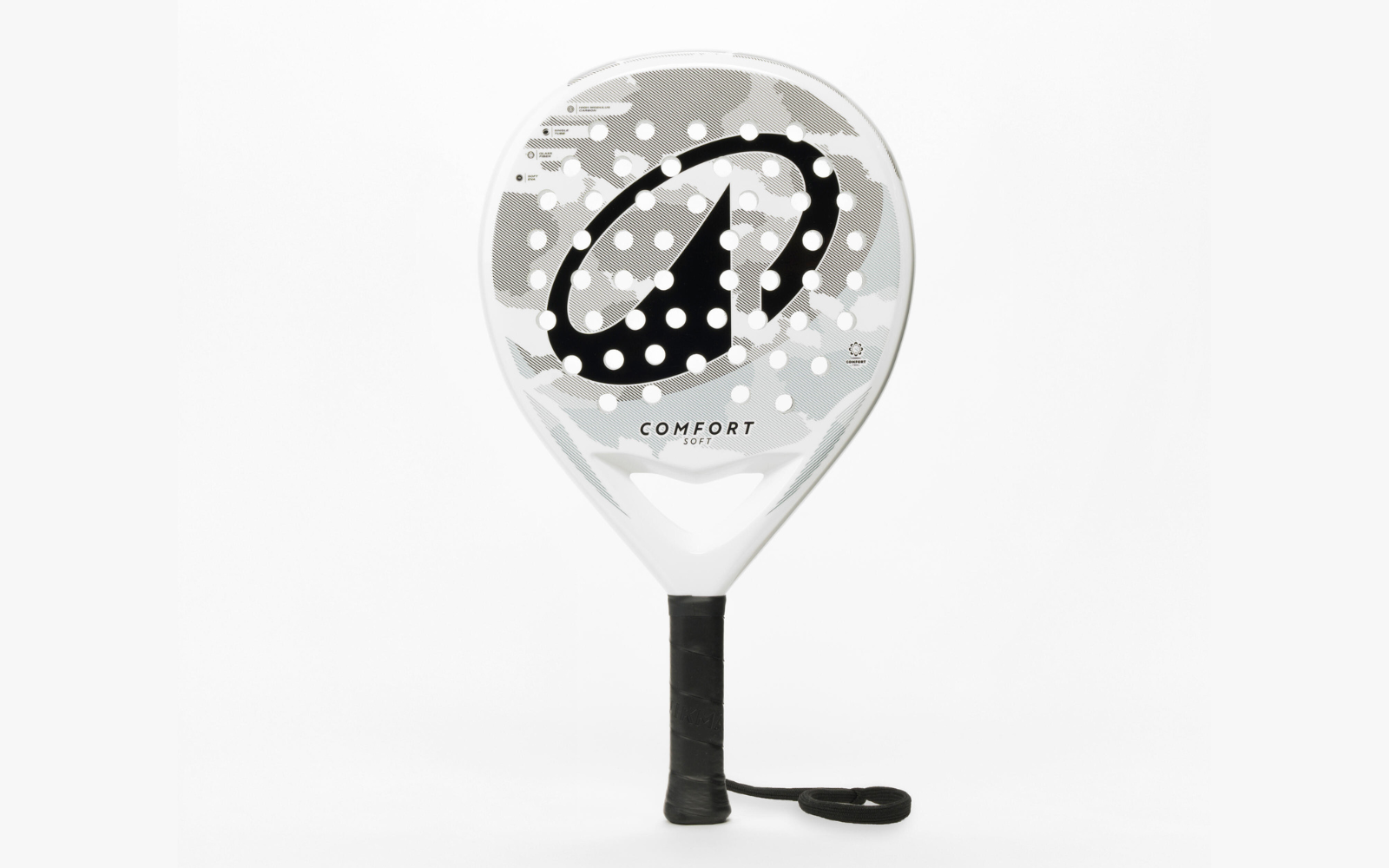
The Kuikma PR Comfort Soft is round, 350 grams and low-balanced, with fiberglass and elastic EVA foam. It normally sits at the entry-level end of the market and has almost the textbook setup for somebody leaving the club-rental pile without knowing whether padel will become a weekly habit.
NOX X-Zero 2026: a forgiving beginner option from a padel brand
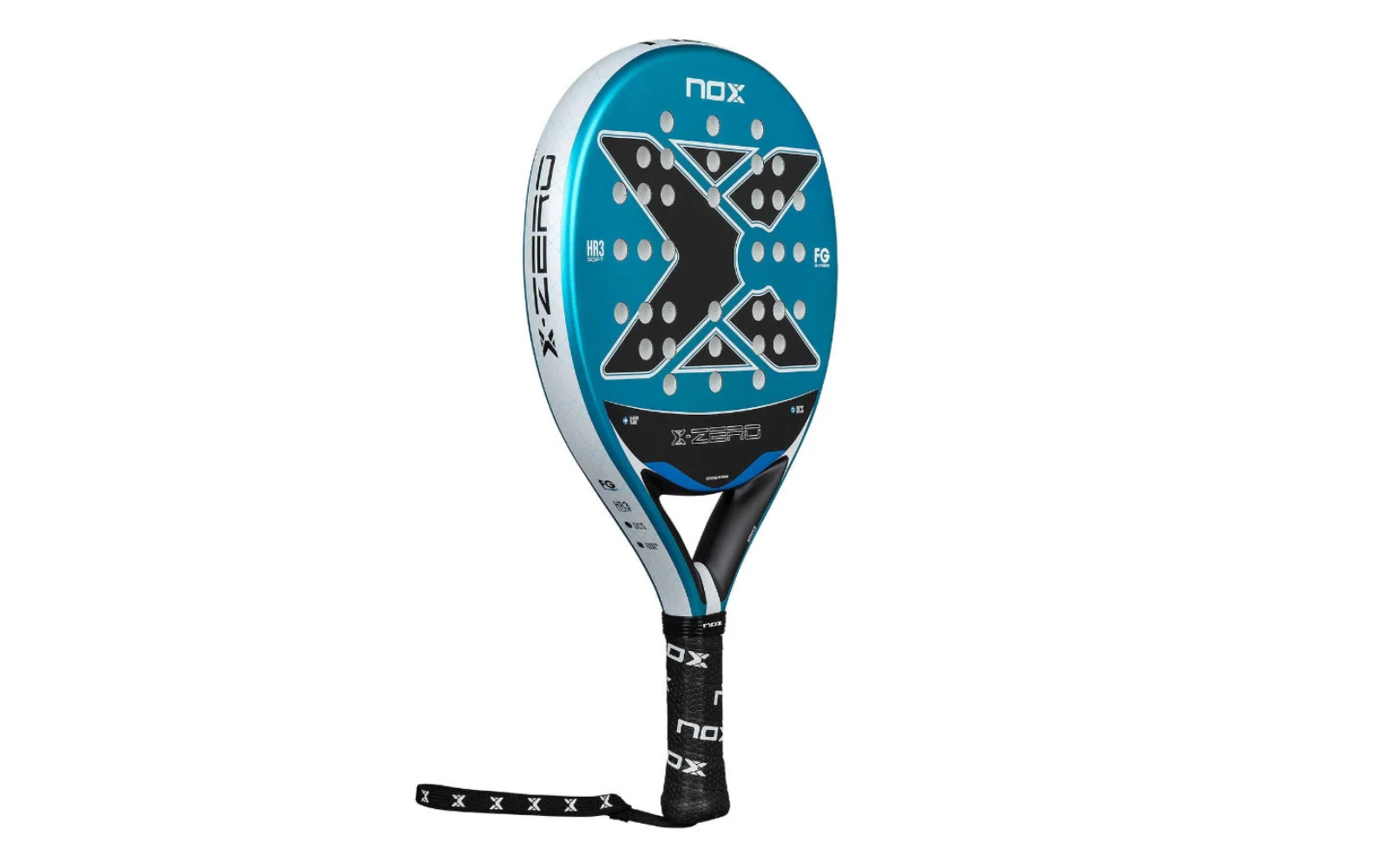
The NOX X-Zero 2026 combines a round shape, 350-to-360-gram weight, soft core, carbon frame and fiberglass face. It has the forgiving construction a beginner needs without dragging them into NOX’s expensive signature end of the range.
Kuikma PR React: the interesting budget option for a tennis player
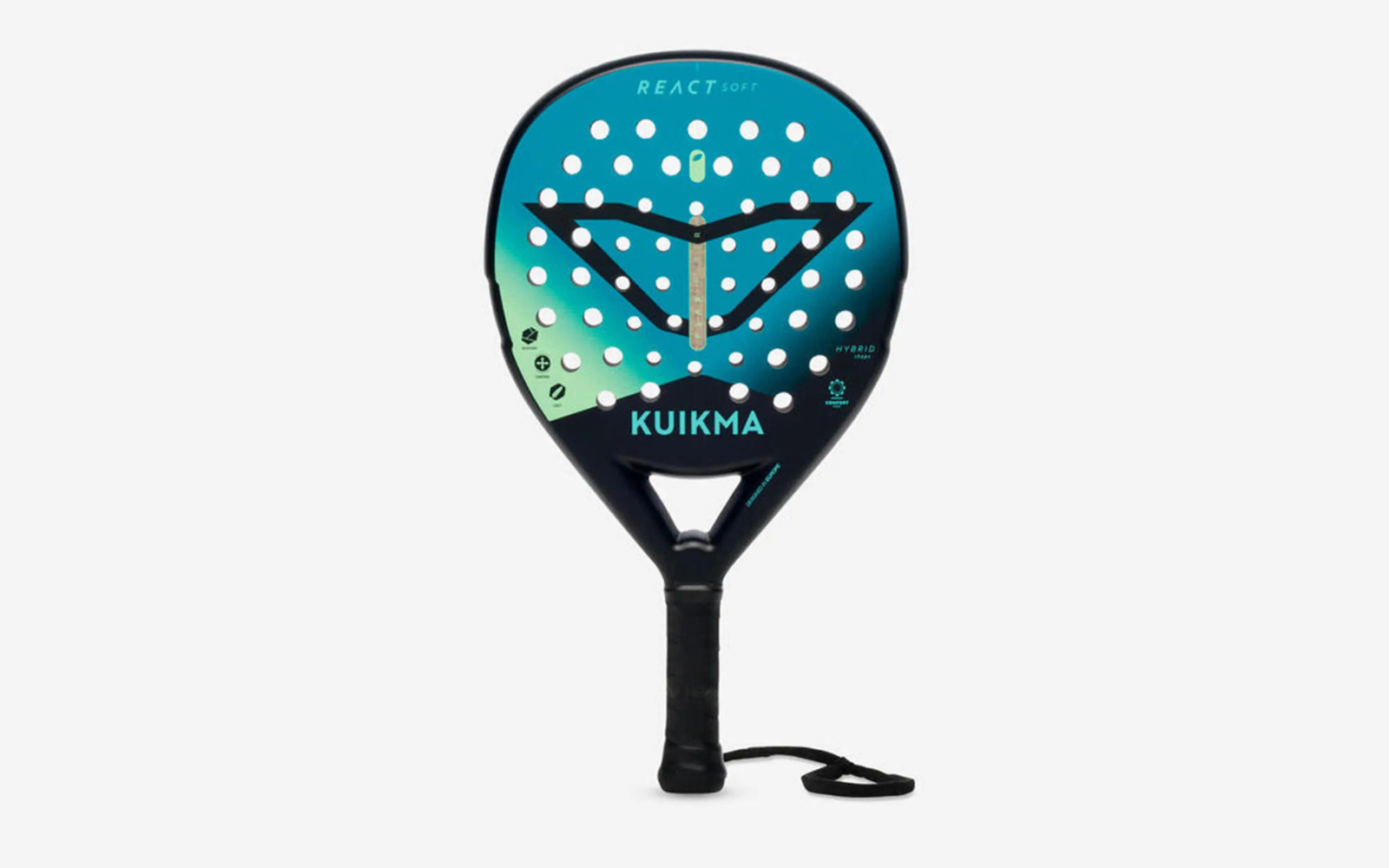
The Kuikma PR React is teardrop-shaped, 360 grams and evenly balanced, with soft EVA and a fiberglass-based face. On specification alone, it is the kind of first upgrade I would inspect after feeling that a generic rental racket had become too basic. It offers a more attacking shape without the high-balance punishment of a professional power model.
Babolat Counter Vertuo 2.6: control and comfort before carbon theatre
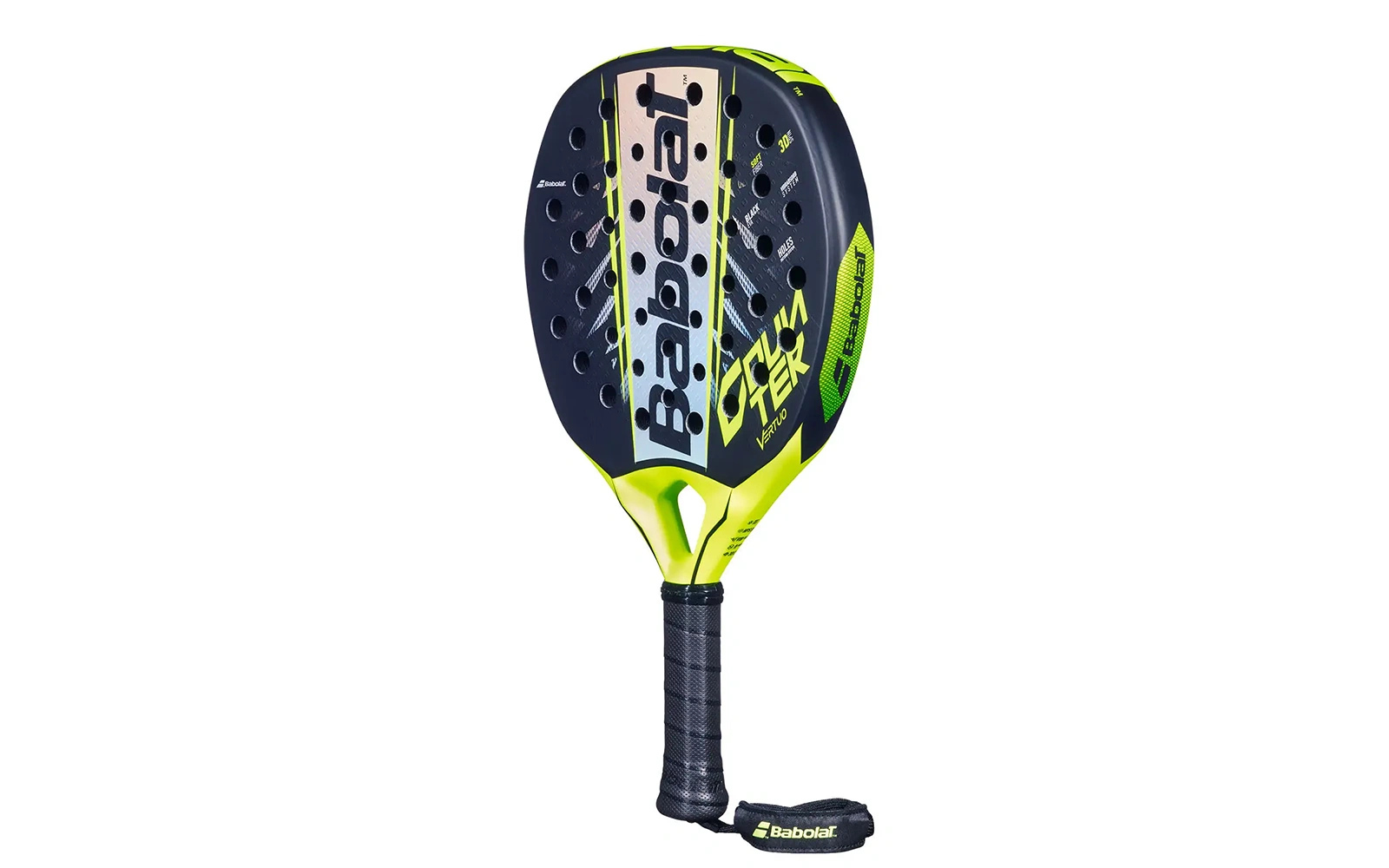
The Babolat Counter Vertuo 2.6 is round, 350 grams and fiberglass-faced. Its large sweet spot and softer response suit a patient control player, or anybody who wants easy handling and comfort instead of a hard face that only behaves when every contact is clean.
HEAD Speed Team: an all-rounder for an improving player
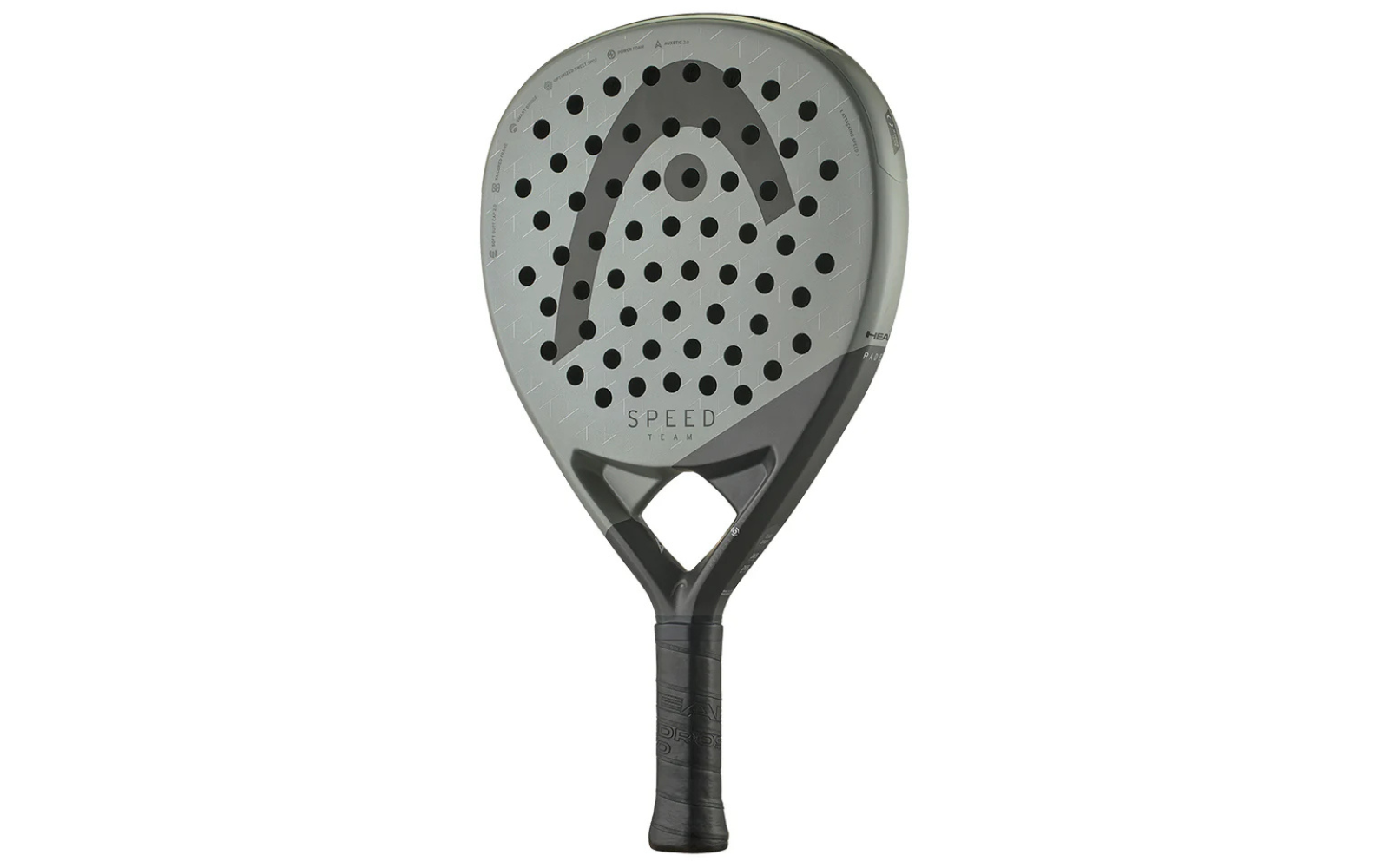
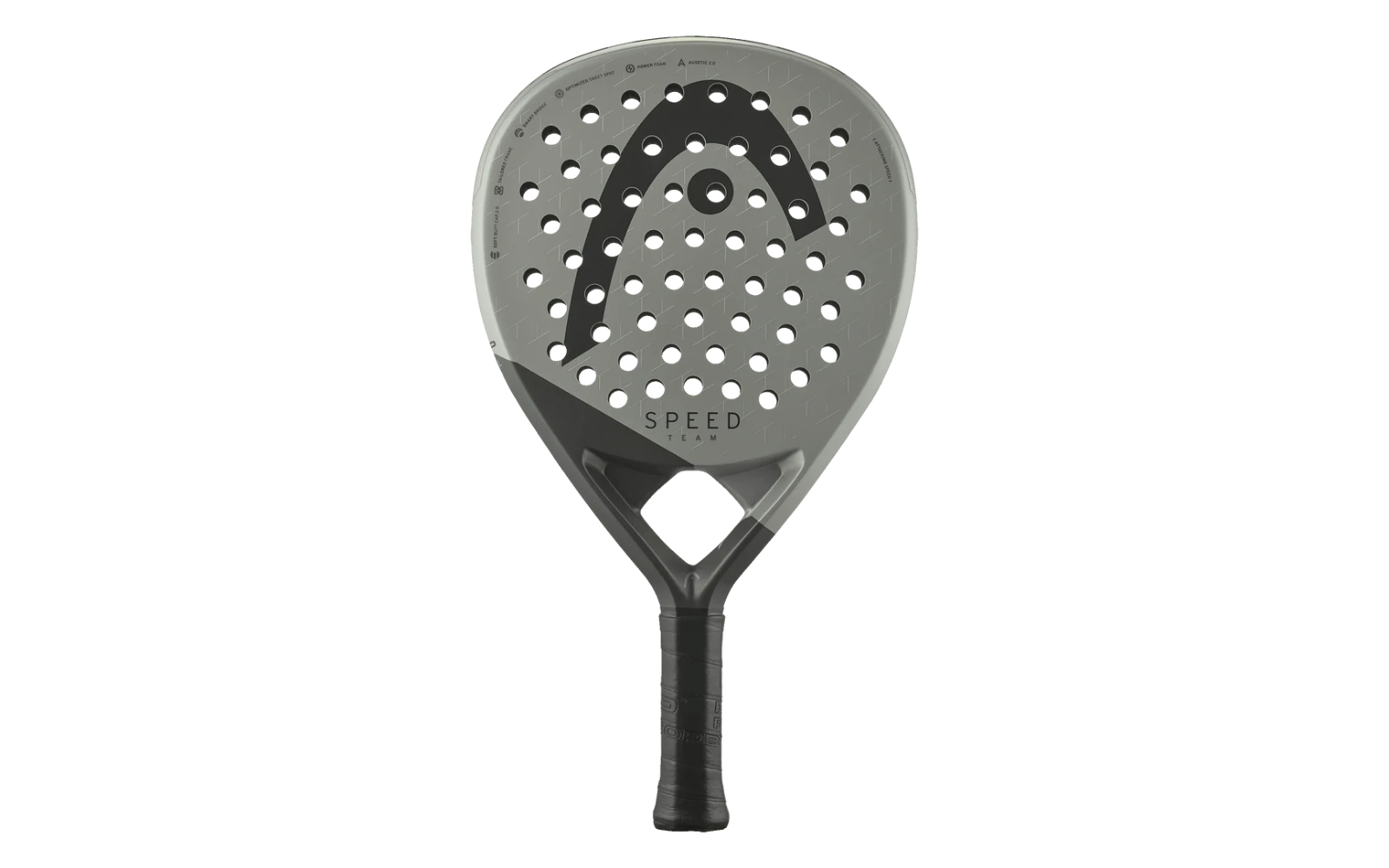
The HEAD Speed Team uses a teardrop shape and fiberglass face, and comes in at 365 grams with medium balance. It sits higher in the range than the beginner examples, closer to the improving tennis convert or regular padel player who already knows they want more stability and attacking help. I would demo it first because 365 grams stops feeling light once the point becomes messy.
I left out the $300-to-$450 flagships because a first-time buyer who has no idea what feels good cannot do much with a firmer face, smaller sweet spot or adjustable head weight. Those rackets may be excellent for somebody who already knows why they want those things, but that is a very different buyer. Used is where these premium models become interesting, provided the condition is excellent and the price beats unopened previous-season stock.
Six Mistakes People Make With Their First Padel Racket
- People buy for the attacking player they imagine becoming, even though that future version of them does not need a diamond racket today. Buy for the shots you can hit now.
- They look at weight and ignore balance, which is how a lighter racket ends up feeling more tiring because all those grams sit farther from the hand.
- They assume harder foam and more carbon create more power for everybody. Stiff equipment rewards swing speed and clean contact, while softer equipment often gives a normal player easier depth at ordinary speeds.
- They pay extra for the current paint job when a previous-year premium model may offer excellent value as soon as the new collection arrives.
- They reject every used racket on principle, then spend the same money on a worse new one. Condition matters more than whether somebody else removed the plastic first.
- They refuse to try a friend’s racket, even though it is the cheapest proper test available. Use the same balls, hit volleys, defend from the back and play overheads rather than judging it from three heroic smashes during the warm-up.
Equipment can help, although your body still has to move it for ninety minutes. If the racket feels heavy because every part of you is exhausted after the first set, building a basic strength and recovery routine will do more than another layer of carbon.
TGK Verdict
The player plays. I still believe that, and beating people with a generic club racket remains excellent evidence. Once I tried a better racket, however, pretending the equipment made no difference would have been stubborn for the sake of it.
For a complete beginner, roughly $60 to $140 is enough for something round, soft and easy to move. Somebody with tennis technique can look at a balanced teardrop around 350 to 365 grams, which is probably where that +5 attack damage starts becoming obvious. A good used premium racket can stretch the same budget further, but only if the frame, face and core are sound. Leave the hard, head-heavy $300 flagship alone until you can explain why you want it without repeating the product page.
Even with the right racket, you remain the same player, but the game can feel cleaner, easier and more fun. That is already a perfectly good reason to stop using the dead grey thing behind reception.
Common Padel Racket Questions
What is the best padel racket shape for a beginner?
Round is the safest beginner shape because it usually provides a large central sweet spot and easier control. A forgiving teardrop can work for beginners who already have technique from tennis, squash or badminton.
Is a light or heavy padel racket better?
Lighter rackets are easier to move, while heavier rackets provide more stability and potential power. Most beginners should start around 340 to 360 grams and pay equal attention to balance. A low or medium-balance racket will usually feel easier than a head-heavy model.
How much should a beginner spend on a padel racket?
Roughly $60 to $140, or the local equivalent, is enough for a good first racket in many markets. Prices vary by country, but spending more can buy better materials or a more specific response, while expensive professional rackets are often less forgiving for beginners.
Is it safe to buy a used padel racket?
Yes, when the face, frame, bridge and core are still sound. Cosmetic scratches are usually harmless, but avoid cracks, soft or separated areas, internal rattling and badly repaired damage. Compare the price with discounted previous-season stock before giving up the protection of buying new.
Is carbon better than fiberglass for padel?
Carbon is stiffer and more direct, while fiberglass is softer and more flexible. Fiberglass or a mixed construction usually suits beginners because it is comfortable and gives easier rebound. Advanced players may prefer carbon when they want a firmer response at higher swing speeds.
Can a tennis player start with a teardrop padel racket?
Yes. A tennis player with clean contact and decent racket speed can often start with a teardrop model around 350 to 365 grams and medium balance. Tennis technique helps, but padel positioning, walls and overheads still have to be learned separately.
Sources
Accessed 3 August 2026.
- HEAD: How to Choose a Padel Racquet — shapes, sweet spots, balance, weight ranges, fiberglass, carbon and rough surfaces.
- HEAD: How to Make a Padel Racquet — foam density, frame, face and drilling effects.
- Decathlon: How to Choose Your Padel Racket — soft, medium and hard foam behaviour and beginner specifications.
- Kuikma PR Comfort Soft — shape, weight, balance, construction and storage guidance.
- Kuikma PR React — weight, balance, materials and manufacturing tolerance.
- NOX X-Zero 2026 — beginner specifications.
- HEAD Speed Team — teardrop shape, medium balance and fiberglass face.
- Babolat Counter Vertuo 2.6 — current weight and comfort/control specifications.