You Know Doomscrolling Is Ruining Your Life. So Why Are You Still Doing It?
Reels will take the first hour of your morning, the last hour of your night and every spare minute in between, then give you nothing back except a hot phone and a head full of rubbish you cannot remember.
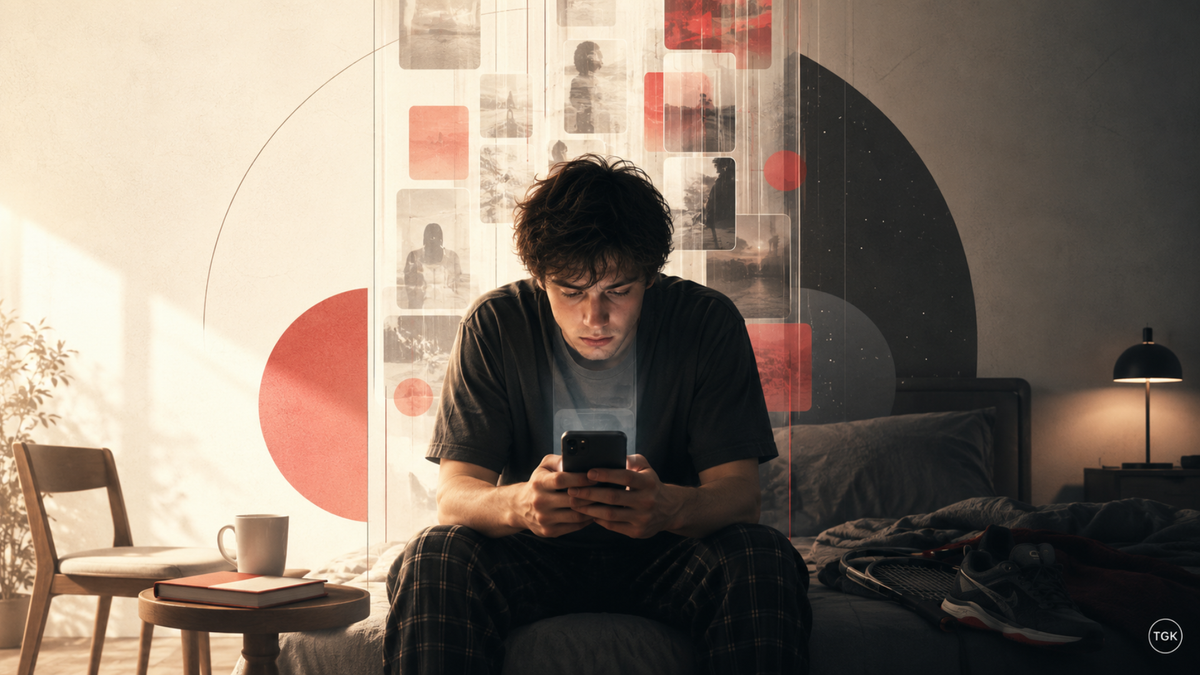
Everybody knows doomscrolling is bad. We still open Reels before getting out of bed, then do the same thing again at night while complaining that there is no time for the gym, family or whatever hobby we have been planning to start since 2022.
The explanation is not complicated. The algorithm is very good, the videos are often genuinely funny or interesting, and scrolling requires less effort than beginning anything real. Sometimes the algorithm is so perfectly tuned to you that it is honestly impressive. It knows when to give you tennis, politics, stupid comedy, attractive people, food, war and some confident guy explaining how to become rich from a rented Lamborghini.
Fine. Enjoy it sometimes.
Just understand that you are giving the easiest and most useful hours of your day to a machine designed to keep asking for one more swipe. You do not need another dramatic speech about throwing your phone into the sea, but at some point you should close Reels and touch some grass.
Quick Answer
You already know that endless scrolling is bad, so forget the twenty-step digital detox and try one rule for seven days:
No phone for the first hour after waking, and no screens for the final hour before sleep.
A 2025 randomized trial involving 467 participants blocked mobile internet on their phones for two weeks while still allowing calls and texts. The intervention improved objectively measured sustained attention, mental health and well-being, while participants spent more time socializing in person, exercising, reading, pursuing hobbies and being outdoors. Only about a quarter followed the block fully, yet the wider group still showed benefits, which suggests you do not have to become a monk before reducing access starts helping.
That study tested a stricter intervention than the two-hour rule, so it does not prove that exactly one hour in the morning and one at night is some medically perfect formula. It does support the obvious idea behind it: constant access costs you something, and removing even part of it gives your attention and time somewhere else to go.
Reels Is a Casino Where the Prize Is Another Reel
The casino comparison gets overused, but it fits because you never know what the next swipe will produce.
The current video is average, but the next one might be hilarious, shocking, useful or perfectly designed to make you angry. Sometimes you find something genuinely good, which gives you enough reason to sit through another twenty pieces of rubbish while waiting for that feeling again.
The prize is rarely money or even useful information. The prize is another reason to swipe.
A film eventually finishes, a chapter ends and a tennis match reaches match point. Reels does not have a natural stopping place because stopping is bad for the platform. You make one decision when you open the app, then the app chooses the next hundred things you see.
Researchers tested what happened when they added a small obstacle to that process. In a study with 30 participants, users had to react to each post before they could access the next one, instead of moving through a normal infinite feed. They remembered significantly more of what they had seen, but most found the slower version frustrating. (arXiv)
That frustration tells you quite a lot. Once scrolling asks you to pay attention and make a decision, much of the magic disappears. Plenty of the content is good enough to consume automatically but not good enough to choose deliberately.
Yes, It Is Killing Your Brain in the Sense That Matters
People become strangely pedantic when someone says doomscrolling is killing the brain.
No, every Reel does not leave a tiny pile of dead neurons inside your skull. Thank you, professor. Nobody normal means that literally.
They mean that after spending hours jumping between unrelated clips, they struggle to read ten pages, watch a full film without checking the phone or follow a conversation before their hand starts looking for something else. The brain gets trained by what you repeatedly ask it to do, and if the daily exercise is abandoning one subject every eight seconds, normal concentration eventually feels painfully slow.
The 2025 mobile-internet trial did more than ask participants whether they felt focused. Researchers also used an objective sustained-attention task, and performance improved after the two-week block. The authors were careful about limitations, including that most participants were already motivated to reduce their use and many did not comply fully, but the attention result was still measured rather than guessed from a wellness questionnaire.
So yes, doomscrolling is killing your brain in the everyday sense. It is making you worse at using it for anything that does not immediately throw a new reward in your face.
You notice this when boredom appears. Waiting three minutes for coffee suddenly requires a phone. Going to the toilet requires a phone. Sitting in a parked car for thirty seconds requires a phone. We have reached a point where people cannot allow the brain to stand around doing nothing without treating the silence as a technical fault.
You Are Filling Your Head Without Learning Much
An hour on Reels can contain more information than someone a century ago would encounter in a week. Unfortunately, most of it enters, causes a small reaction and leaves before connecting to anything useful.
You watched political arguments, recipes, gym advice, football clips, a murder story and five videos explaining why another generation has destroyed society. Ask yourself the next morning what you actually learned and the result is usually not impressive.
This is why scrolling can leave you mentally tired even though you did nothing difficult. Your head processed hundreds of cuts, voices, captions, songs and emotional changes, but there was no finished task, no real understanding and barely a memory at the end.
Negative content makes the experience worse because the brain gives threats more weight than neutral information. A 2024 cross-cultural study of university students in the United States and Iran found that heavier doomscrolling was associated with greater existential anxiety in both samples, although the research was observational and cannot establish that scrolling alone caused the anxiety. (ScienceDirect)
That distinction matters, but it does not make the result surprising. Spend an evening consuming corruption, shootings, war, fraud and people predicting social collapse, then see whether you feel more reasonable about humanity afterward.
Scrolling Feels Like Rest Because You Are Sitting Down
This is probably the most understandable excuse.
You worked, dealt with people, cooked, cleaned, handled the kids if you have them, answered messages and finally sat down. Nobody expects you to immediately study Mandarin or build a profitable company from the kitchen table.
Sometimes you want to do nothing, and that is completely fine.
The problem is that scrolling is a noisy form of doing nothing. Your body is sitting on the sofa while your mind moves through jokes, adverts, attractive bodies, dead people, politics, holiday photos, financial panic and ten strangers telling you how to improve your life.
That is why two hours can pass without leaving you rested. You were physically still but mentally poked every few seconds.
Proper rest can be a film you chose, a game, music, a conversation, sitting outside or doing absolutely nothing for twenty minutes. The activity does not have to be productive or impressive; it just helps when it has some shape and you know when you are finished.
Reels never finishes, so you keep waiting for the moment when you will finally feel satisfied enough to close it. That moment rarely comes because the next video has already started.
The Time Is Not Disappearing. You Are Spending It
People say they “lost” two hours scrolling as though the time slipped out through a hole in the sofa.
You spent it. Nobody enjoys saying that because it makes the whole thing sound less mysterious.
Twenty minutes after waking, half an hour on the toilet, another twenty while eating and an hour in bed easily becomes two hours a day. That is fourteen hours a week, which is enough time to train properly, read a book, play tennis several times or begin becoming less terrible at a new skill.
The phone usually wins because real hobbies have an awkward opening period. Your first tennis session after years away feels rough, the guitar sounds bad, the first thing you write is embarrassing and the gym does not change your body by Friday.
Reels has no beginner stage. You open it and receive immediate entertainment without risking failure or looking stupid.
That is a very attractive deal for tonight and a terrible deal when repeated for five years.
You do not need to turn every recovered minute into a side hustle. Spend it cooking, walking, playing with your dog or talking nonsense with people you like. The important part is doing something you chose instead of looking up later and realizing the algorithm selected your entire evening.
Your Family Gets Whatever the Feed Leaves Behind
This part does not need sad music underneath it.
Your parents are getting older. Your children, if you have them, are growing. Your partner notices when you are half-listening, even when you keep saying, “Yeah, yeah, I heard you.”
That is simply how time works.
You do not have to stare lovingly into your family’s eyes for four hours every evening, and everybody is allowed to be tired, quiet or interested in something on a screen. The problem begins when the phone receives your immediate attention while real people have to repeat themselves three times.
You would probably be annoyed if someone pulled out a slot machine during dinner and began pressing the button every twelve seconds. Reels receives more forgiveness because the machine fits inside a hand and everybody else is doing the same thing.
Sometimes the people around you are also boring. Family conversations repeat, children tell stories with no clear ending and your partner may want to show you something you do not care about. That is normal life. It cannot compete with an algorithm that can replace the person speaking whenever your interest drops for half a second.
You have to decide that real people deserve a less optimized form of attention.
The First Hour Should Stay Yours
The morning is the easiest place to make a change because nothing has happened yet.
Instead, many people wake up and immediately invite the whole internet into bed. Before brushing their teeth, they have already seen bad news, somebody’s perfect body, somebody else’s income, an argument about relationships and a morning-routine video made by someone whose job is filming morning-routine videos.
You can feel behind before you have even stood up.
There is no need to replace scrolling with a ridiculous routine involving ice baths, supplements and writing down ten things you are grateful for. Make coffee, shower, eat, stretch, train, walk the dog or sit there looking slightly stupid while your brain wakes up.
The purpose is to begin the day inside your own life instead of immediately entering everybody else’s.
Keep the phone available for calls when necessary, but stay out of Reels, news feeds and random browsing for one hour. The world will remain available afterward, in exactly the same condition you left it.
The Last Hour Should Be Slightly Boring
The final hour matters because the phone keeps the day running long after it should have finished.
You get into bed intending to check something for five minutes, then the algorithm finds your exact weakness and suddenly it is tomorrow. Even when you close it, your head is still carrying the noise, and you begin the next morning tired enough to want the same effortless entertainment again.
In the randomized mobile-internet study, participants slept more during the intervention and also reported greater social connection and self-control. The researchers found that blocking access shifted time toward offline activities and away from media consumption, although their mediation analysis could not prove exactly which change caused each improvement.
One screen-free hour gives the evening a proper ending. Read, shower, prepare breakfast, stretch, talk to someone or simply go to sleep earlier.
Yes, it may feel boring for the first few nights. That is not evidence that the experiment has failed. You have trained yourself to expect stimulation until the second you lose consciousness, so ordinary quiet feels strange.
Let it feel strange for a week.
Five Things Worth Trying
1. Protect the first and last hour
No phone for one hour after waking, no screens for one hour before sleep. Do this for seven days before deciding it is unrealistic.
2. Keep the phone away from the bed
Charge it across the room or outside the bedroom. Buy a cheap alarm clock if the alarm excuse is the only thing holding the whole arrangement together.
3. Make Reels slightly annoying to access
Remove the app from the home screen, log out after using it or use the browser version. You can still watch it, but now your hand has enough time to notice what it is doing.
4. Give the recovered hour somewhere to go
“Use my phone less” is not an activity. Decide beforehand that the morning is for breakfast and training, while the evening is for family, reading, gaming, tennis, cooking or whatever you will realistically do.
5. Check news instead of living inside it
Choose one or two proper sources and check them at a set time. A war will not end because you refreshed, and an important story will still be important after lunch.
Do Not Turn This Into Another Productivity Religion
The answer is not replacing an unhealthy amount of Reels with an unhealthy obsession over efficiency.
You are allowed to waste time. Watch rubbish television, play games, send your friends stupid videos and spend an evening doing almost nothing. A life where every minute must produce money, muscle or personal growth sounds exhausting.
The problem is unconscious use. You wanted ten minutes and gave it ninety; you wanted to rest and ended up more tired; you wanted to check the news and somehow watched strangers argue about a completely unrelated subject.
Enjoy your phone when you actually chose to be on it.
The phone is useful, fun and sometimes much more entertaining than whatever is happening around you. Pretending otherwise turns the article into the usual digital-detox nonsense written by someone who checks his own notifications immediately after publishing it.
The goal is control, not purity.
The TGK Take
You know doomscrolling is bad and continue doing it because Reels is easy, fun and frighteningly good at learning exactly what keeps your thumb moving. Awareness alone does nothing when the habit is available in bed, at breakfast, on the toilet and during every empty minute of the day.
Still, the solution does not need to become a lifestyle brand.
Give yourself one hour without the phone after waking and one screen-free hour before sleep. Put enough friction between yourself and Reels that opening it becomes a decision, then spend the recovered time with your family, training, reading, playing tennis or doing some hobby badly until you eventually become good at it.
The algorithm will still be there afterward, and it will still know exactly what you like. The difference is that it will no longer automatically receive the first and last part of every day.
Nobody needs to be told that doomscrolling is bad anymore. We all know the routine: you open Reels to check one thing, your thumb starts moving automatically, and forty minutes later you have watched a dog fall into a swimming pool, three murders, somebody’s luxury holiday, a war update, a relationship expert who has never maintained a relationship and twelve people arguing about something you did not care about before opening the app.
You probably barely remember any of it, but the time is gone.
That is the embarrassing part. We are no longer being fooled into thinking this is useful. We know we are wasting time, wrecking our concentration and going to bed later because of it, yet the phone still gets the first hour after we wake up and the final hour before we sleep.
Those hours could go to your family, the people you love who are getting older, your kids if you have them, or the hobby you keep saying might change your life if you ever found time to begin. Instead, they go to strangers talking over stolen clips with subtitles bouncing across the screen.
Quick Answer
Yes, doomscrolling is killing your brain in the way people actually mean when they say it.
It is not burning holes through brain tissue every time you swipe. It is training your attention to expect a new reward every few seconds, filling your head with information that never becomes useful knowledge, stealing sleep and leaving less patience for anything slow enough to require real thought.
A 2025 randomized trial found that blocking mobile internet on participants’ phones for two weeks improved objectively measured sustained attention, mental health and general well-being. People also spent more time socializing in person, exercising, reading, pursuing hobbies and being outside. The study does not prove that every Reel causes brain damage, but it does show that constant access comes with a measurable cognitive and emotional cost.
The most useful thing to try is simple: no phone for the first hour after waking, then no screens during the final hour before sleep. Do it for seven days before downloading another productivity app that you will eventually open only to avoid doing something productive.
Reels Is a Casino That Never Pays You
Reels works because every swipe might produce something better than the last one.
The current video is boring, but perhaps the next one is hilarious. The next one might be shocking, attractive, useful or perfectly designed to make you angry. You never know which swipe contains the reward, so you keep pulling.
That is where the casino comparison comes from. The phone has no roulette table and you are usually not losing cash directly, but the behavioural trick is familiar: unpredictable rewards keep you repeating an action long after the experience has stopped being enjoyable. Social feeds add breaking-news alerts, infinite scrolling and algorithmic recommendations, so there is never a natural moment where the screen says you have finished. (WIRED)
You open the app by choice, then the app chooses the next hundred things you see.
A film has an ending. A book eventually runs out of pages, a tennis match finishes, dinner ends and even a long conversation reaches the point where everybody goes home. Reels can continue until your battery dies, your eyes hurt or you notice that it is 1:17 in the morning and tomorrow has already become worse.
The platform will never tell you that you have watched enough because enough is terrible for business.
Yes, It Is Killing Your Brain
People become strangely pedantic when somebody says scrolling is killing the brain. Of course, one hour on TikTok does not leave a pile of dead neurons underneath your skull.
That does not make the phrase meaningless.
Your brain adapts to what you repeatedly ask it to do. When you spend hours jumping between unrelated clips every few seconds, you practise abandoning one thing and chasing another. You practise needing novelty before the current thought has had time to develop, and you make normal activities feel slow because books, work, conversations and hobbies do not explode into a new subject every eight seconds.
The 2025 mobile-internet experiment gives this argument more weight than another motivational speech about focus. After two weeks without internet access on their phones, participants performed better on an objective sustained-attention task, while also reporting better mental health and well-being. The researchers were cautious about generalising because the participants were already motivated to reduce phone use and many struggled to maintain the block, but the improvement in attention was measured rather than guessed from a screen-time questionnaire.
So no, doomscrolling does not kill your brain like a disease. It kills your ability to use it properly for long stretches, and most people can feel that happening without waiting for a neurologist to draw them a diagram.
Try reading ten pages without touching your phone. Try watching a film without checking messages. Try standing in a queue without immediately reaching into your pocket.
That discomfort is the habit showing itself.
You Are Filling Your Brain Without Learning Anything
After an hour of scrolling, you have technically consumed a huge amount of information.
Ask yourself what you learned.
You may remember one argument, part of a joke and the face of somebody selling protein powder. Everything else entered your eyes, produced a quick reaction and disappeared before it had any chance of connecting to something useful.
This is how you end up mentally exhausted without having done anything difficult. Your brain has processed hundreds of cuts, voices, captions, songs, emotional changes and unrelated topics, yet there is nothing solid at the end of it. It is the mental equivalent of eating sweets for dinner: plenty went in, but you are somehow still empty.
Negative content makes the effect worse. In two controlled experiments, researchers found that only two to four minutes of negative COVID-related social-media content reduced participants’ positive mood, and in one experiment also reduced optimism. Positive stories about acts of kindness did not produce the same damage, which suggests the problem is not simply looking at a screen but repeatedly feeding yourself material designed around threat, anger and disaster. (PLOS)
Another cross-cultural study involving students in the United States and Iran found that heavier doomscrolling was associated with greater existential anxiety, while the Iranian sample also showed a connection with more negative beliefs about humanity. It was an observational study with limitations, so it cannot prove that scrolling caused every one of those feelings, but the direction will surprise absolutely nobody who has spent an evening watching the worst events on Earth arrive between comedy clips. (ScienceDirect)
You started because you wanted to know what was happening. You finished believing everybody is stupid, corrupt or dying.
You Are Probably Not Staying Informed
Checking the news is the respectable excuse for doomscrolling.
There is always a war, election, economic crisis, crime story or disaster that feels important enough to follow live. You refresh because something may have changed, then read the same facts rewritten twenty times by people who know no more than the first person.
After that come the reaction videos, rumours, comments and completely confident analysis from somebody sitting inside a parked car.
There is a difference between knowing what is happening and marinating in updates.
Proper information gives you context, explains what is confirmed and eventually reaches some conclusion. Doomscrolling gives you fragments, repeats the emotional part and leaves the uncertainty open so you have a reason to check again.
The news will still exist in an hour. A serious event will not become irrelevant because you finished breakfast first, and if something genuinely changes your life, somebody will probably call you.
You do not need to carry every crisis on Earth inside your nervous system all day to prove you care.
Your Phone Takes the Time That Could Have Become Something
This is the part people avoid because it is easier to discuss dopamine than regret.
The phone does not usually destroy an entire life in one dramatic collapse. It takes twenty minutes while you are waking up, half an hour on the toilet, another forty minutes after dinner and the hour you were supposed to use before sleep. Every piece feels too small to matter, but together they consume the exact space where a better life might have developed.
The people you love are getting older. Your kids, if you have them, are growing up while you are in the same room pretending to listen. Your partner notices every time a sentence loses to something on your screen, even when you keep nodding and saying, “Yeah, I heard you.”
Then there are the things you supposedly have no time to do. You cannot train, read, learn a language, play tennis, start a business, write, cook properly or become good at any hobby, yet your weekly screen report contains enough spare hours to qualify as a part-time job.
Most real activities feel unrewarding at first. Your first tennis session is awkward, the guitar sounds terrible, the first pages you write are embarrassing and the gym does not change your body by Friday. The feed has no beginner stage. You swipe once and are immediately entertained.
That is why it wins.
An hour a day spent on one real activity becomes 365 hours in a year. You could become noticeably stronger, finish a shelf of books, learn the basics of an instrument or create something you are proud to show somebody. An hour a day on Reels becomes a warm rectangle in your hand and a vague feeling that the year moved quickly.
The First Hour Belongs to You
Reaching for the phone immediately after waking is a stupid way to begin the day because you have not had one thought of your own before allowing the entire internet into your head.
Within five minutes you have somebody’s perfect morning routine, bad news from another country, an attractive person selling discipline, a millionaire telling you that normal employment is slavery and a comment section fighting about gender.
You have not even brushed your teeth.
The morning does not need to become a performance. You do not have to wake at 5 a.m., take an ice bath and write gratitude notes while staring at the sunrise. Make coffee, eat breakfast, shower, train, walk the dog, speak to your family or sit there doing absolutely nothing for ten minutes.
Almost anything is better than allowing Reels to choose your first emotion.
The phone can wait for one hour. Anyone who genuinely needs you can still call, and the world will manage without your immediate reaction to a video uploaded while you were sleeping.
The Final Hour Decides How Tomorrow Starts
The evening rule may matter even more because scrolling does not stop when you put the phone down.
You carry the stimulation into bed, sleep later and begin the next morning already tired, which makes the effortless entertainment even harder to resist. Then you repeat the same evening because you tell yourself you deserve to relax.
A large 2025 Norwegian study of more than 45,000 young adults found that each additional hour of screen use in bed was associated with 24 minutes less sleep and a 59% higher likelihood of reporting insomnia symptoms. Because the research was observational, it cannot prove that screens caused every sleep problem, but the result did not depend much on whether people were using social media, watching videos or doing something else. The strongest issue may simply be that the screen keeps you awake, engaged and delaying sleep. (Health)
One hour before bed without screens gives the day somewhere to finish.
Talk to your partner, prepare things for tomorrow, read, stretch, shower or sit with music. If you have kids, spend the time with them while they still want it. If you live alone, learn to be alone without immediately filling the silence with strangers.
You are supposed to become slightly bored before sleep. That is not an emergency.
Try This for Seven Days
Do not announce a digital detox or buy a minimalist phone from a company charging €400 for the ability to send text messages. Run a small experiment and see what happens.
1. No phone for one hour after waking
Charge it far enough from the bed that checking it requires standing up. Calls can remain available for emergencies, but Reels, news feeds and notifications can wait.
2. No screens for one hour before sleep
That includes replacing the phone with a laptop and pretending you followed the rule. Use the hour for something that has an ending, such as a chapter, conversation, shower or preparation for tomorrow.
3. Remove Reels from the easiest path
Delete the worst app, log out, use the browser version or remove it from your home screen. You are allowed to use it, but reaching it should require enough effort for you to notice what you are doing.
4. Give the recovered time a specific job
“Use my phone less” leaves a hole, and the phone will refill it. Decide that the morning hour is for breakfast and training, while the evening hour is for family, reading, tennis practice, writing or whatever you actually care about.
5. Check the news at a chosen time
Read one or two proper sources once or twice a day. Get the facts, then leave before the comments and reaction videos convince you that you need another fifty versions of the same story.
The point is not perfection. In the 2025 mobile-internet trial, only about a quarter of participants met the researchers’ full compliance standard, yet the experiment still produced meaningful benefits across the larger assigned group. Reducing access helped even when people did not execute the plan like monks.
Stop Expecting Willpower to Beat the Product
People blame themselves for having no discipline while carrying a personalised casino in their pocket.
Of course self-control matters, but you are fighting software designed, tested and adjusted around keeping your attention. The app knows which subjects make you stay, which faces stop your thumb and which emotional reaction brings you back tomorrow.
Do not make the fight fair.
Turn off useless notifications, keep the phone outside the bedroom and create time blocks where the internet is unavailable. Put a real alarm clock beside the bed if “I need my phone as an alarm” has become the excuse holding the whole habit together.
The 2025 experiment used an app that completely blocked mobile internet while still allowing calls and texts, and participants’ average phone use dropped sharply during the intervention. As phone access decreased, time spent in the offline world, social connection, feelings of self-control and sleep all increased.
You do not have to block the entire internet for two weeks, but the result makes one thing clear: changing the environment works better than standing inside the casino and promising not to gamble.
The TGK Take
You already know doomscrolling is ruining your attention, sleep and time, so another polite reminder about screen limits will not change much. The real question is why you continue giving the least memorable content ever created the most usable hours of your day.
Reels will keep producing another video. There is no final episode and no point where the algorithm thanks you for your service and sends you back to your family. The people you love will get older, your kids, if you have them, will stop being small, and that hobby capable of changing your life will remain something you nearly started.
Protect the first hour after waking and the final hour before sleep for one week. Put the phone somewhere that forces you to make an actual decision before opening it, then spend those hours on something you can remember tomorrow.
The feed does not care whether you miss your life. It only cares that you watch the next clip.